Articles
Notes from the show: where it films, who sits in the other chair, and what the episodes add up to. Every guest and every organisation has a page too: see People and Companies.
-
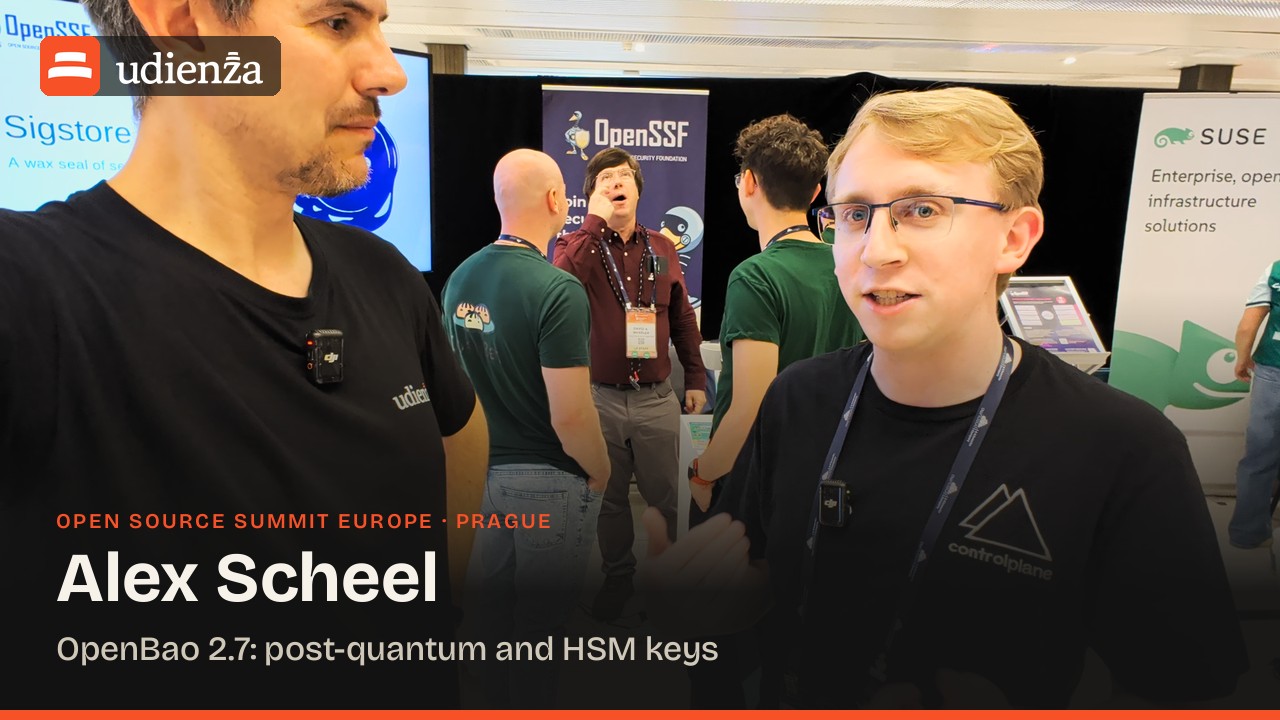
OpenBao 2.7: post-quantum and HSM keys
Alex Scheel of Control Plane on OpenBao 2.7: horizontal scaling on PostgreSQL, PKI roots backed by an HSM, post-quantum support and the roadmap.
-
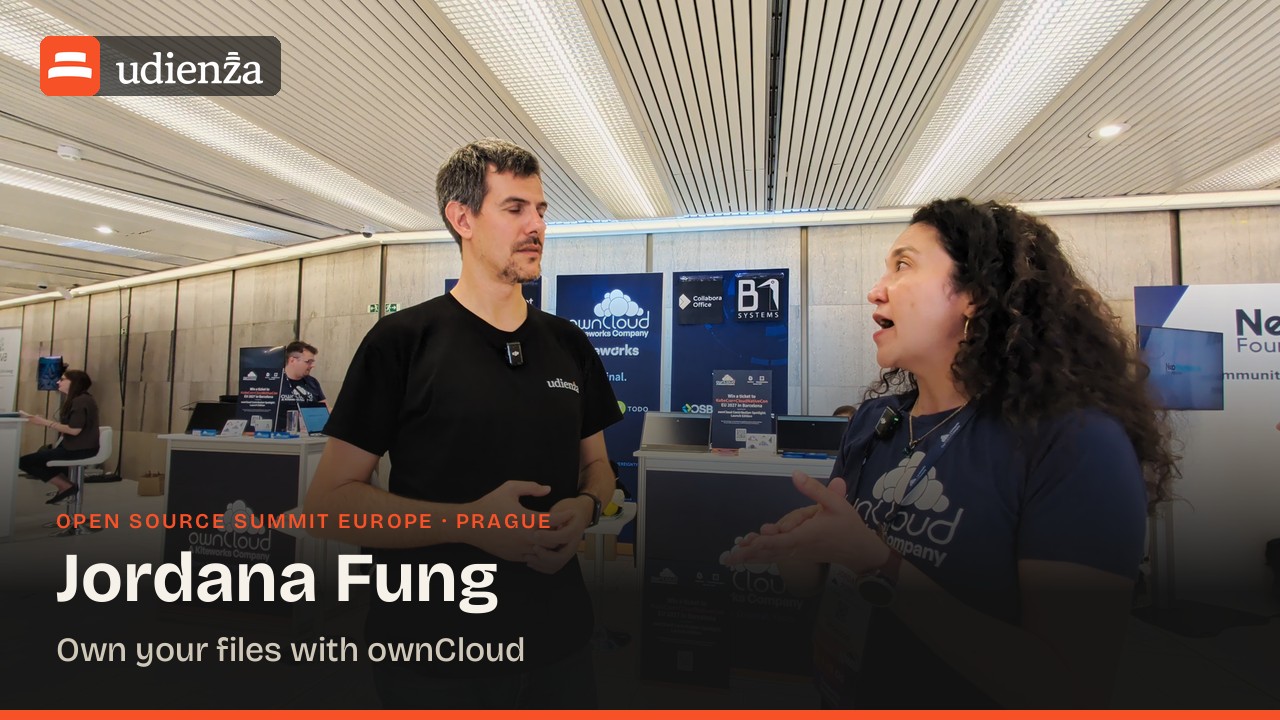
ownCloud: own your files, Pi to Kubernetes
Jordana Fung of ownCloud on Infinite Scale: one Go binary with no database, Apache 2.0 with nothing gated, and a company re-engaging its community.
-
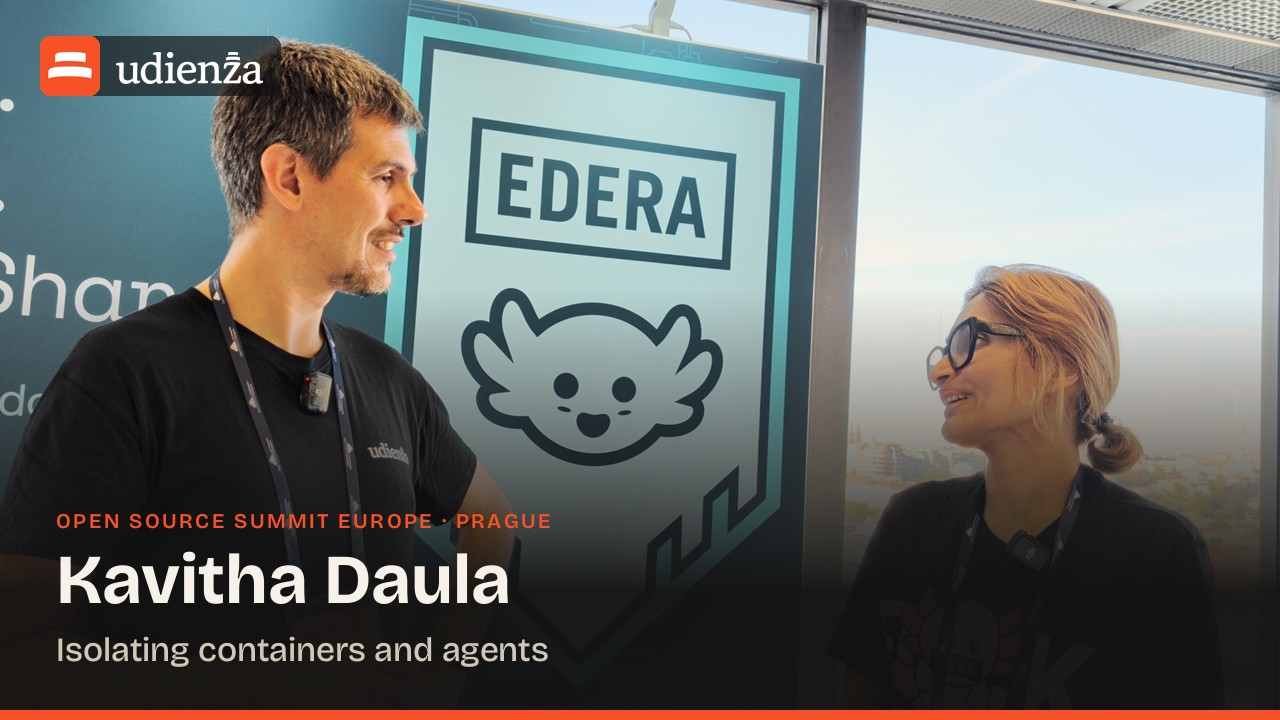
Edera: a micro-VM and a kernel for each workload
Kavitha Daula, VP of Engineering at Edera, on why containers sharing one kernel is a risk, zones per workload, and isolation for AI-written code.
-
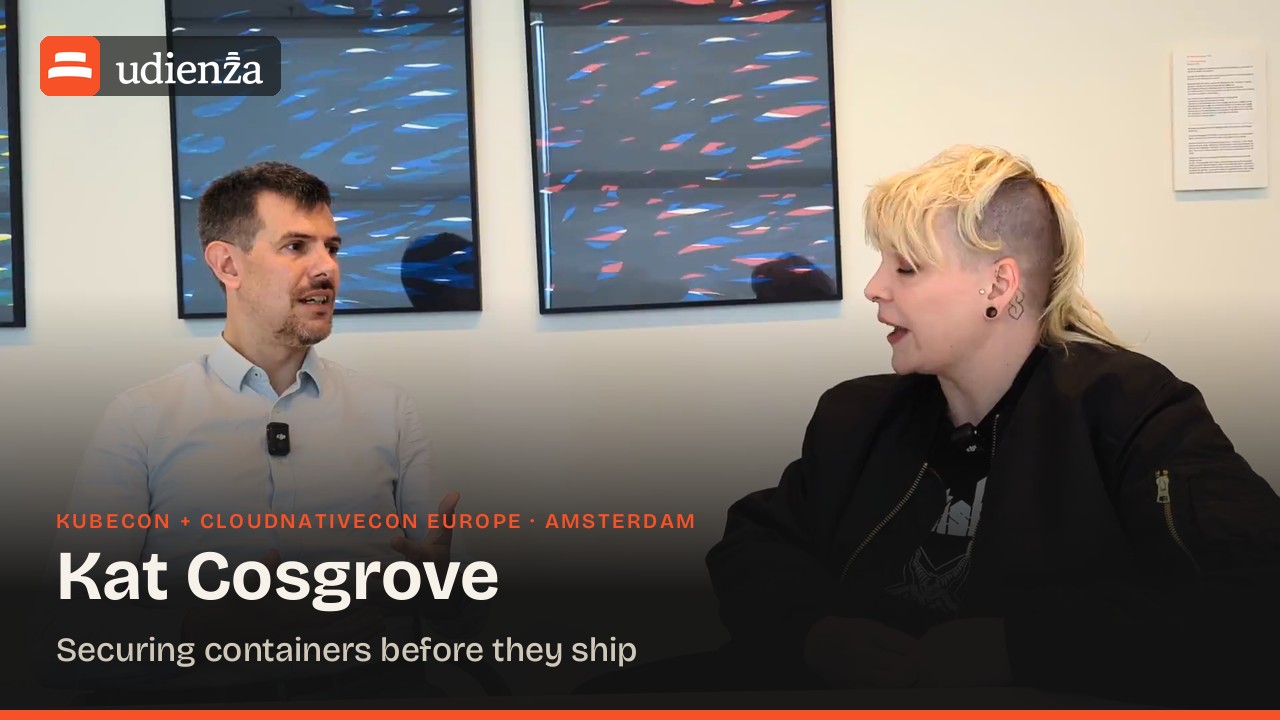
KubeCon + CloudNativeCon Europe 2026: who we met
Amsterdam, 25 and 26 March: four conversations at KubeCon + CloudNativeCon Europe, on container security, observability, agents and a European cloud.
-
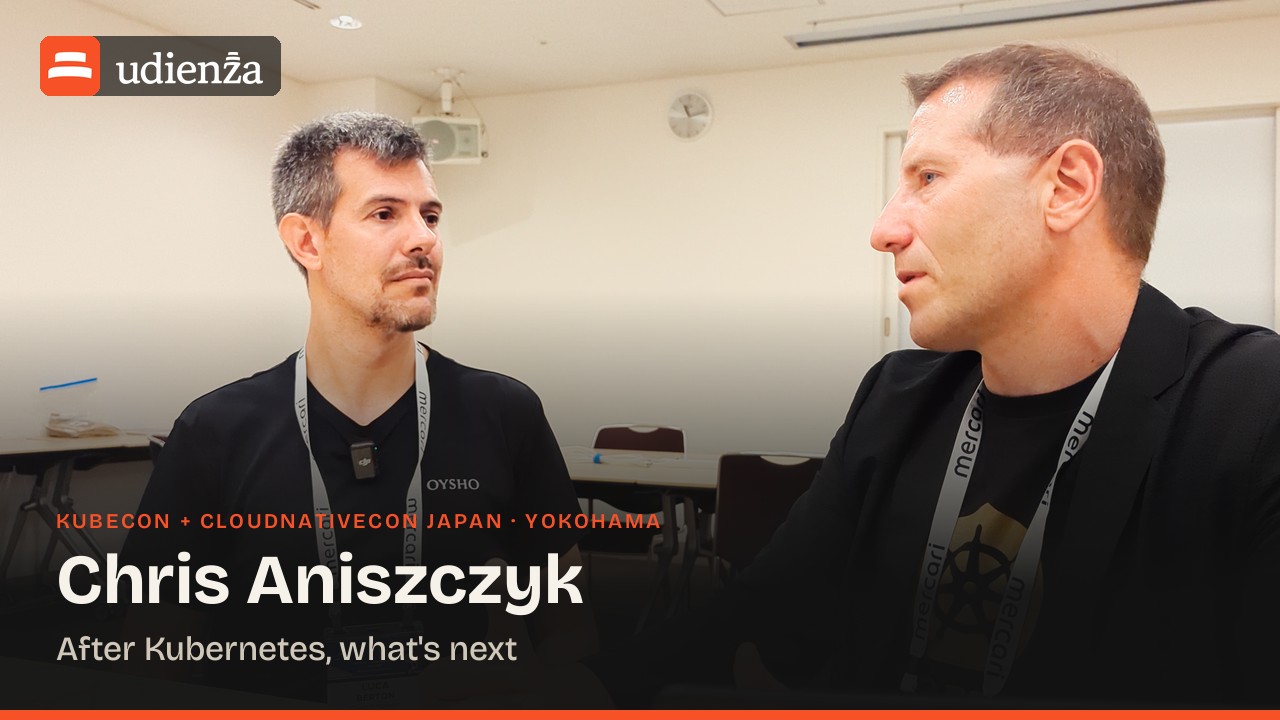
KubeCon + CloudNativeCon Japan 2026: Yokohama
29 July 2026 in Yokohama: one conversation at KubeCon + CloudNativeCon Japan, with CNCF CTO Chris Aniszczyk on agents, local AI and young engineers.
-
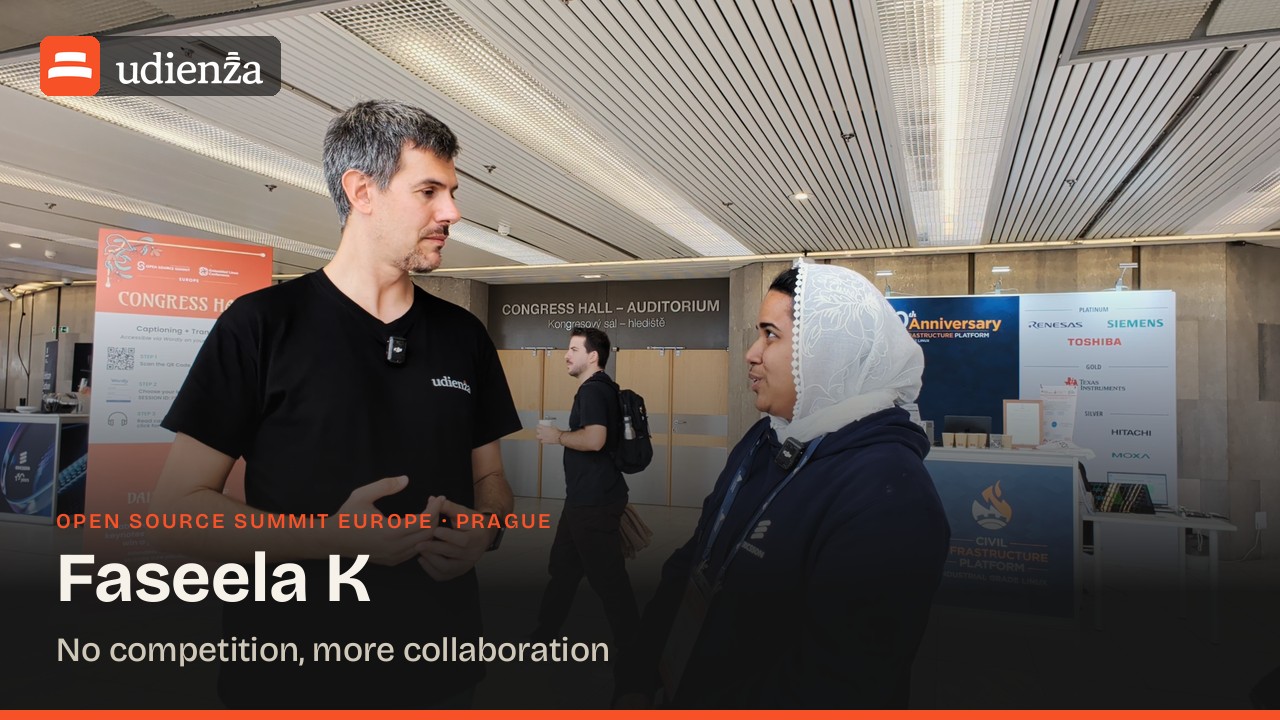
CNCF: Istio and collaboration over competition
Faseela K, CNCF TOC member and Istio maintainer, on maintaining Istio, the CNCF ambassadors, the new CKNE exam and why collaboration beats competition.
-
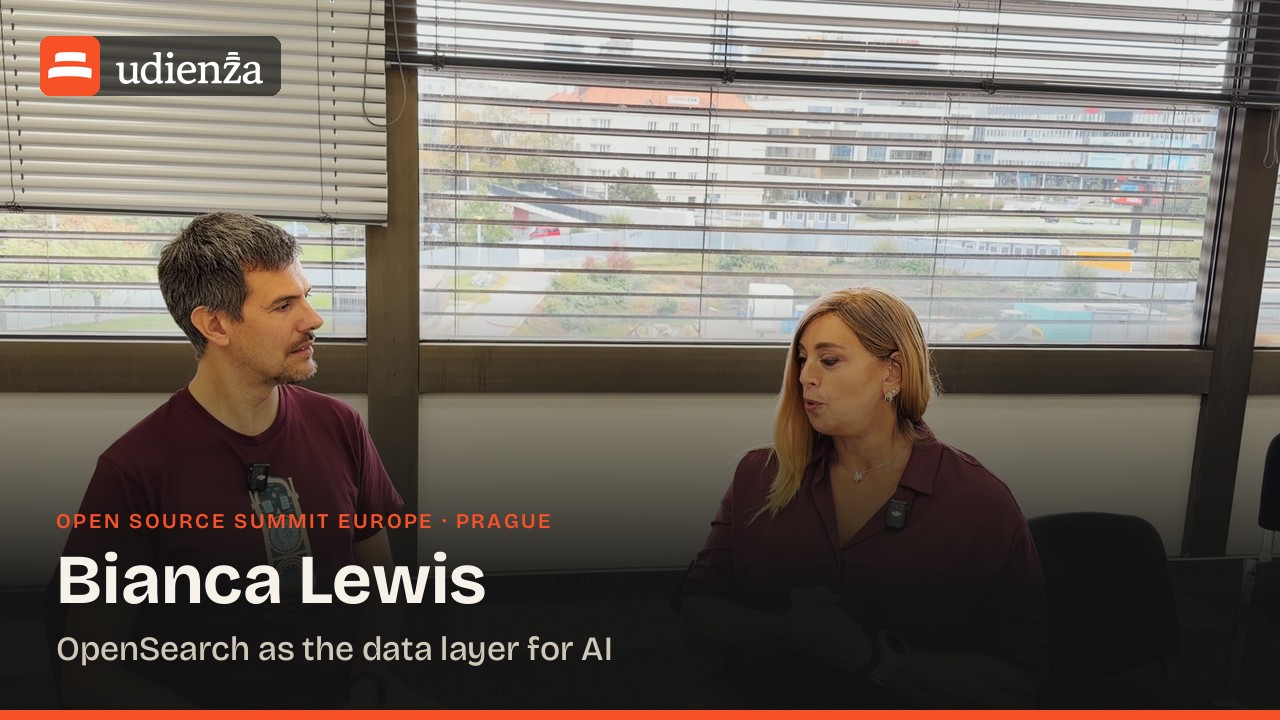
OpenSearch: one data layer for AI, no silos
Bianca Lewis of the OpenSearch Software Foundation on OpenSearch as a data layer for AI: no silos, hybrid search, long-term support or fast releases.
-
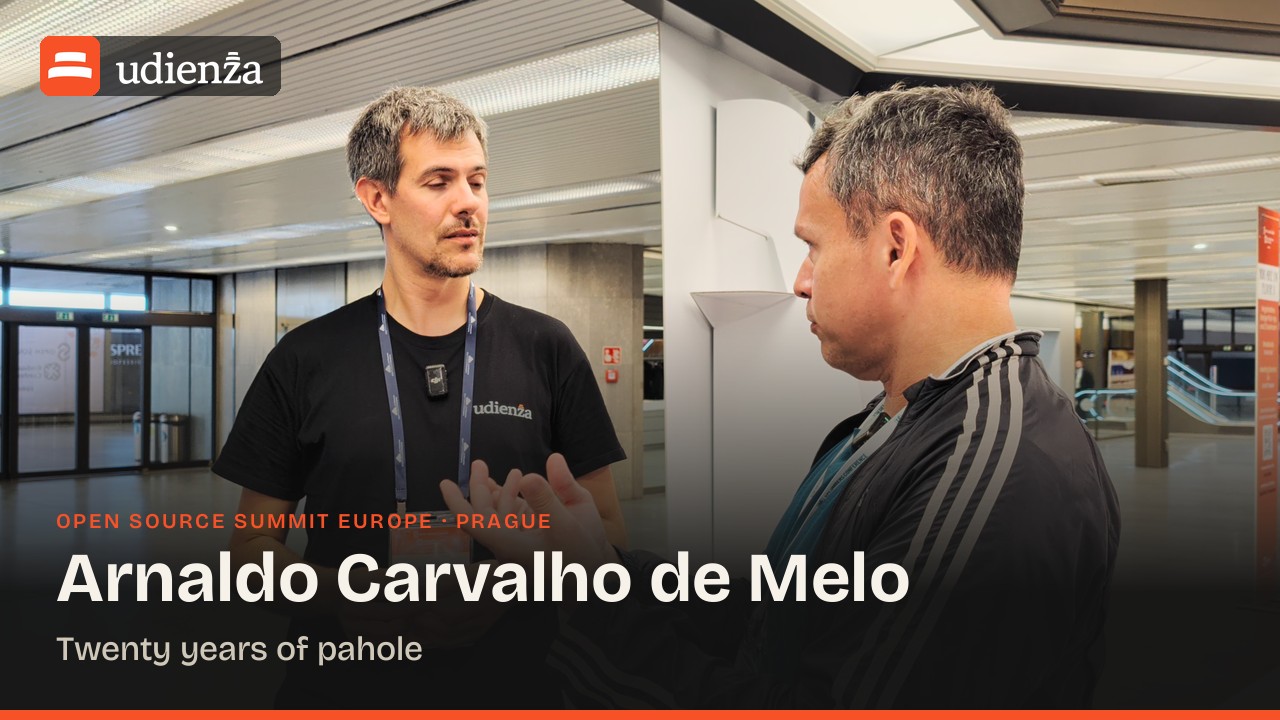
Red Hat: twenty years of pahole, structs to BPF
Arnaldo Carvalho de Melo of Red Hat on how pahole became part of every kernel build, BTF for Rust, and perf profiling data structures.
-
SREday Amsterdam 2026: who we met
Monday 2 November at ING Cedar in Amsterdam: SREday's talks, from the recordings, and five conversations on agents, delivery, GPUs and a conference kept small.
-
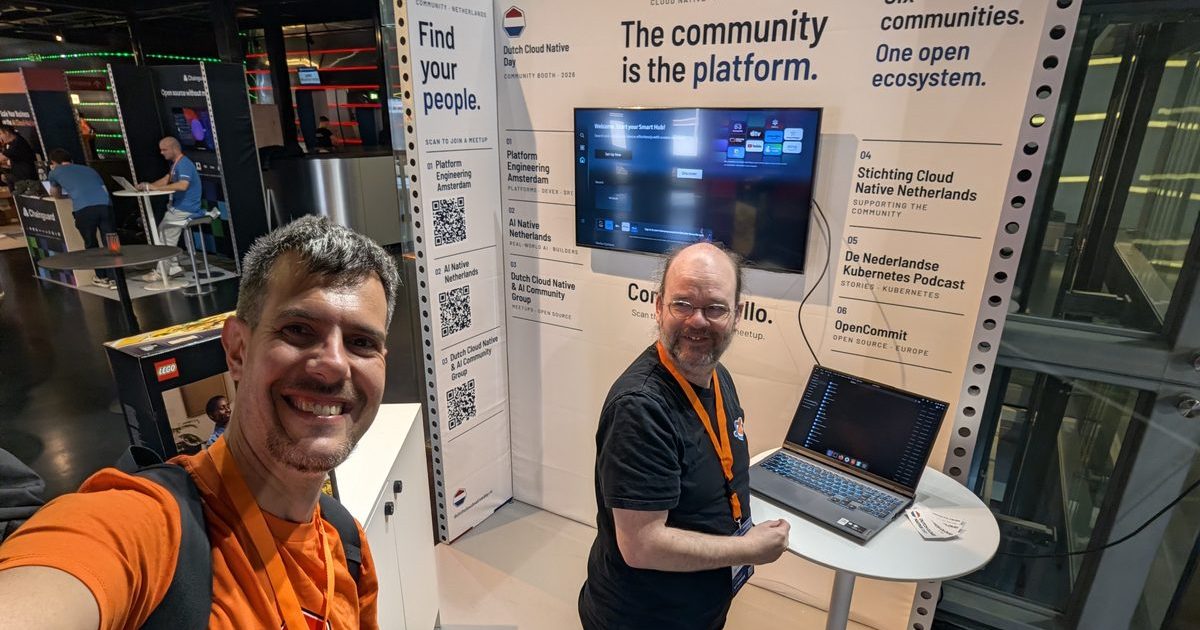
Dutch Cloud Native Day 2026: who we met
Friday 30 October in Utrecht: nine conversations at Dutch Cloud Native Day, on sovereign clouds and forges, security, feature flags and community.
-
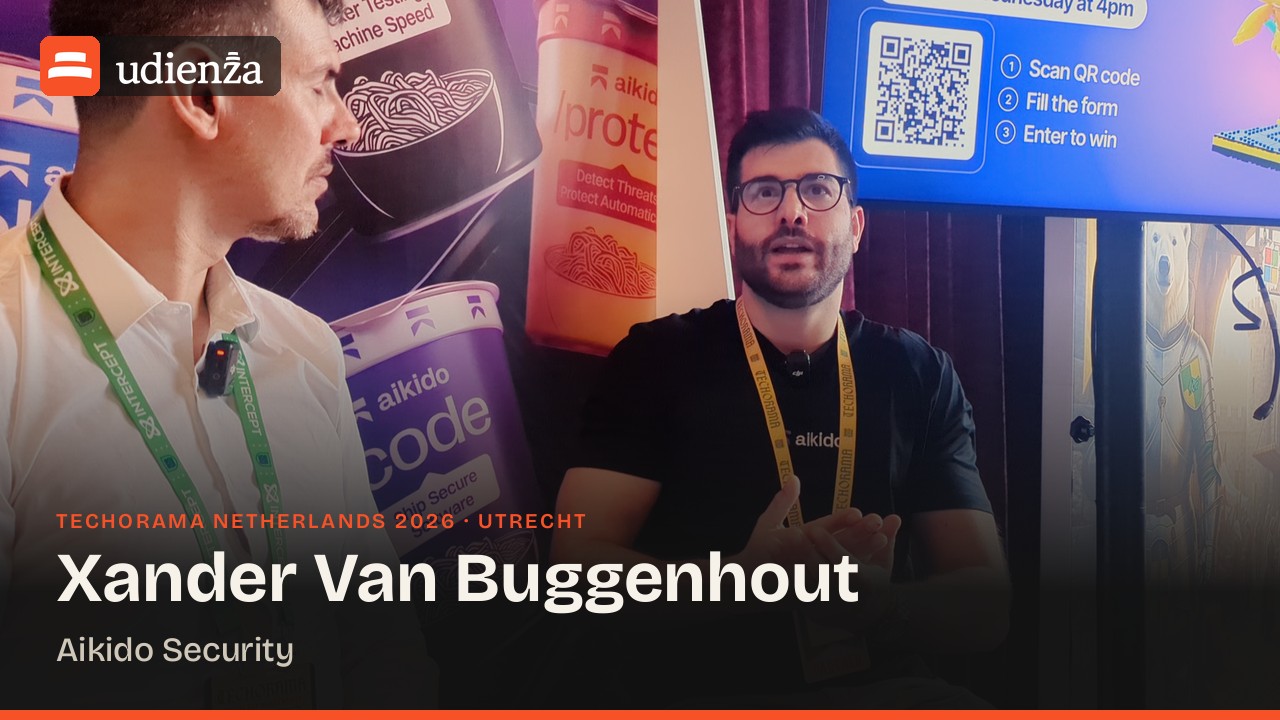
Aikido Security: toward self-securing software
What Aikido Security builds, as Xander Van Buggenhout told it in Utrecht: code-to-cloud scanning, AI pentesting, device protection and autofix.
-
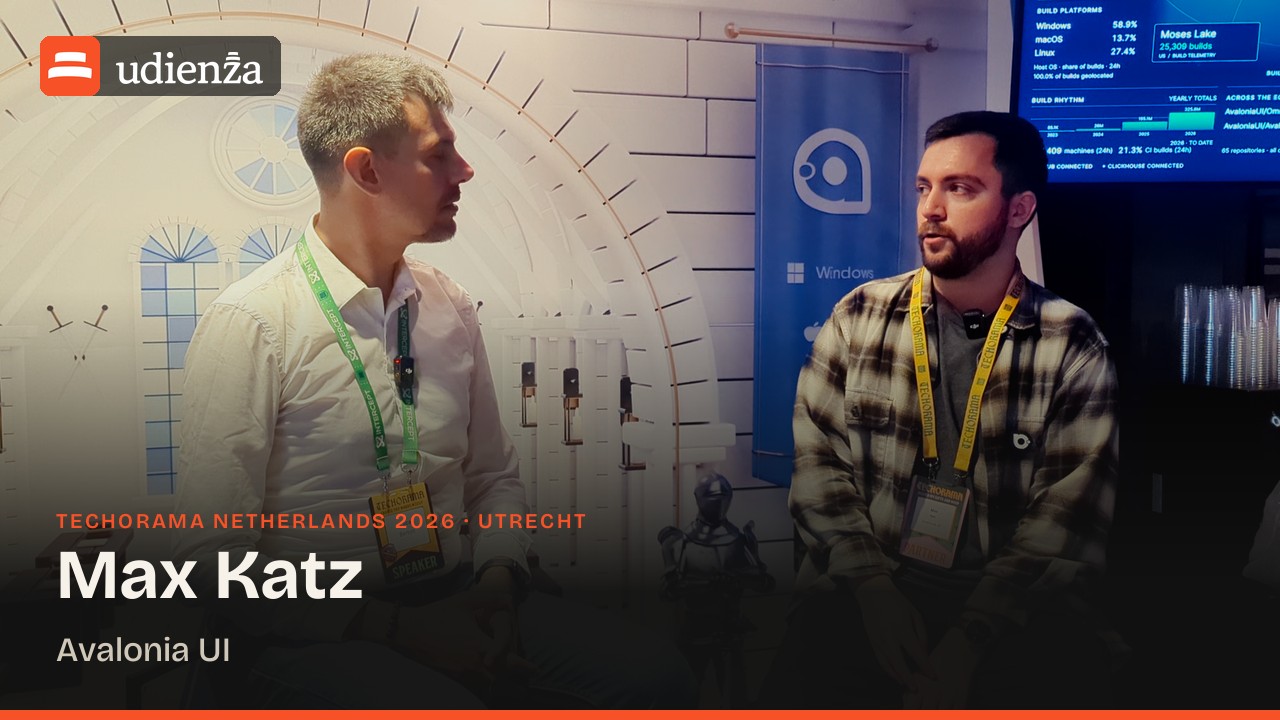
Avalonia UI: one pixel-perfect UI, one code base
Max Katz of Avalonia UI on a desktop and mobile framework that looks the same on Windows, Linux and macOS, and why one code base suits AI agents too.
-
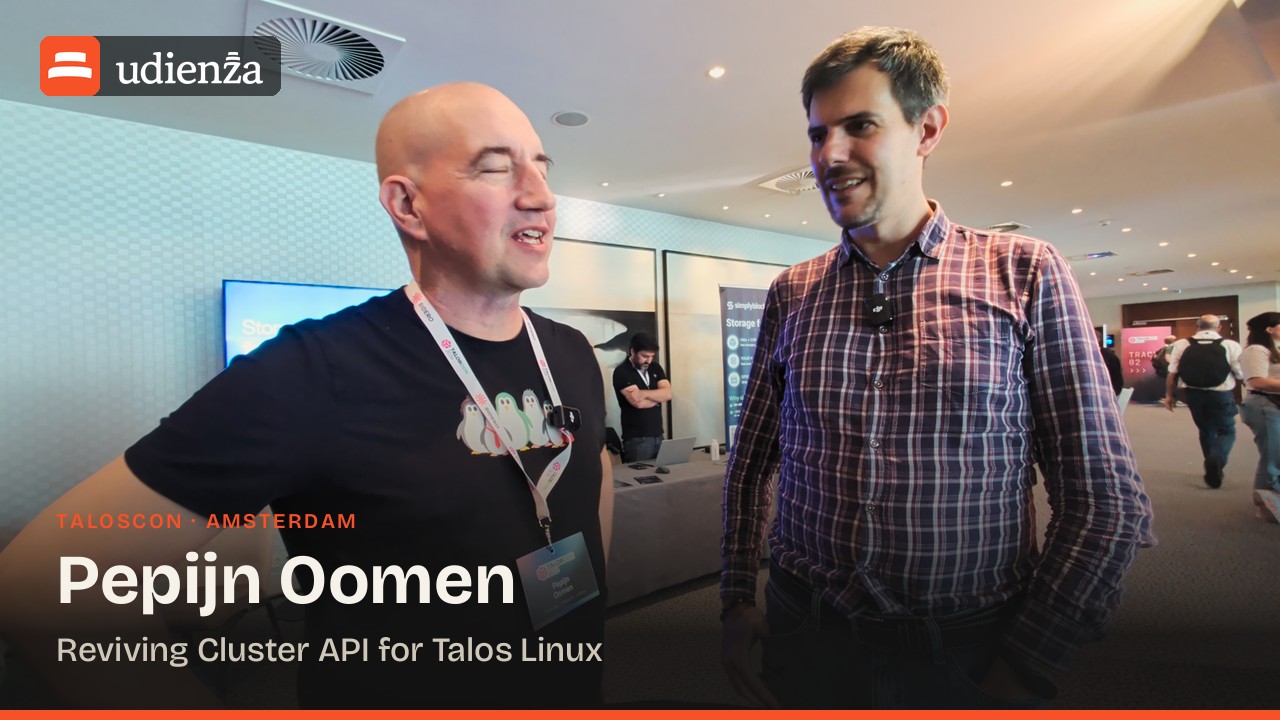
Reviving Cluster API for Talos Linux
Pepijn Oomen of Redpill Linpro asks the community to take over the Cluster API control plane and bootstrap providers for Talos Linux, marked deprecated.
-
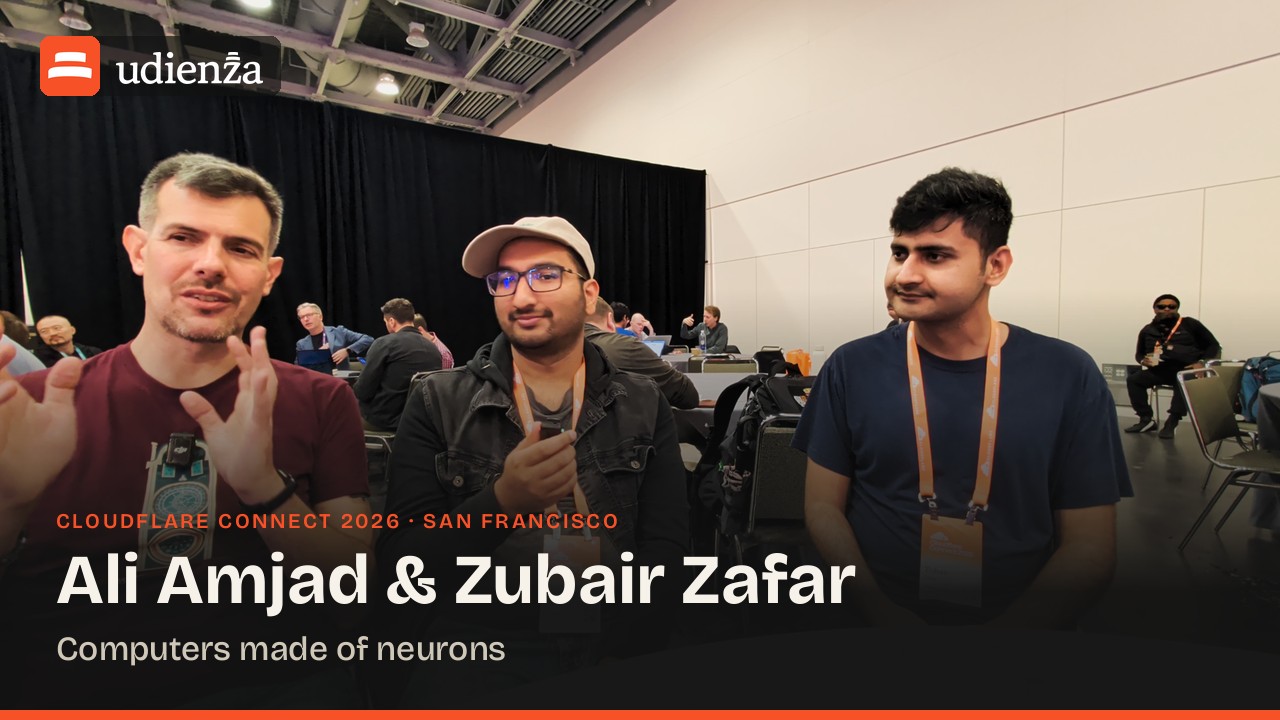
Computers made of neurons
Ali Amjad and Zubair Zafar, co-founders of a young biocomputing startup, on neurons grown on a dish, and robots that could learn from less data.
-
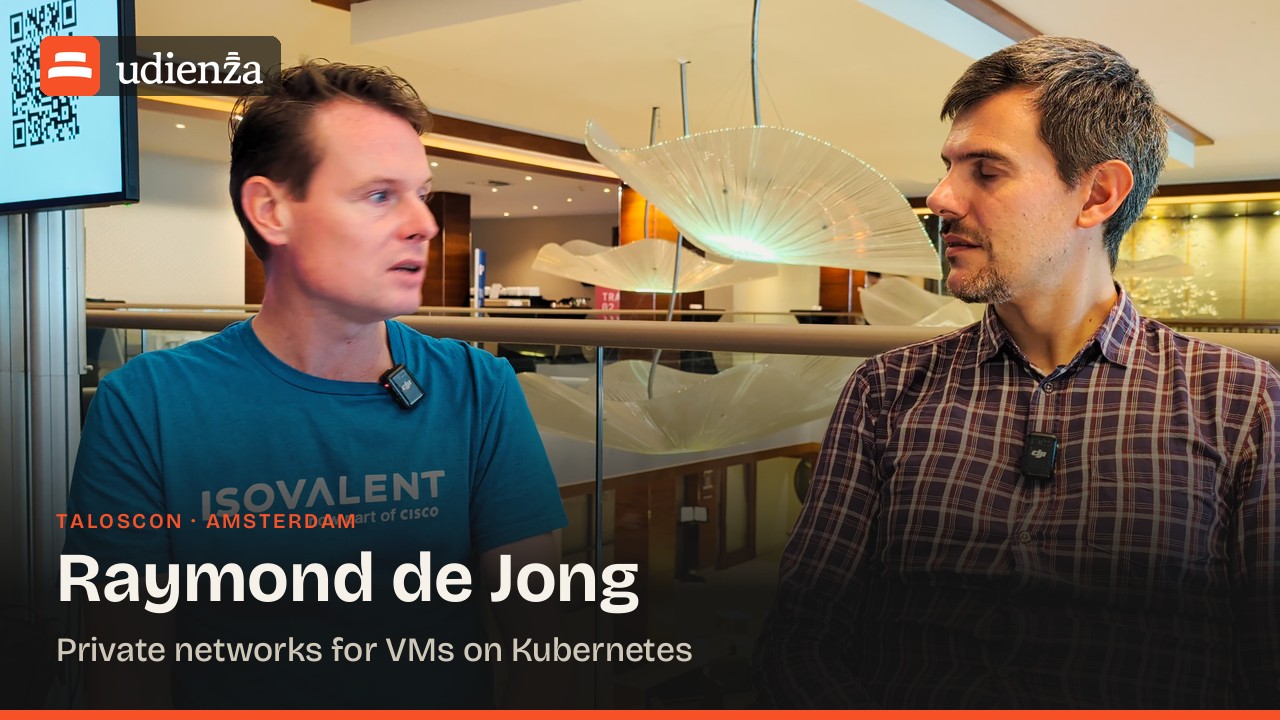
Isovalent: private networks for VMs on Kubernetes
A VPC for your Kubernetes cluster: Isovalent Private Networks gives VMs sticky IPs and their own subnets on KubeVirt, as Raymond de Jong explained at TalosCon.
-
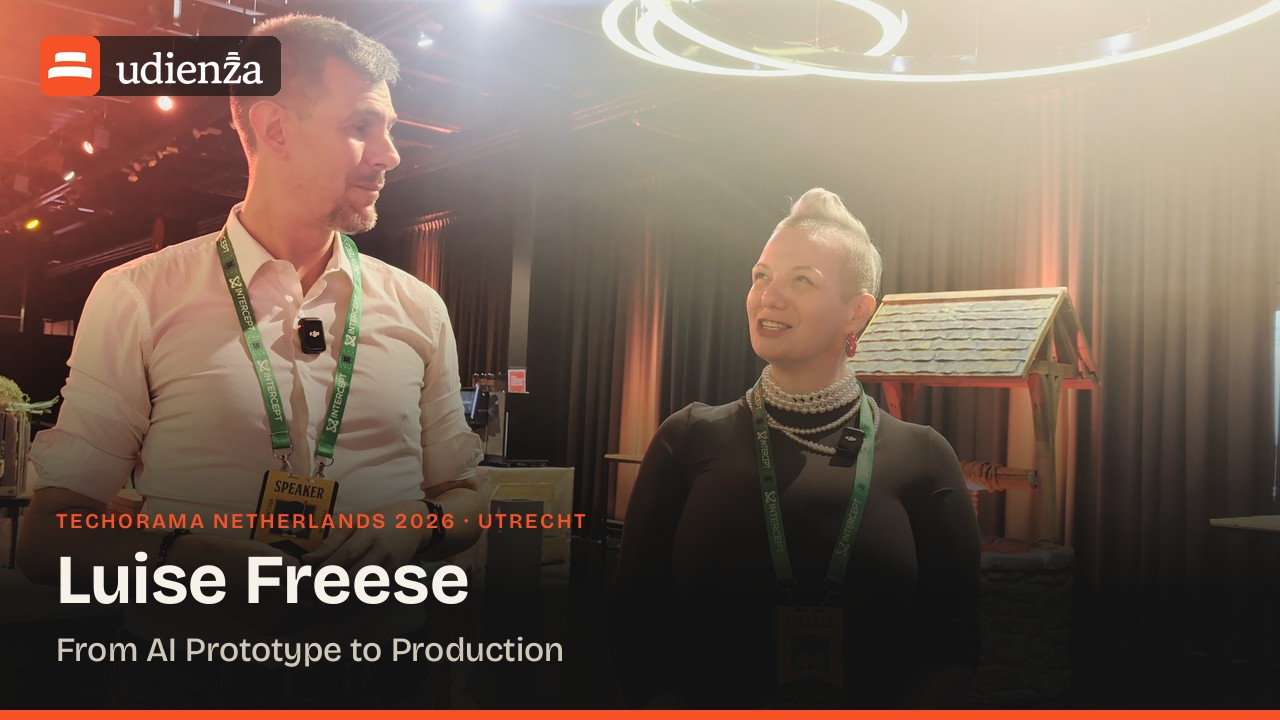
Luise Freese: AI prototypes into production
Software architect Luise Freese on her 90-day playbook for shipping enterprise AI, where agentic AI fits, and getting dev people and people people to talk.
-
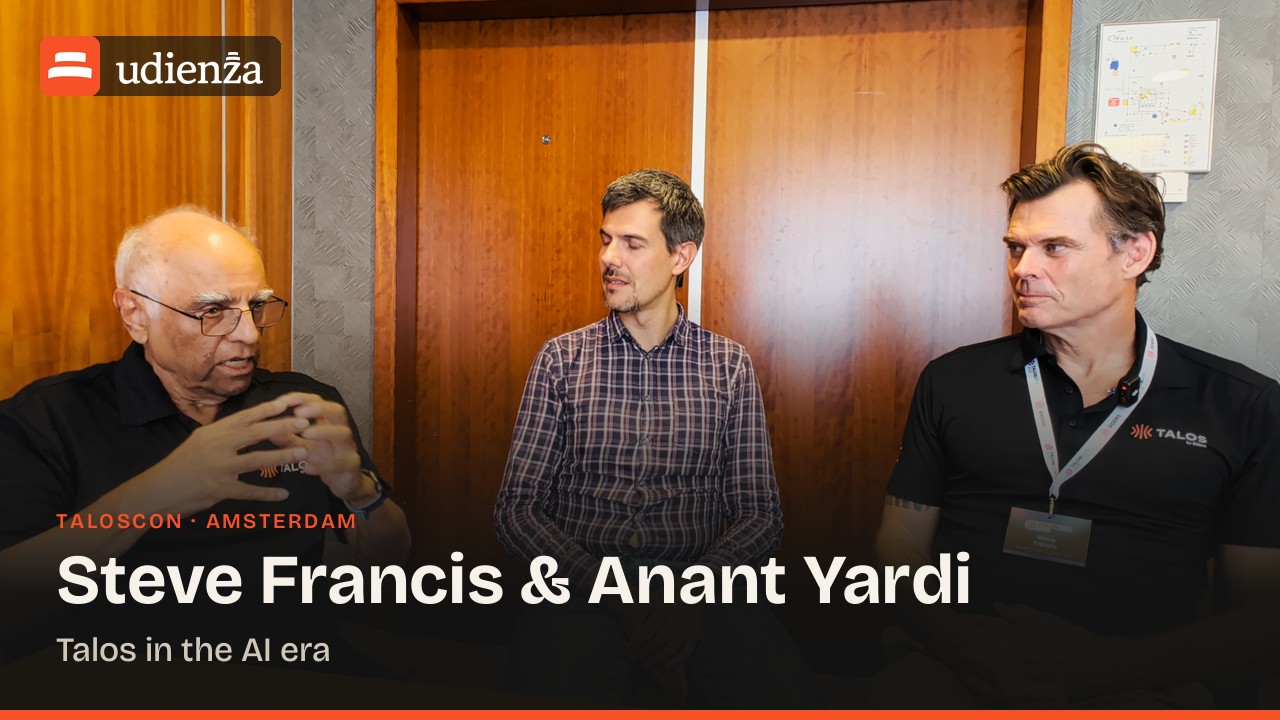
Sidero Labs: Talos in the AI era
Steve Francis of Sidero Labs and Anant Yardi at TalosCon on Talos Enterprise Linux, the hypervisor, Talos AI, and private clouds that keep AI data sovereign.
-
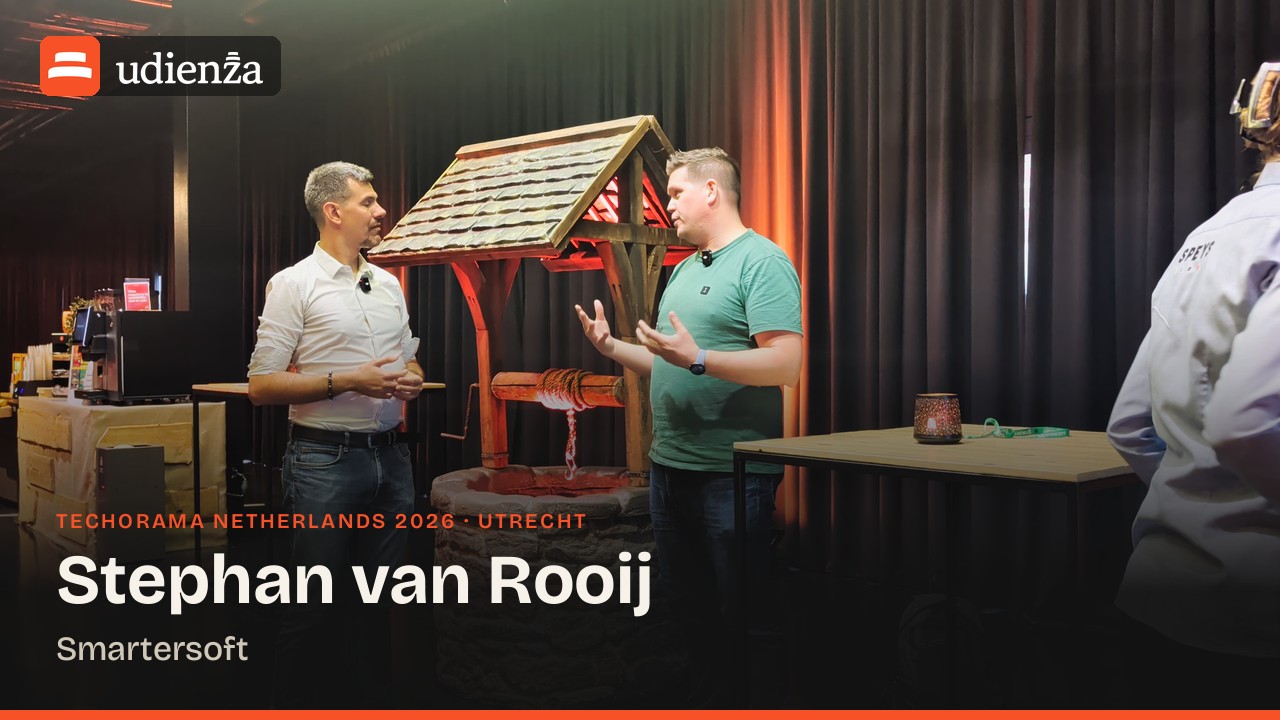
Smartersoft: school schedules in every calendar
Stephan van Rooij of Smartersoft on software that puts school schedules into personal calendars, scaling with queues on Azure Functions, and testing security.
-
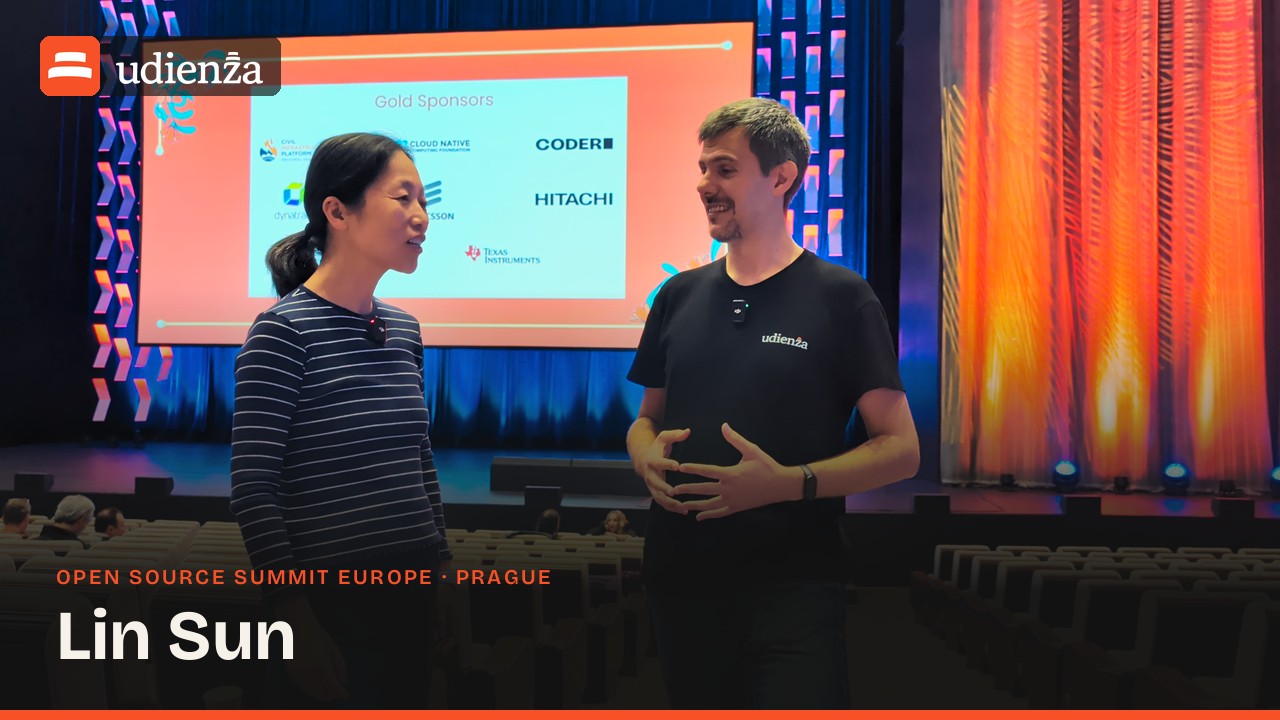
Solo.io: AI agents as microservices, but more
Lin Sun of Solo.io on the infrastructure that runs AI agents in production: agentgateway, kagent and Agent Substrate on Kubernetes, and how to keep up.
-
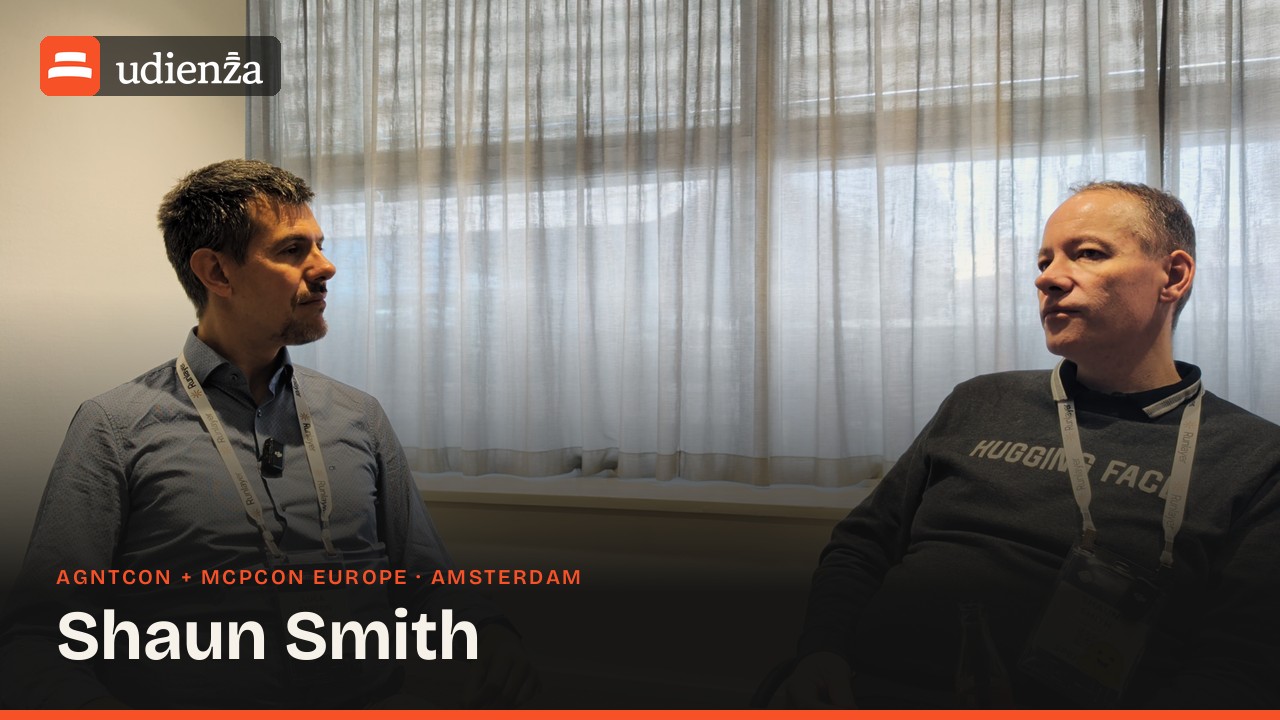
Stateless MCP: Shaun Smith on the new protocol
Shaun Smith, MCP maintainer at Hugging Face, on the stateless MCP release, elicitations any server can answer, evaluations, and six-monthly releases.
-
Techorama: two editions a year, 19 so far
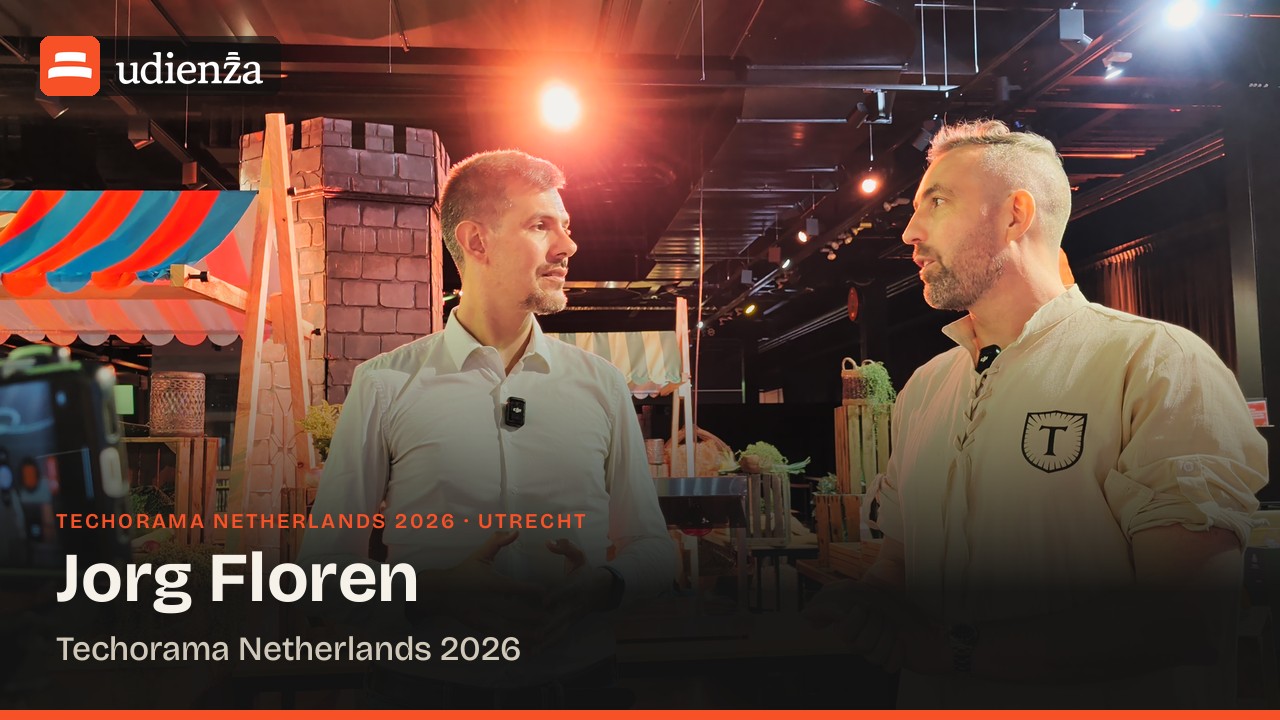
Jorg Floren of Techorama on its Netherlands edition in Utrecht: 1,300 people, 24 sponsors and partners, a Middle Ages theme, and where AI fits.
-
Linux Foundation: inside the stable kernel
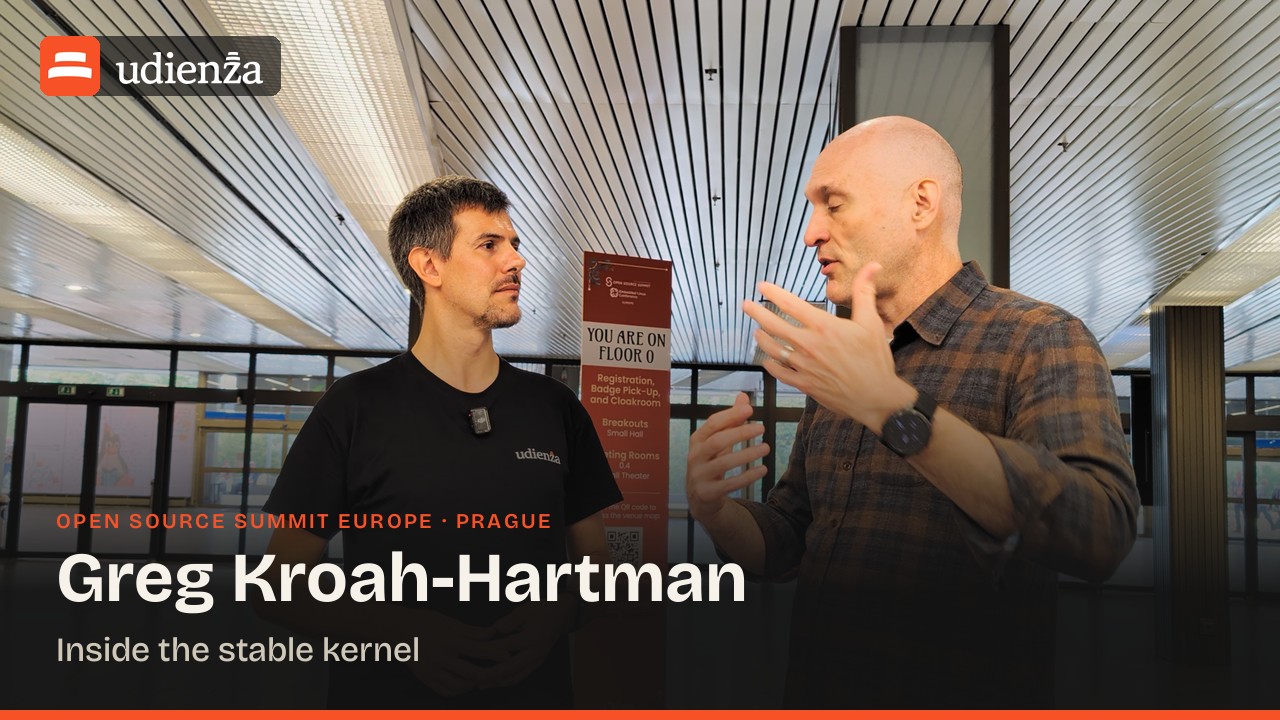
Greg Kroah-Hartman on AI tools that find kernel bugs, why a phone runs more of Linux than a server, the CRA, students, and 35 years of maintaining.
-
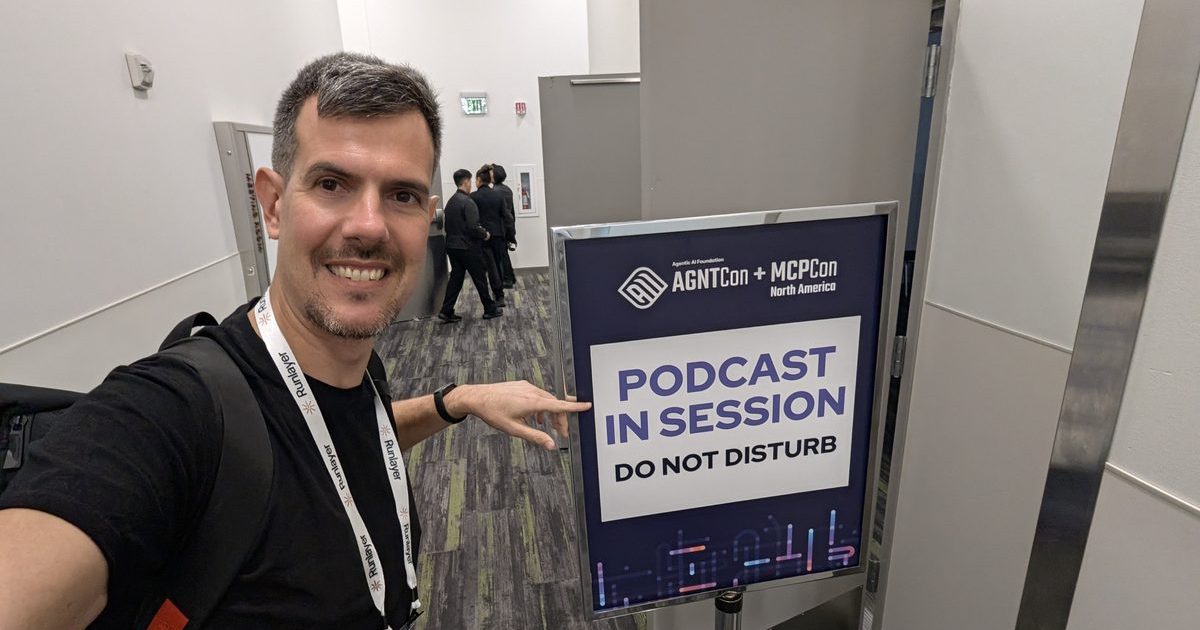
AGNTCon + MCPCon North America 2026: the recap
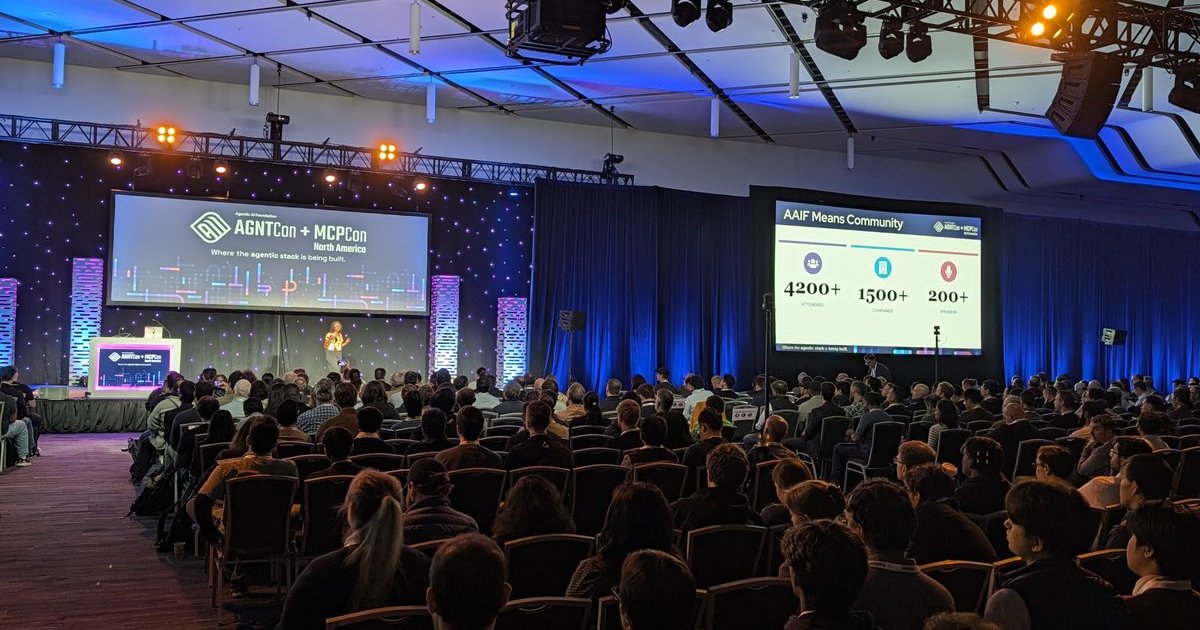
Two days in San Jose: four new AAIF projects, 2 billion MCP tool calls in Claude, MCP Tasks, the first AAIF awards and twenty-six interviews.
-
Agentic AI Foundation: why another standard
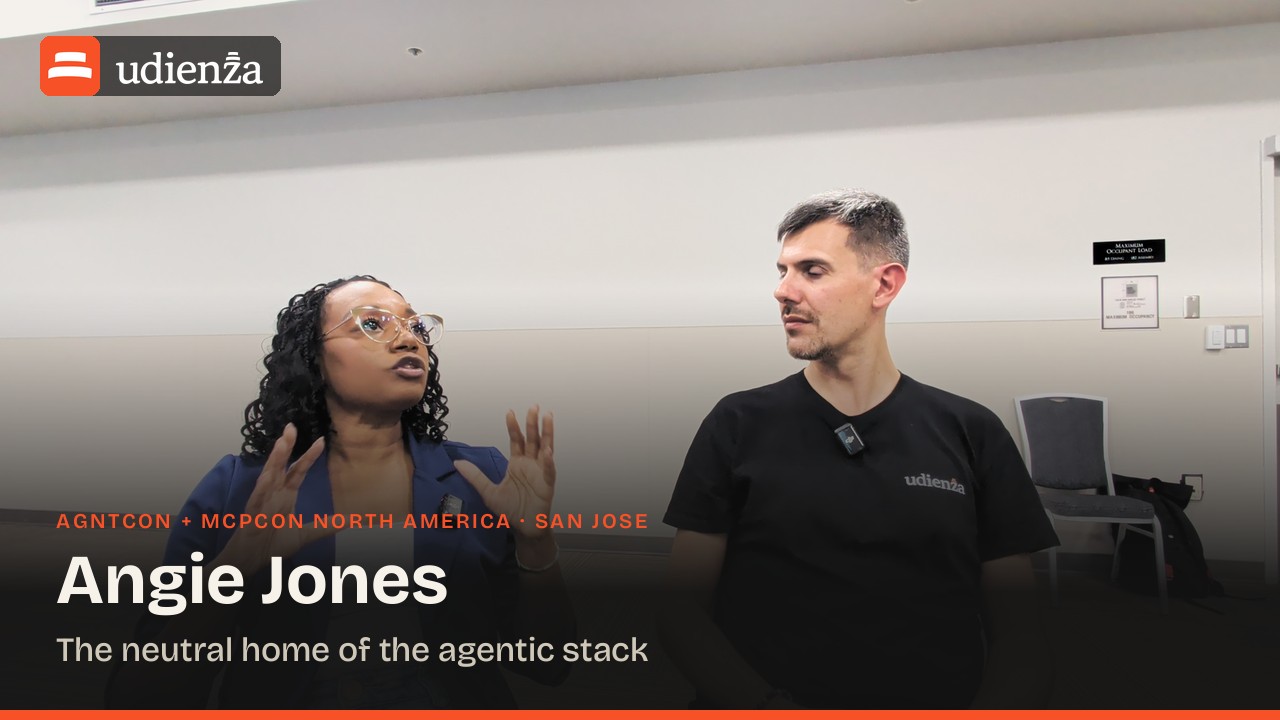
Angie Jones, VP of Developer Experience at the Agentic AI Foundation, on new standards for agents, testing what is non-deterministic, and how to get involved.
-
AgentCat: the silent failures of MCP servers
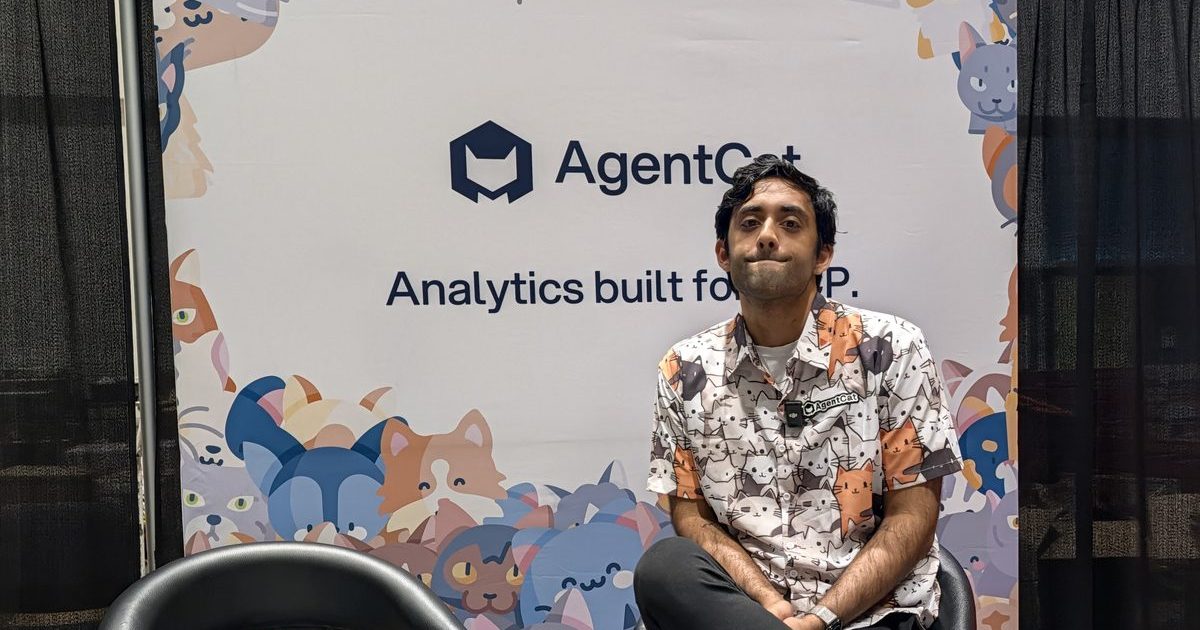
Kashish Hora of AgentCat on the silent failures that MCP servers' logs never show, a one-line SDK that lets agents report back, and the agent experience.
-
AGNTCon + MCPCon North America 2026: day two
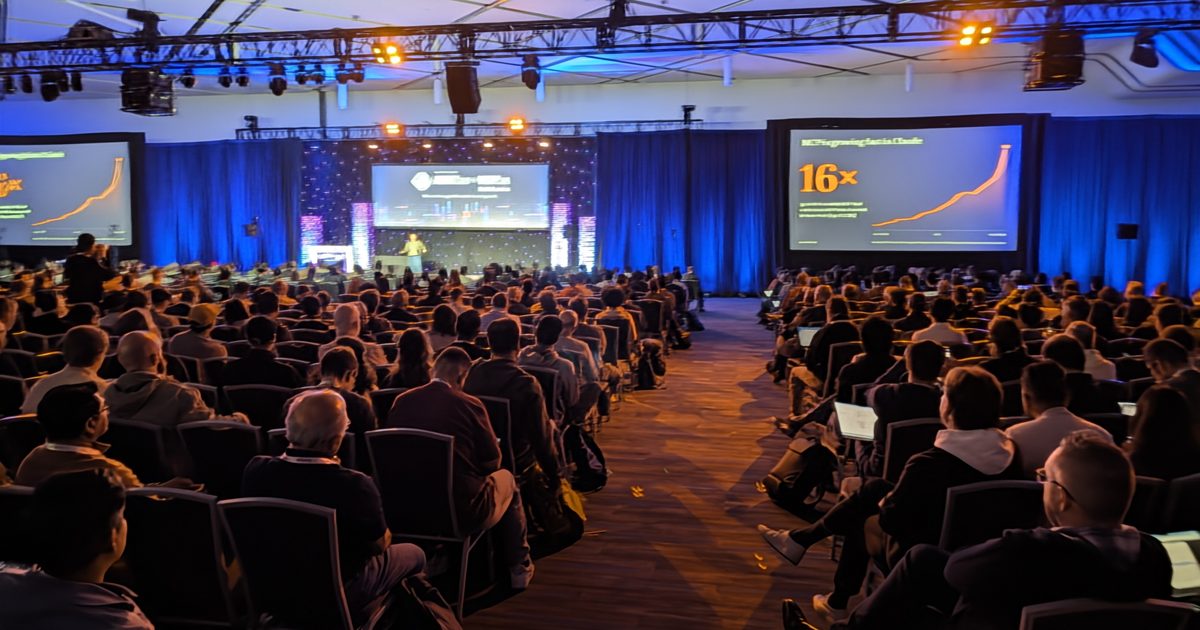
Day two in San Jose: the first AAIF Technical Excellence Awards, small specialist models, universal properties, MCP's 16x in Claude and fourteen interviews.
-
Airia: securing agents inside the enterprise
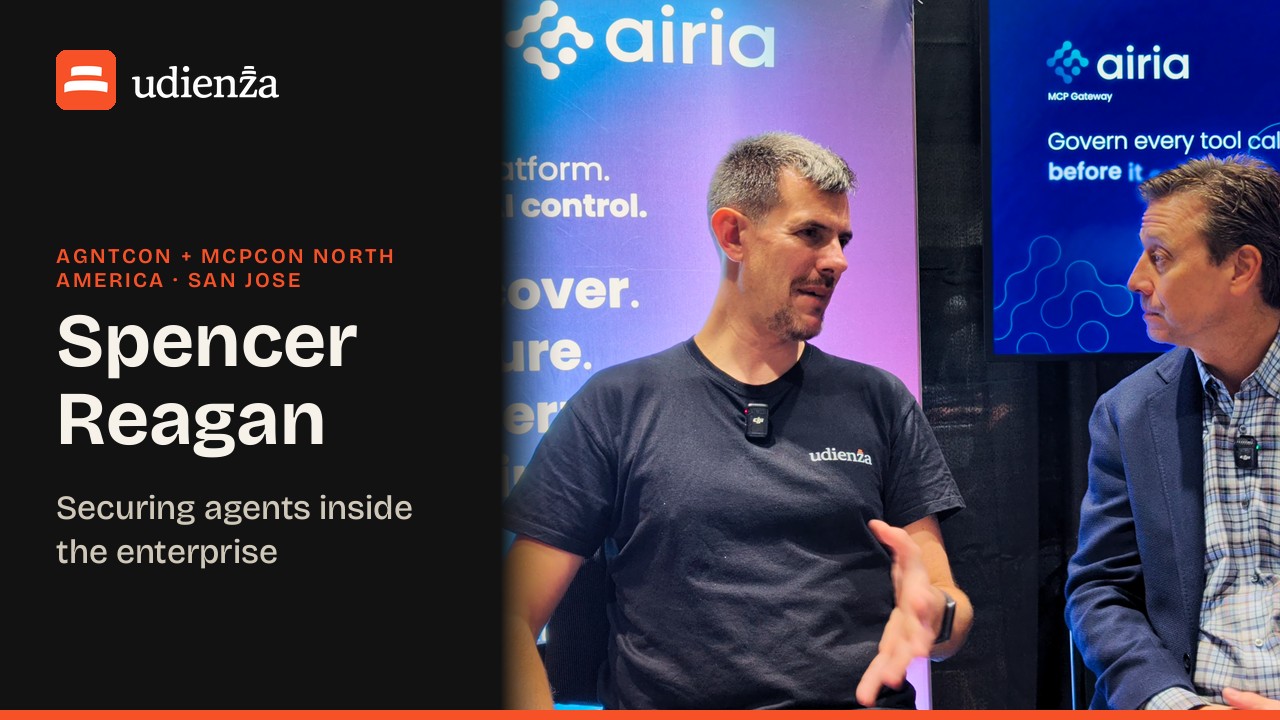
Spencer Reagan of Airia on securing agents inside the enterprise: discovering every agent, agent constraints, and an MCP gateway that IT runs in one place.
-
Akamai: agents in production, at the edge
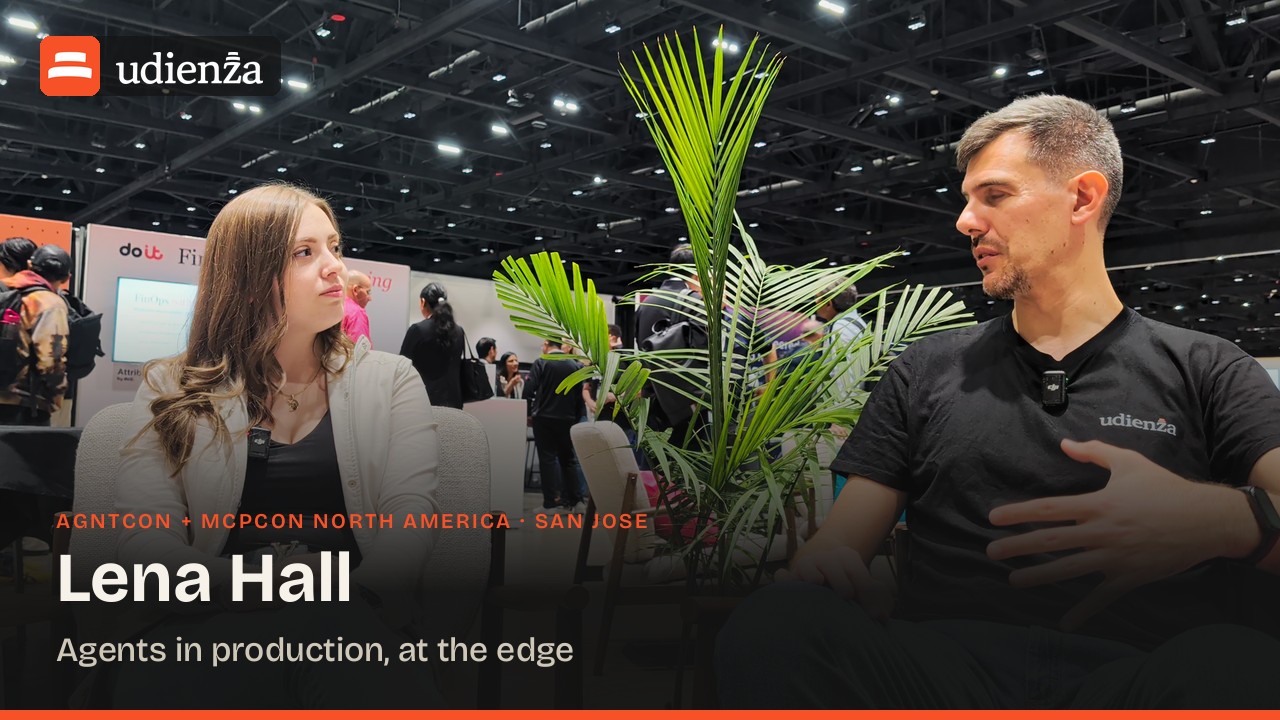
Lena Hall, who leads developer relations at Akamai Cloud, on taking agents from demo to production: latency, data locality, open-weight models, no cold starts.
-
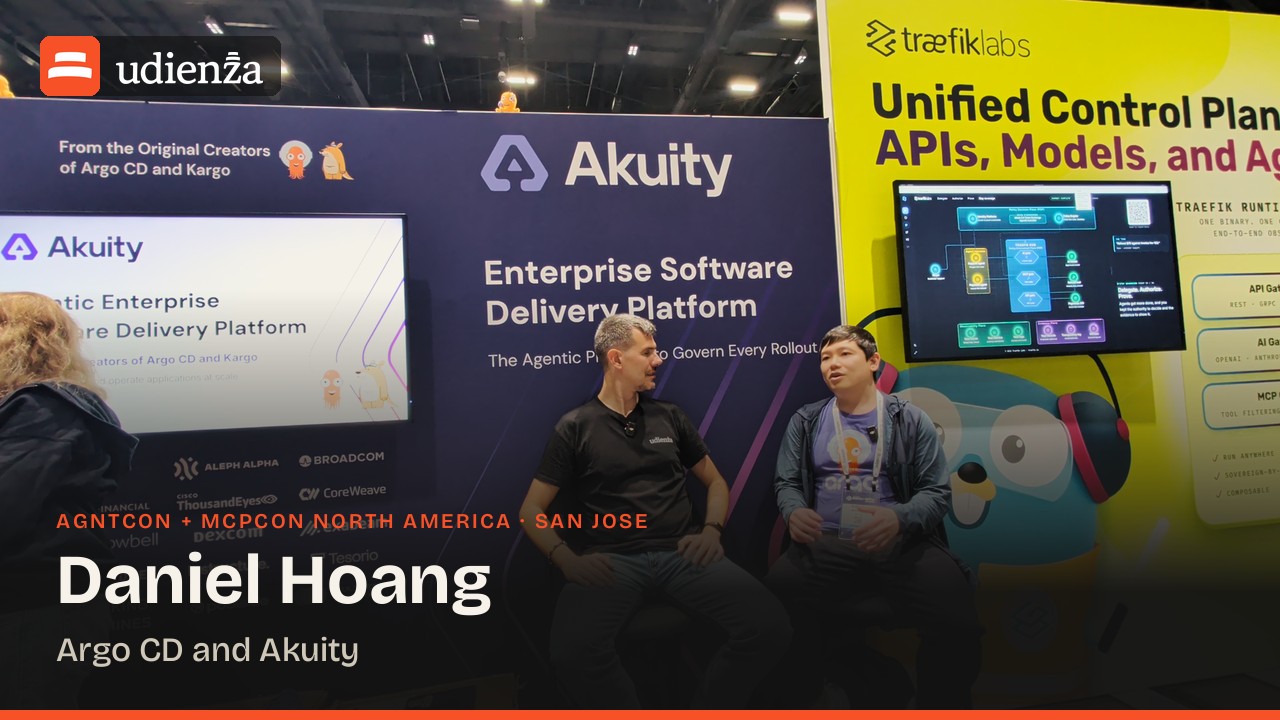
Akuity: Argo CD, Kargo and agents
Daniel Hoang of Akuity, the company of the team that built Argo CD, on Kargo, GitOps pipelines, and an MCP layer that lets an AI assistant build and debug them.
-
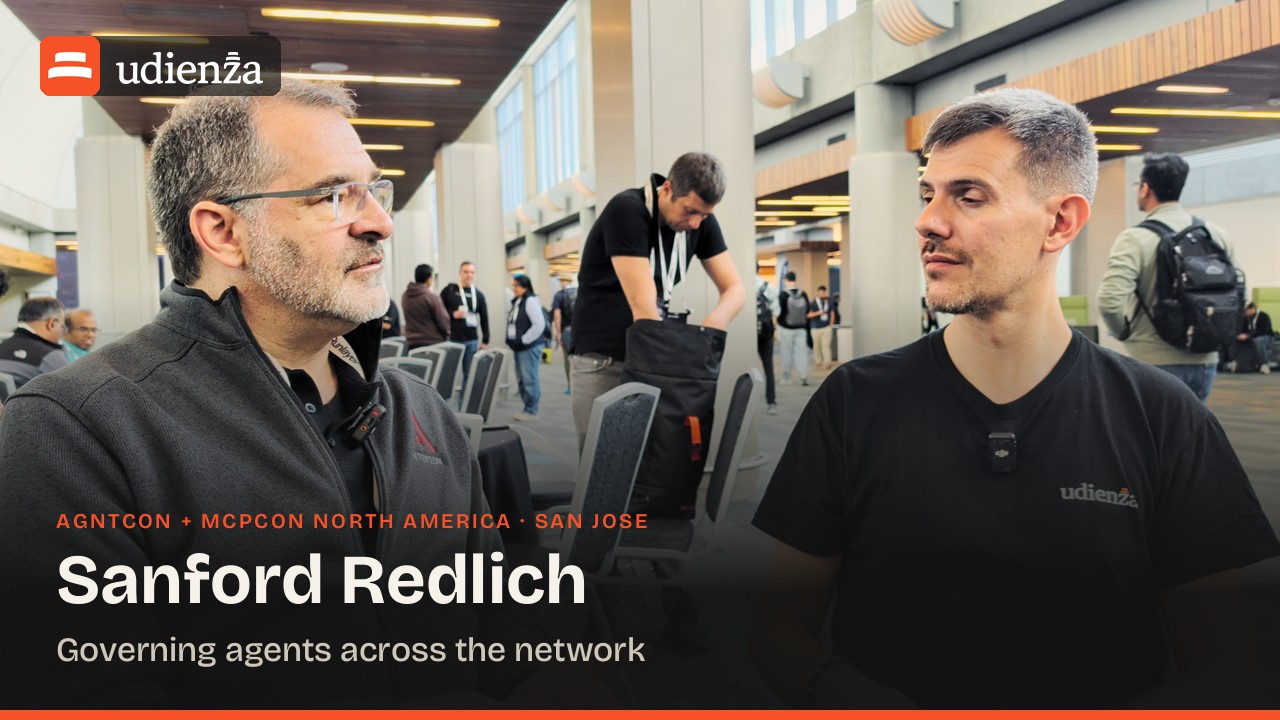
Alterion: governing agents across the network
Sanford Redlich, Head of Engineering at Alterion, on watching agents from the endpoint to the network, AI that classifies them, and controls a CISO can use.
-
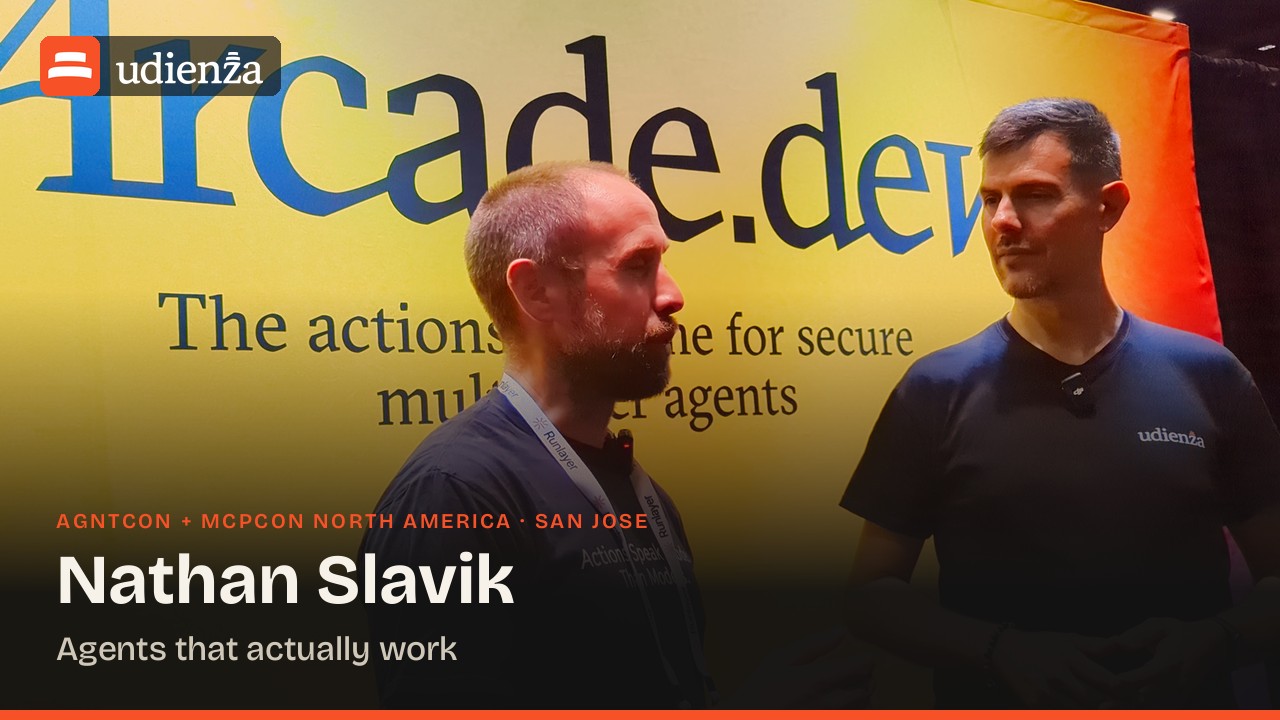
Arcade.dev: agents that act on your behalf
Nathan Slavik of Arcade.dev on authorization, enforcement and governance: a runtime that lets an agent act as you in Salesforce, Gmail or Workday, and no more.
-
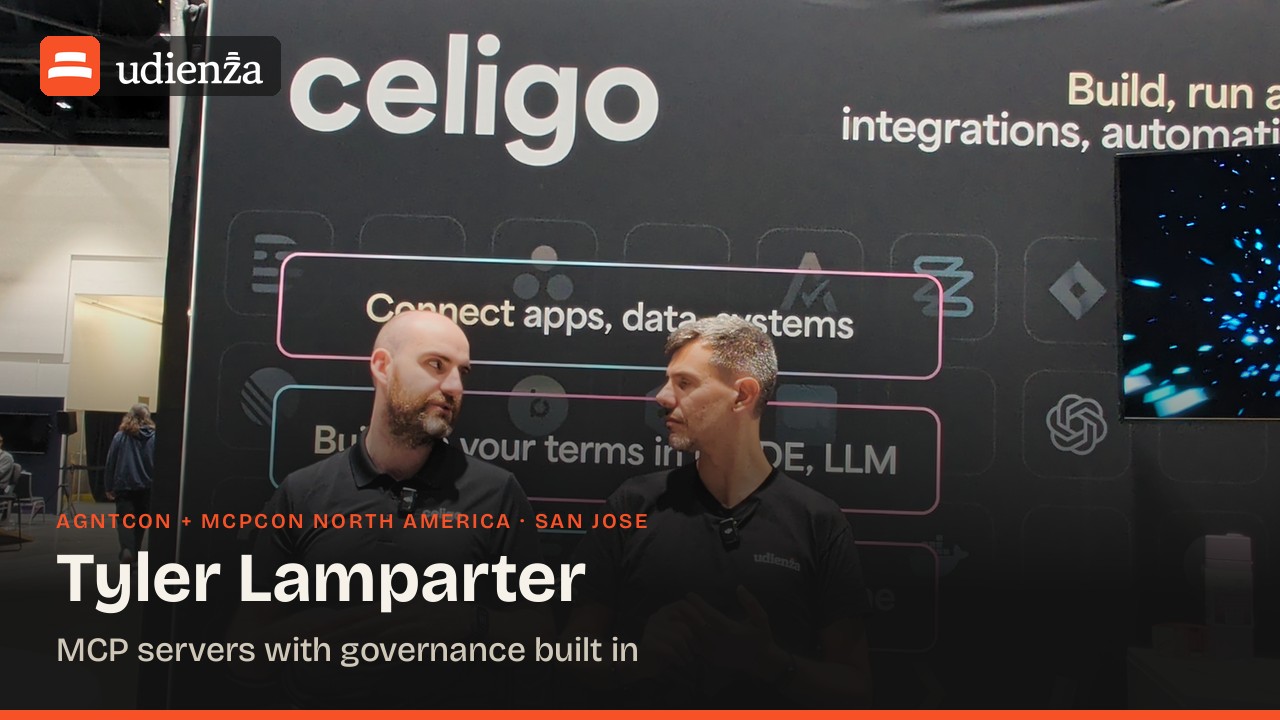
Celigo: MCP servers with governance built in
Tyler Lamparter, product manager at Celigo, on governed MCP servers for back-end systems, access down to single tools, and earned autonomy in finance.
-
Diagrid: durable execution for business agents
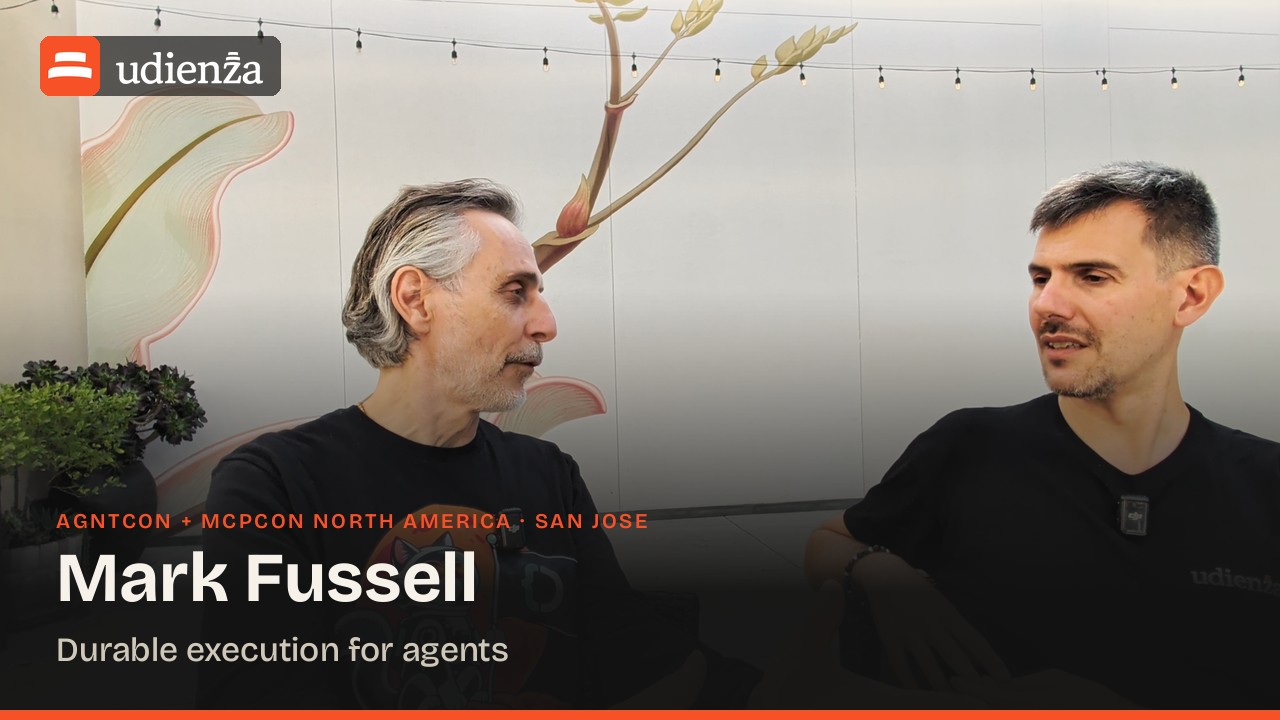
Mark Fussell, Chief Product Officer and co-founder of Diagrid, on agents that recover their state after a crash, signed agent steps, and running at the edge.
-
JetBrains: the human part of AI development
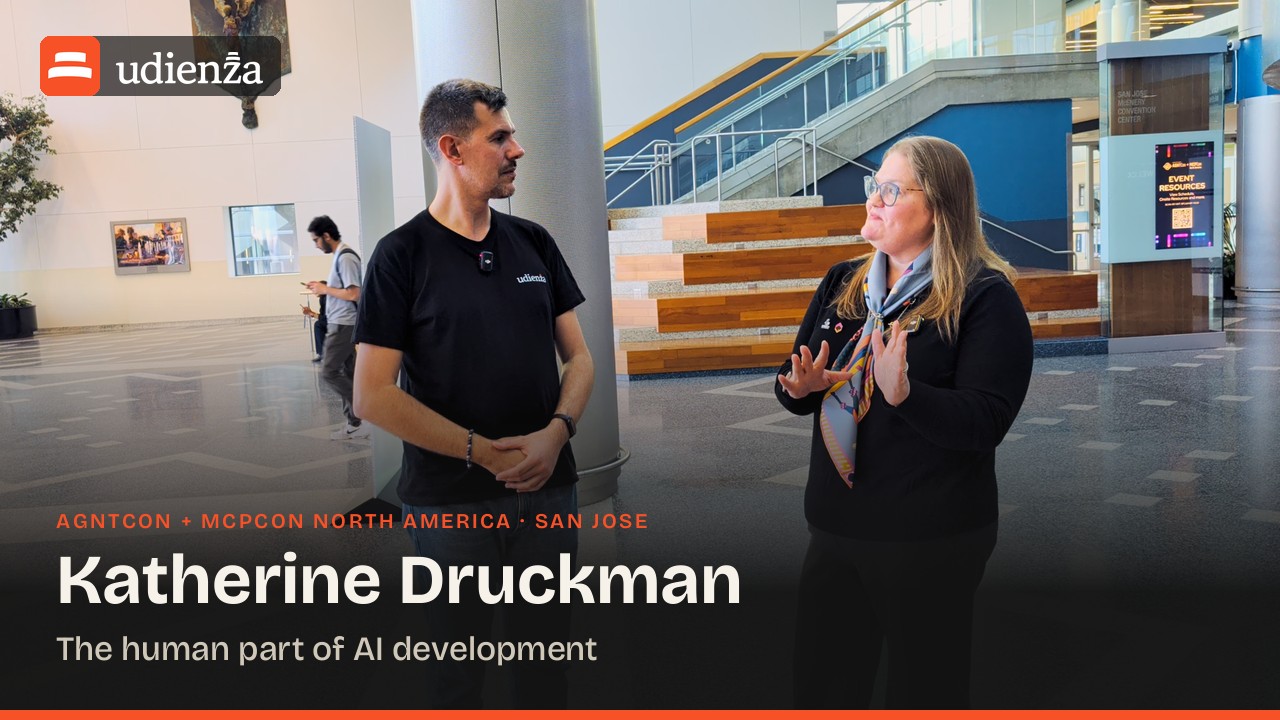
Katherine Druckman of JetBrains on why reviewing, understanding and trusting AI-generated code still costs what it did, and the human in the loop as a person.
-
Mezmo AURA: an open source SRE agent
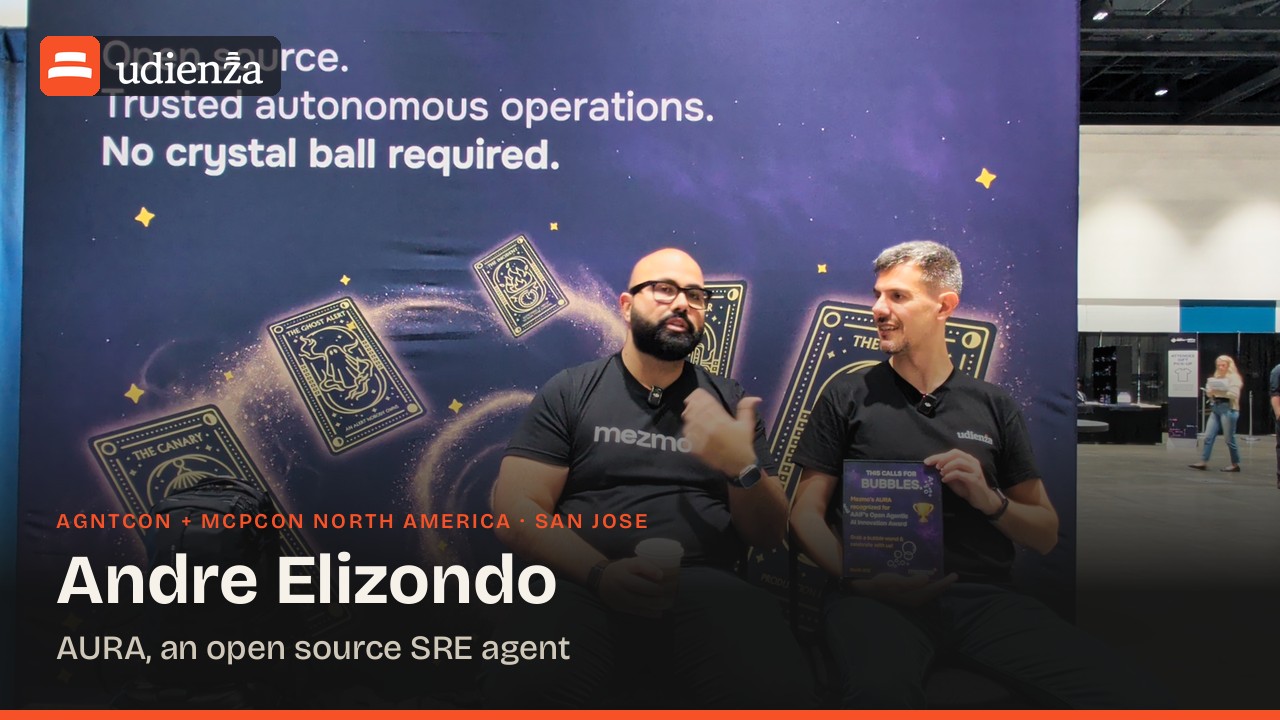
Andre Elizondo, Head of Product at Mezmo, on AURA, its open source SRE agent: declarative agents, tracing from day one and a strict human in the loop.
-
MobilityeCommerce: from startup to enterprise
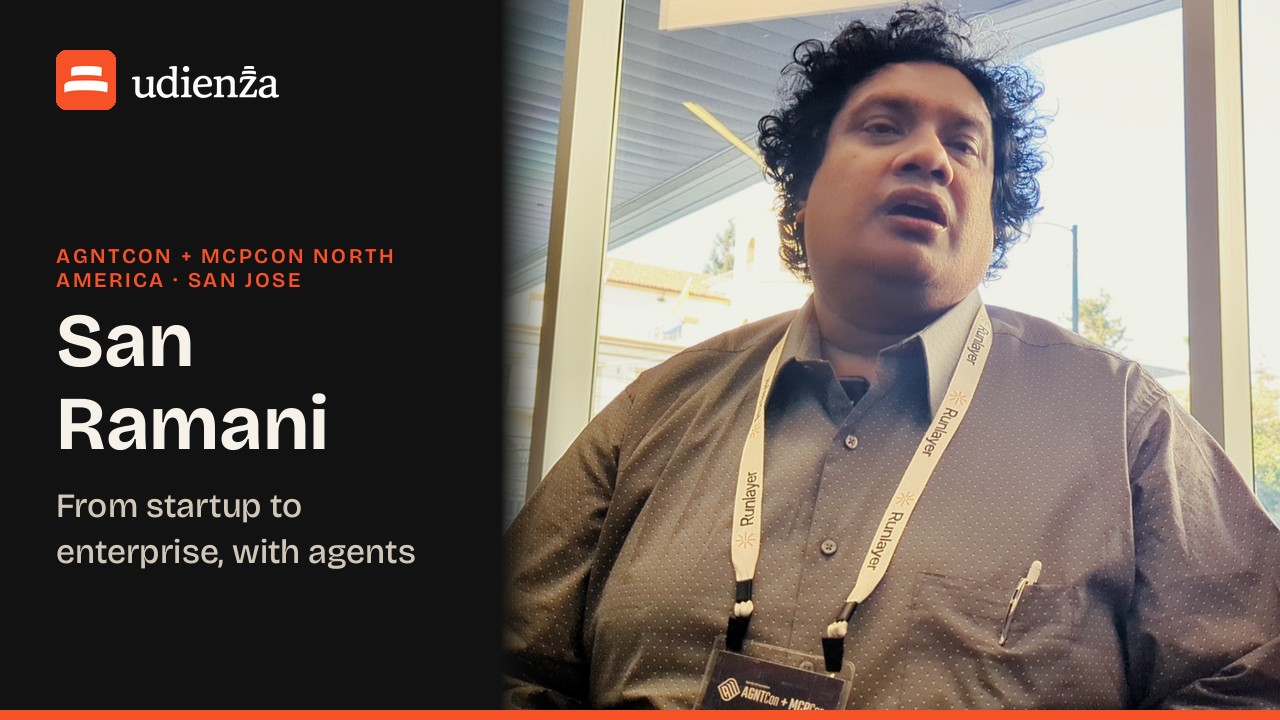
San Ramani of MobilityeCommerce on helping AI startups reach enterprise customers and investors, local AI infrastructure, and marketing run autonomously.
-
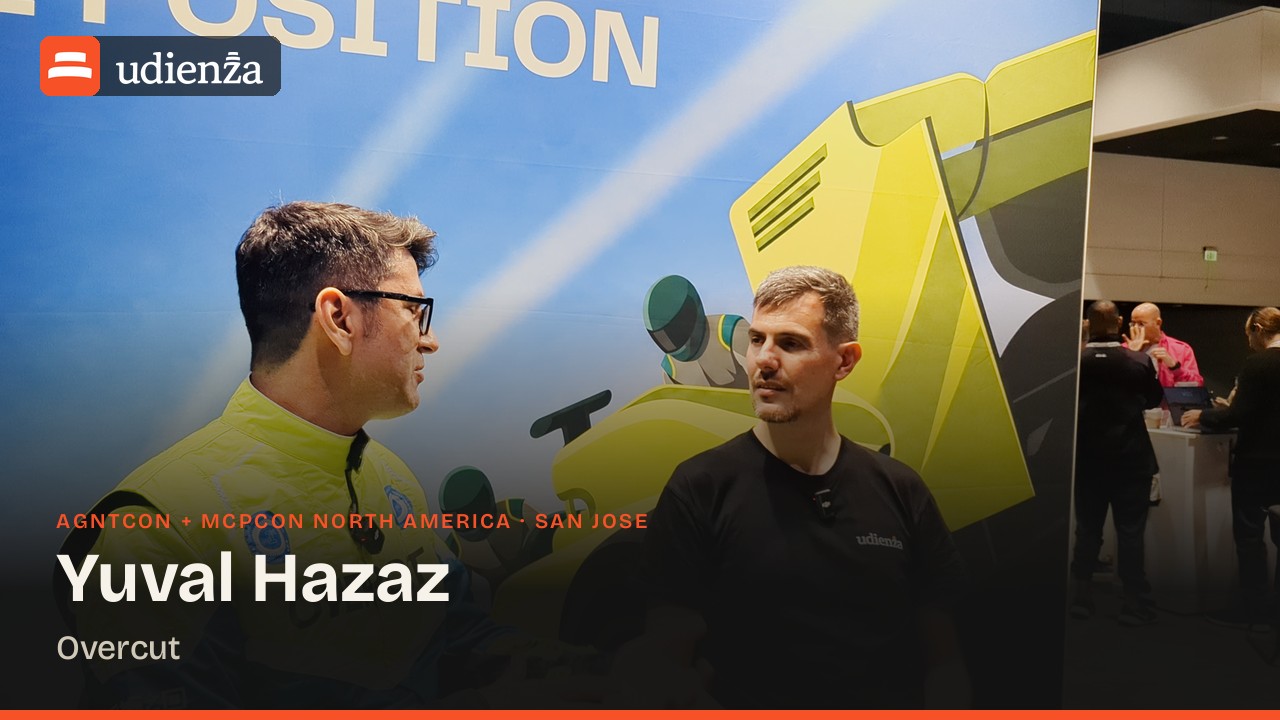
Overcut: a software factory run by agents
Yuval Hazaz, co-founder and CEO of Overcut, on running autonomous agents across the software lifecycle, and why the dark factory will come gradually.
-
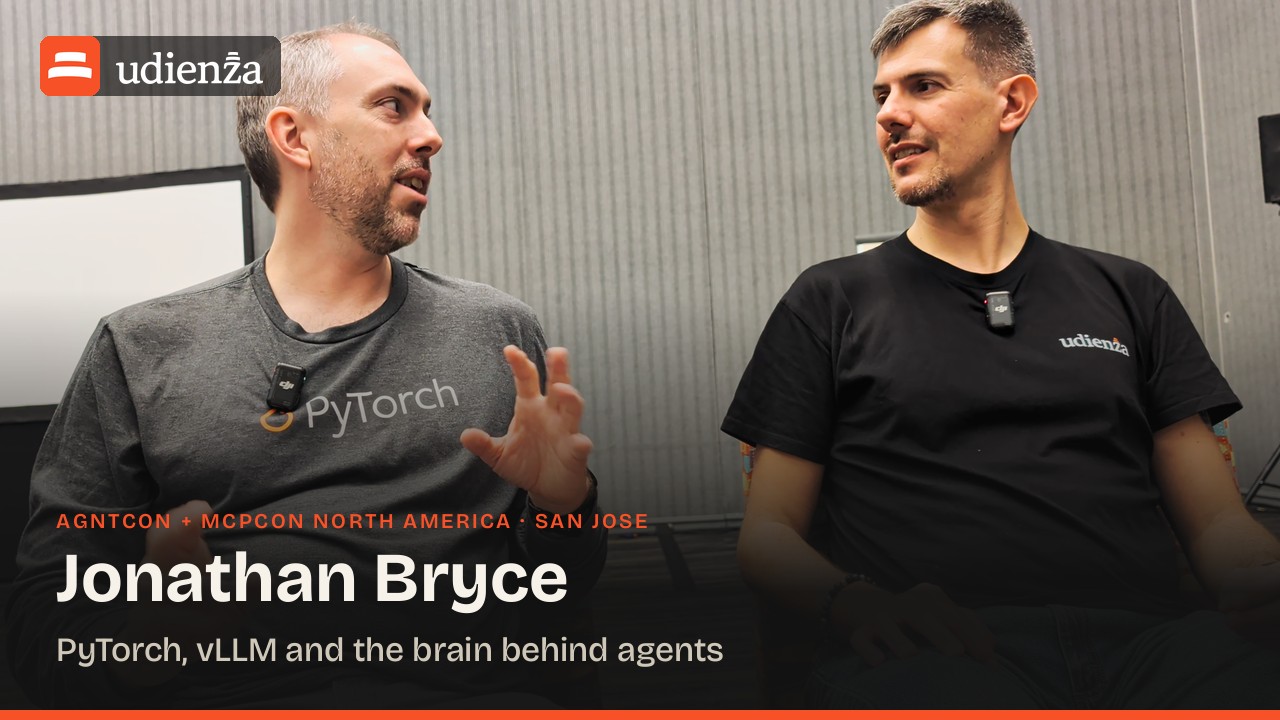
PyTorch Foundation: the brain behind agents
Jonathan Bryce of the Linux Foundation on PyTorch and vLLM as the brain behind agents, inference on Kubernetes, and why nothing in AI is optimised too early.
-
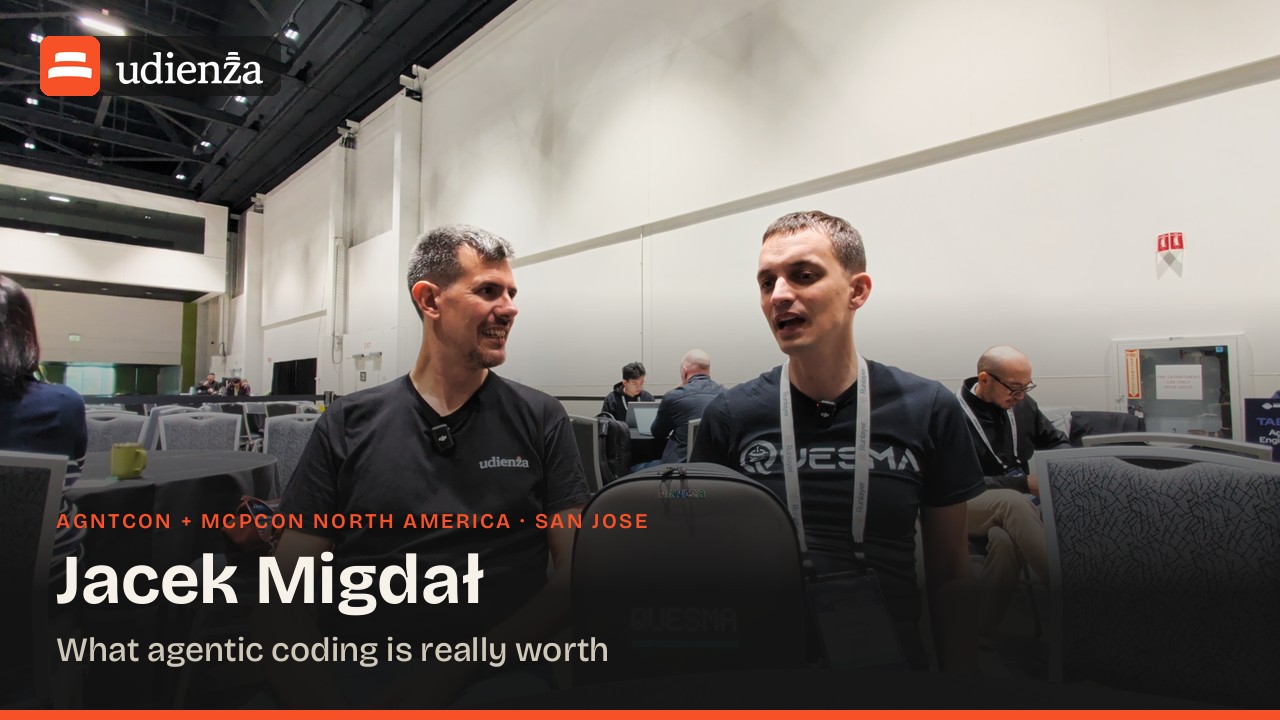
Quesma: what agentic coding is really worth
Jacek Migdał, founder of Quesma, on collecting agent session logs to coach prompting, tune the setup and attribute AI spend, and why savings get reinvested.
-
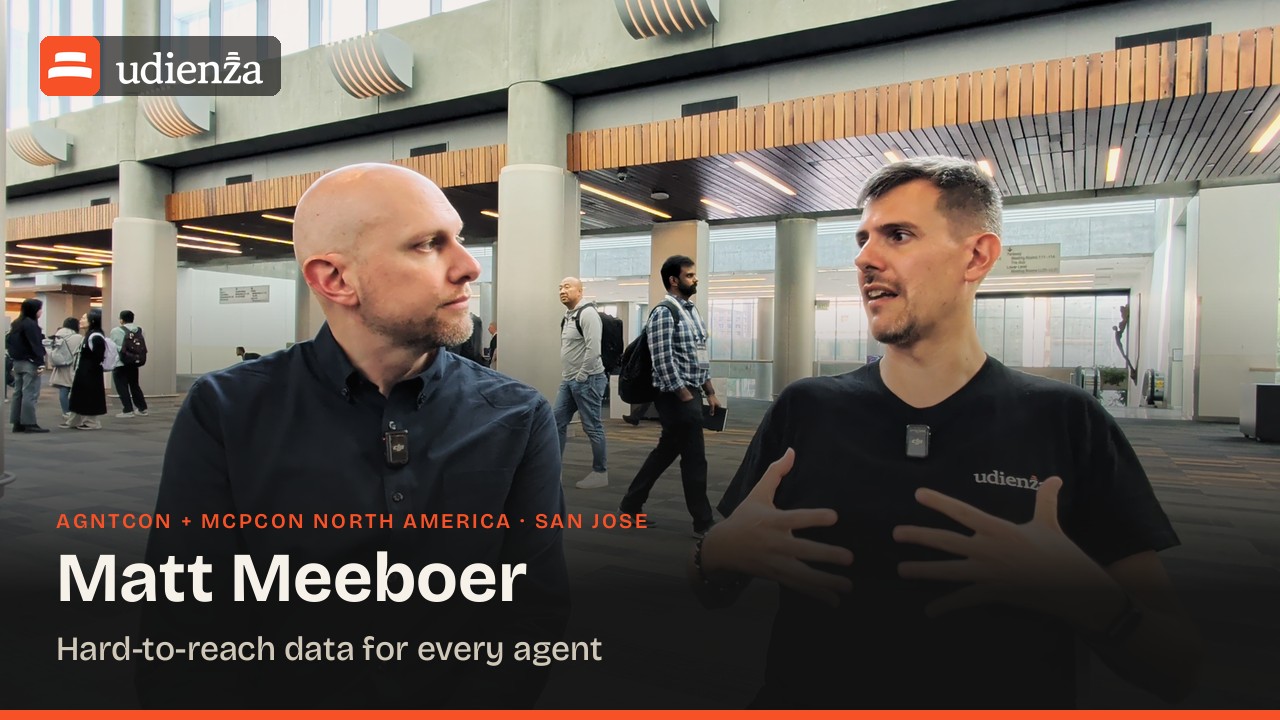
Safe Software: hard-to-reach data for agents
Matt Meeboer of Safe Software on FME Flow's no-code MCP servers, which give agents hard-to-reach data such as 3D building models and live sensor feeds.
-
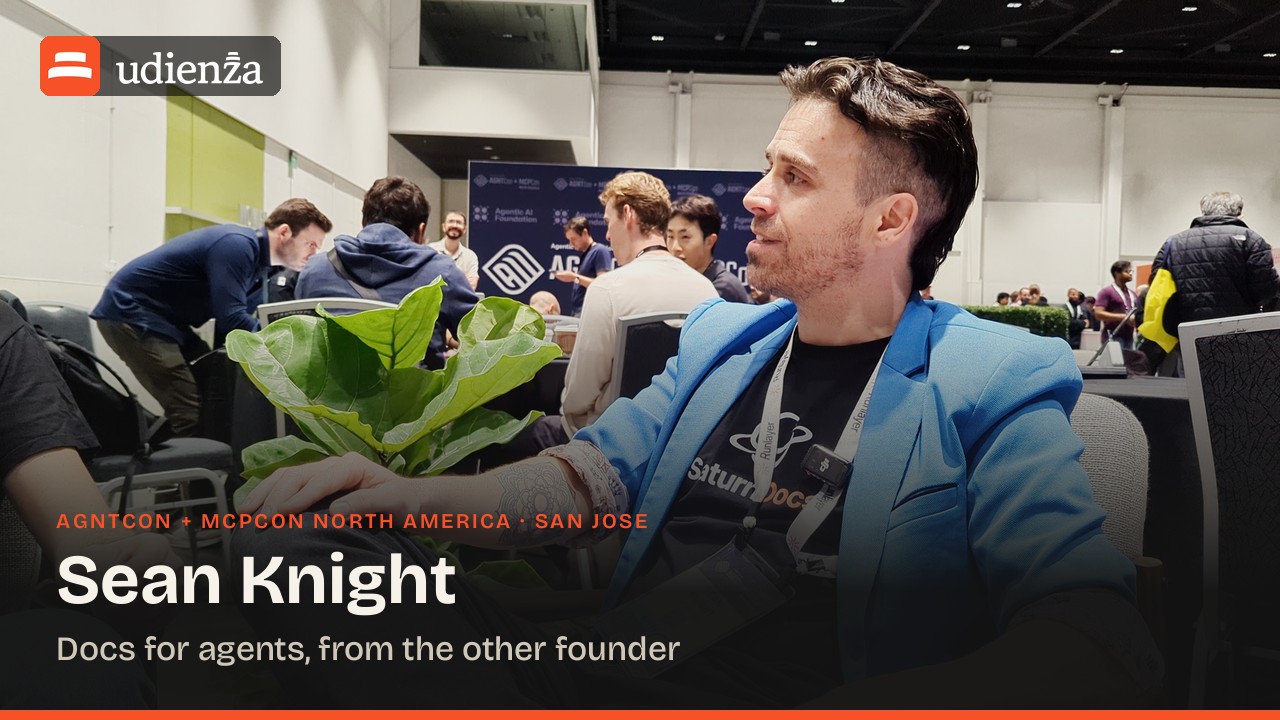
SaturnDocs: docs that agents read and write
Sean Knight, co-founder of SaturnDocs, on an audit of every vendor's docs at AGNTCon, WebMCP, and agents that migrate docs and draft pages from Slack.
-
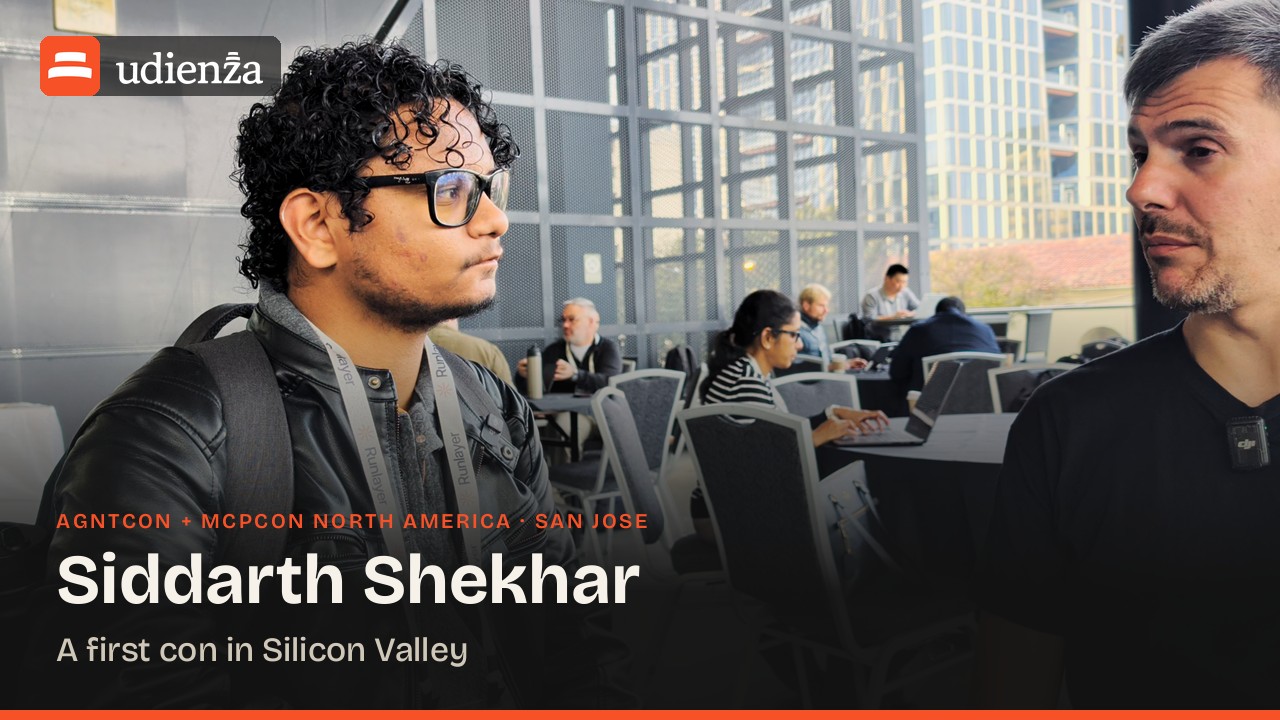
A student's first conference in Silicon Valley
Siddarth Shekhar, a second-year data science student at San Jose State University, on his first conference and why he leans towards data engineering.
-
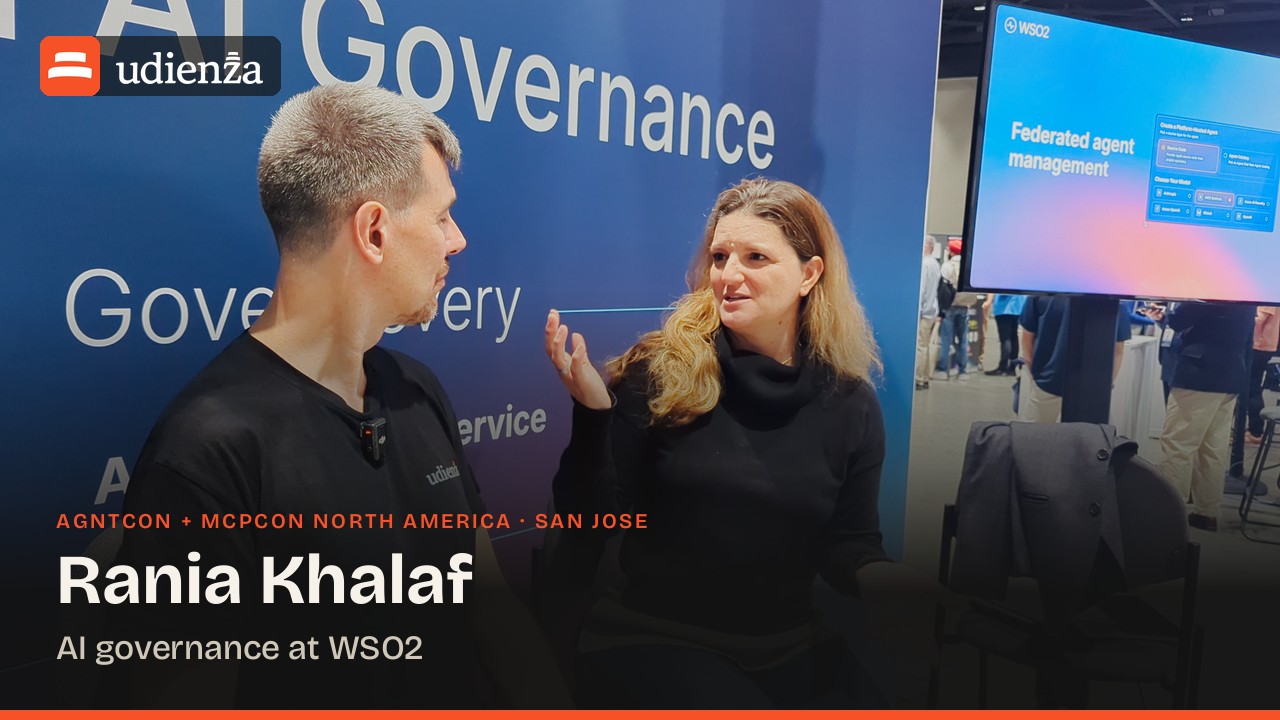
WSO2 Agent Manager: a halo around the agent
Rania Khalaf, Chief AI Officer at WSO2, on Agent Manager: identity, AI gateways, observability and evals around an agent, and why controls let teams go faster.
-
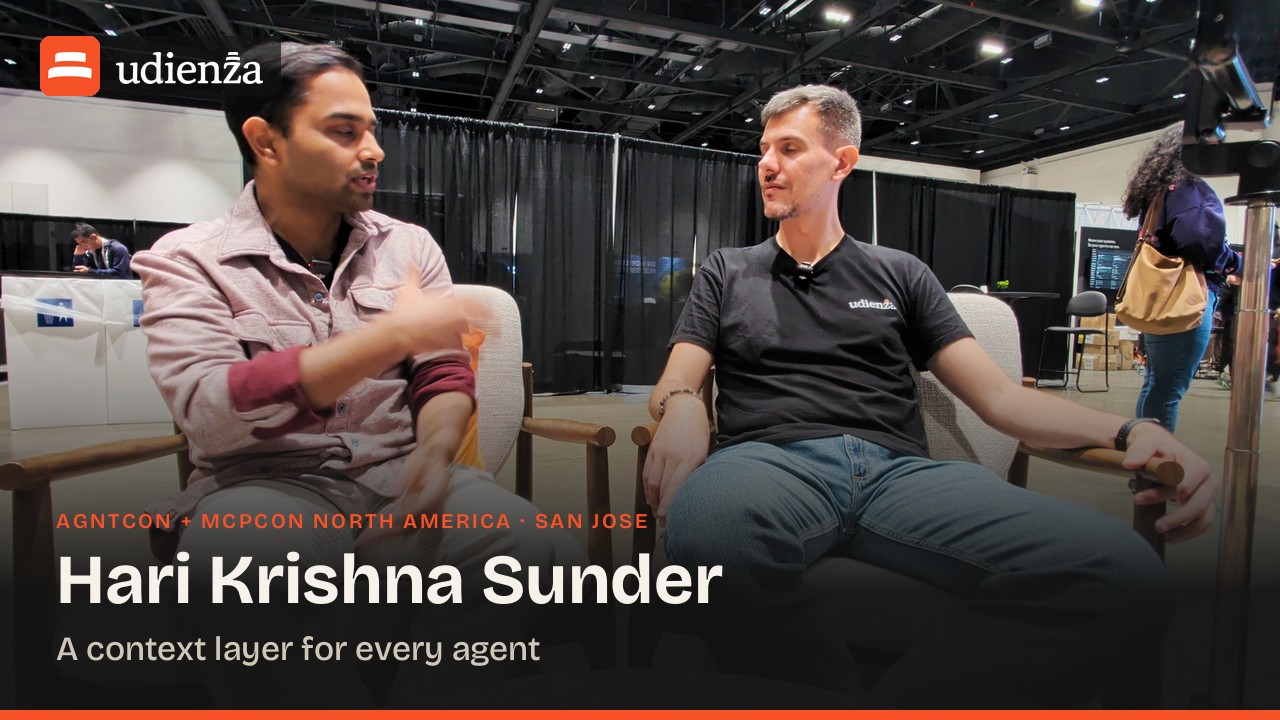
YugabyteDB Meko: a context layer for agents
Hari Krishna Sunder of YugabyteDB on Meko, a context layer of memory and knowledge that agents and teams share over MCP, in the cloud or air-gapped.
-
AGNTCon + MCPCon North America 2026: day one
Day one in San Jose, hour by hour: four new AAIF projects, 305 members, MCP Tasks in Claude Code, Skills over MCP, 12 interviews and a maintainer roundtable.
-
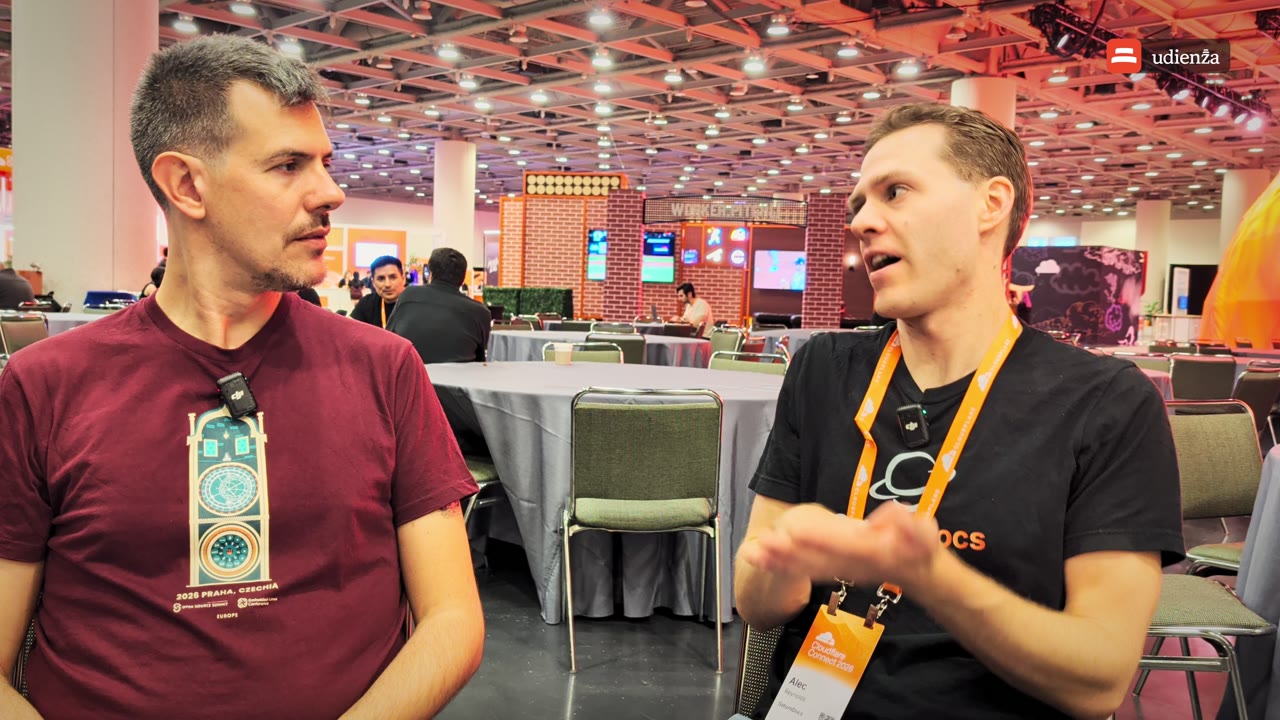
SaturnDocs: documentation written for agents
Alec Reynolds, co-founder of SaturnDocs, on why most readers of technical documentation are now agents, and what docs need so that agents can use them.
-
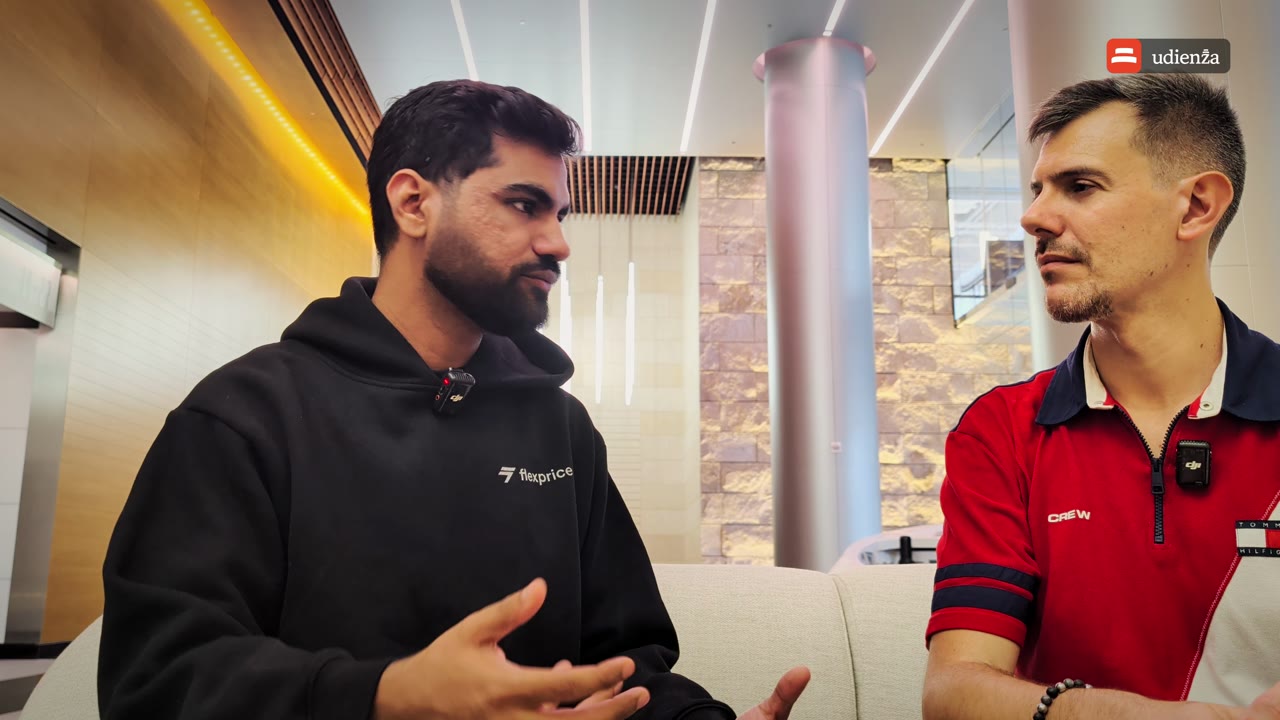
Flexprice: open source billing for AI agents
Nikhil Mishra, co-founder and CTO of Flexprice, on billing AI agents from the traces they already leave, and on agents that run accounts receivable.
-
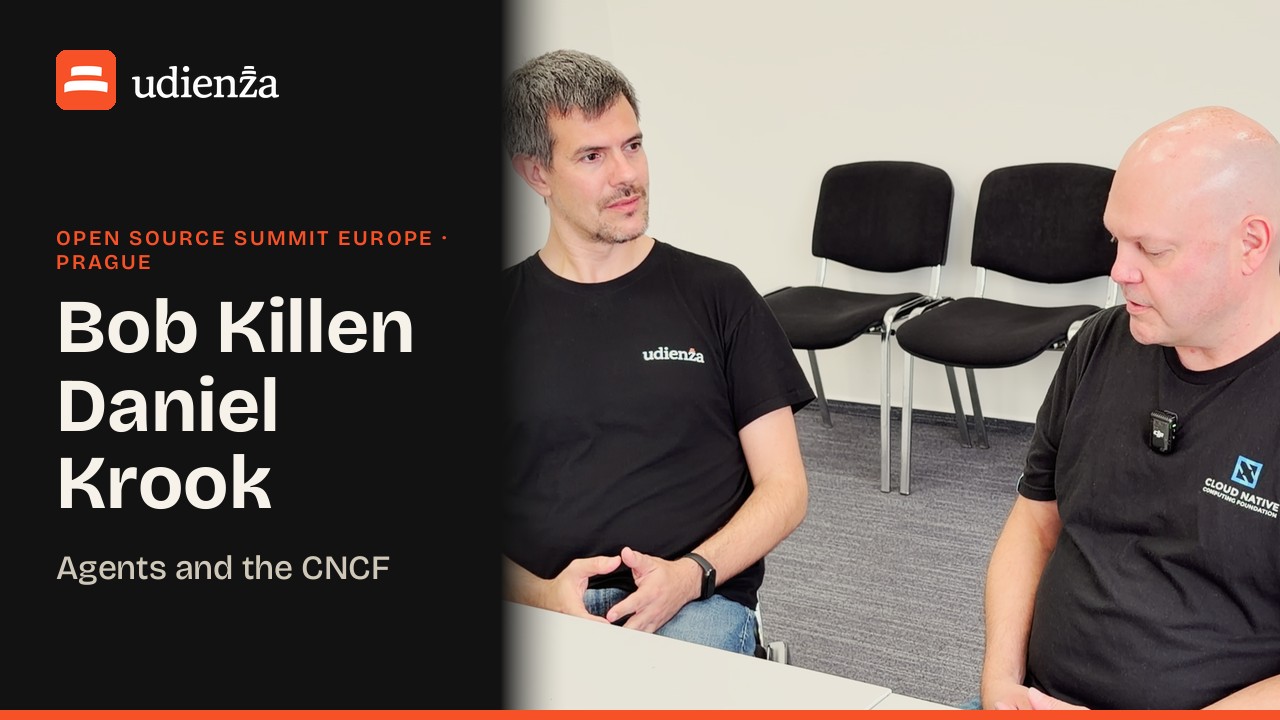
CNCF: who judges a project, and what agents ask
Bob Killen and Daniel Krook of the CNCF on how the Technical Oversight Committee moves projects up, and on the load AI agents put on Kubernetes.
-
Udienza in The New Stack
The New Stack cites Udienza and our CNCF conversation with Bob Killen and Daniel Krook: one human request can set off about 20 agent requests.
-
DevWorld 2026: when the buyer is an agent
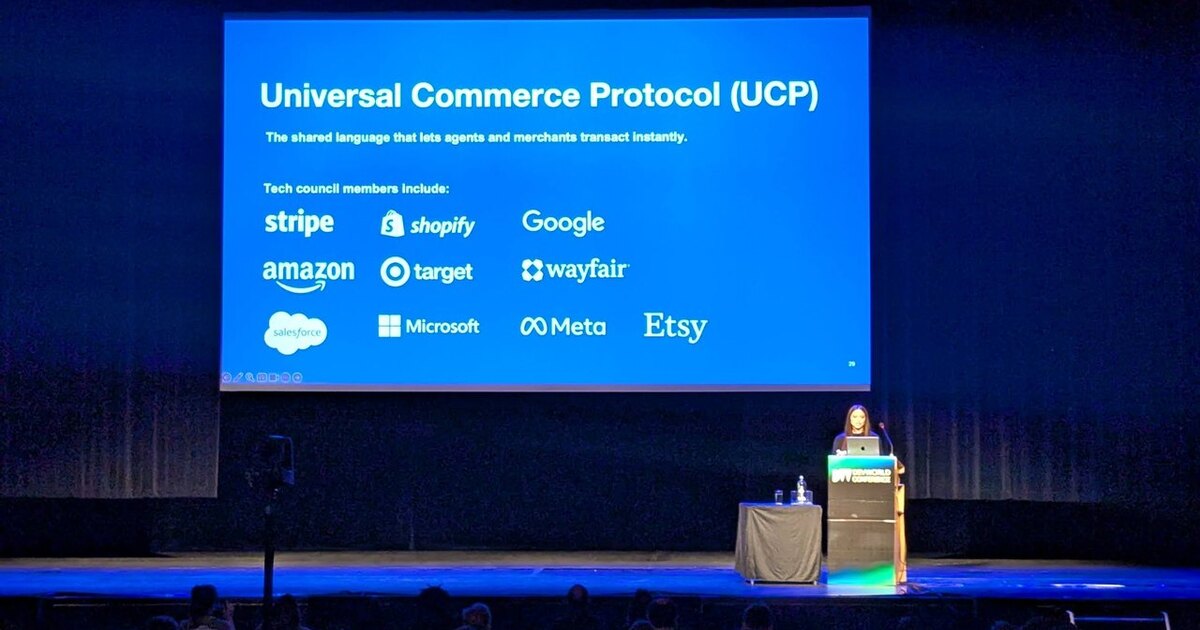
Stripe told an Amsterdam theatre their checkout flow was already obsolete, then showed the protocol meant to replace it. Notes from two days at DevWorld.
-
IBC 2026: a cloud-native walk through broadcast
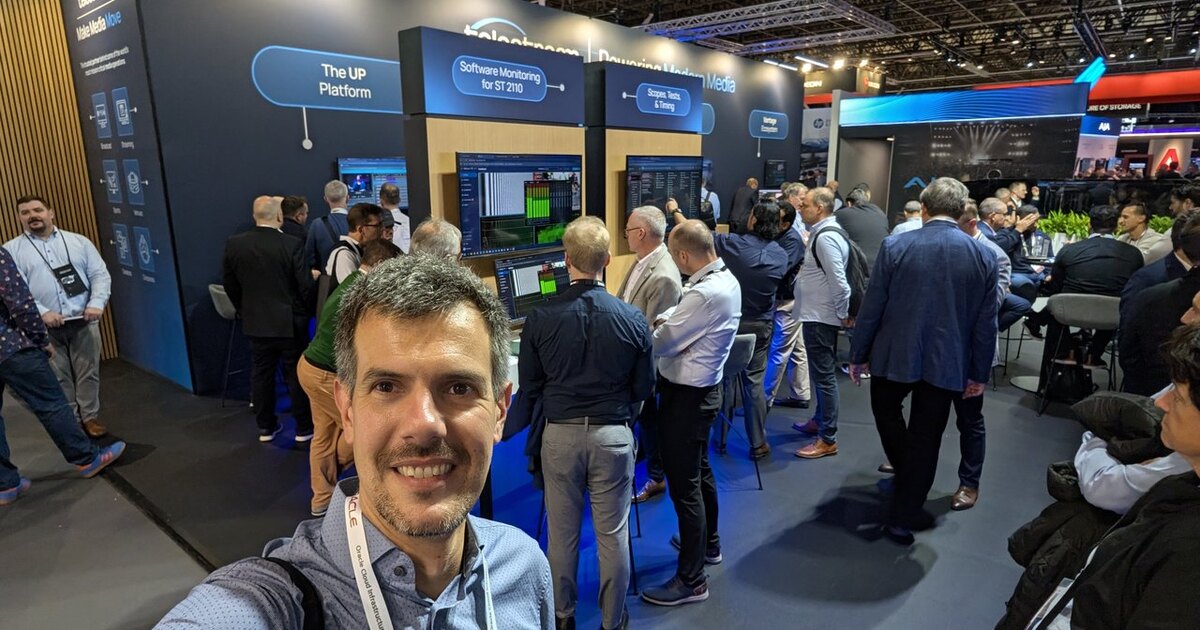
Fourteen halls of media technology at the RAI, seen by someone who usually covers Kubernetes: open standards, sovereignty, provenance and a lot of AI.
-
Nordic APIs Summit 2026: APIs for the agentic era
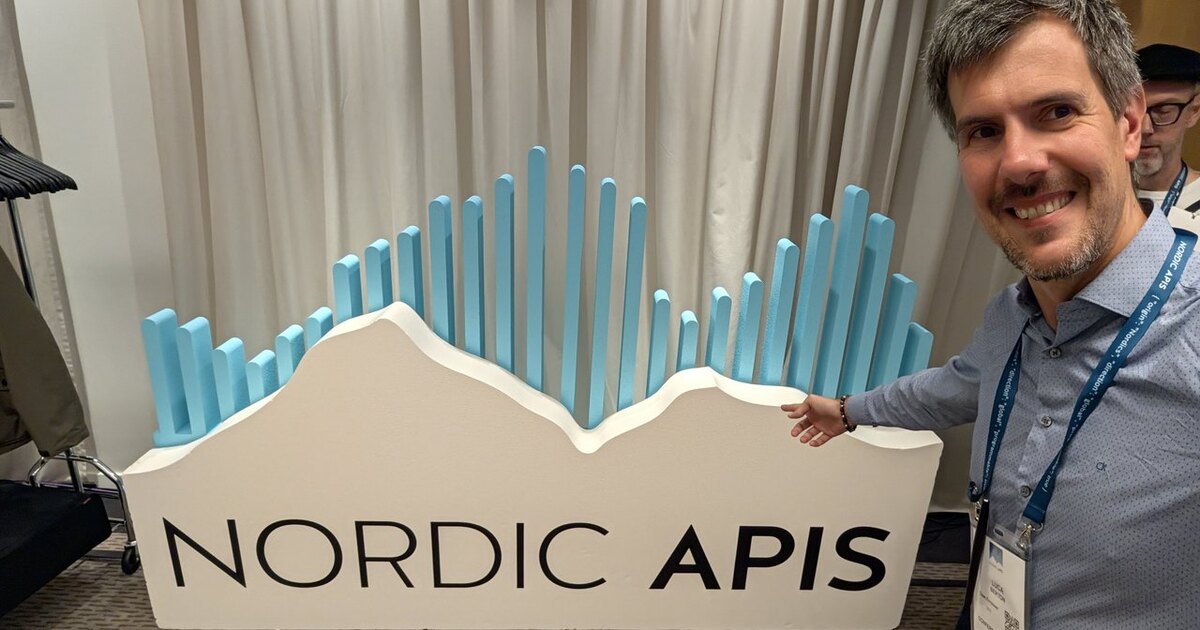
Three keynotes in Stockholm said the same thing: the next caller of your API is not a human. What the show saw at Nordic APIs Summit 2026.
-
PlatformCon London 2026: the harness around AI
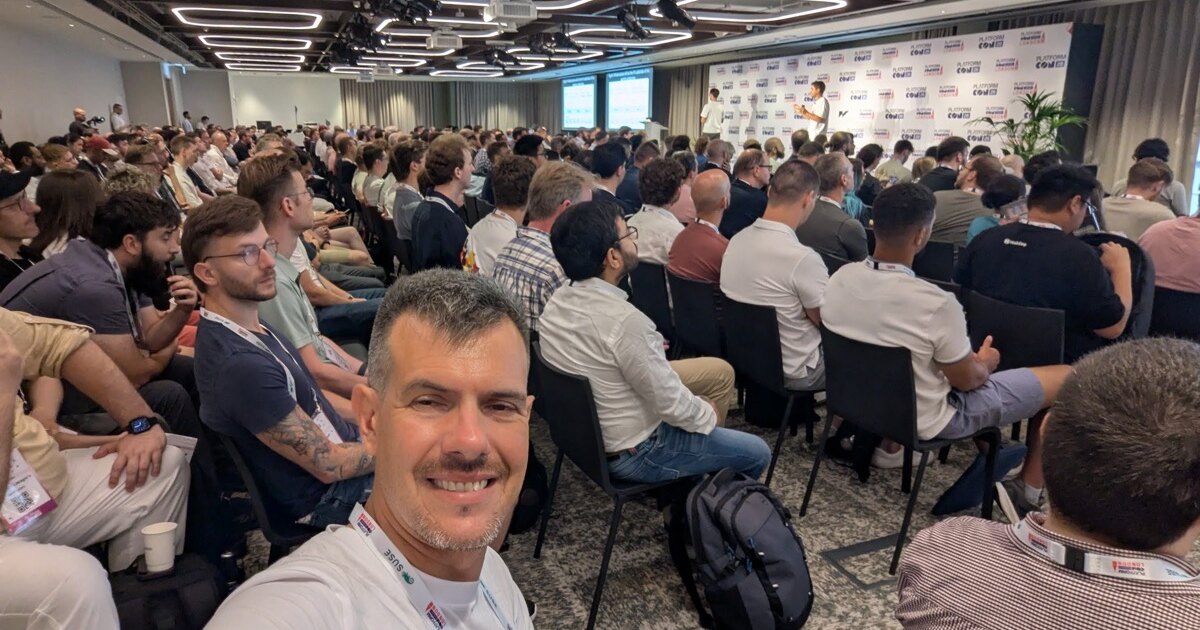
A packed room in London arguing one point from every angle: the age of AI runs on platform engineering, and the harness matters more than the model.
-
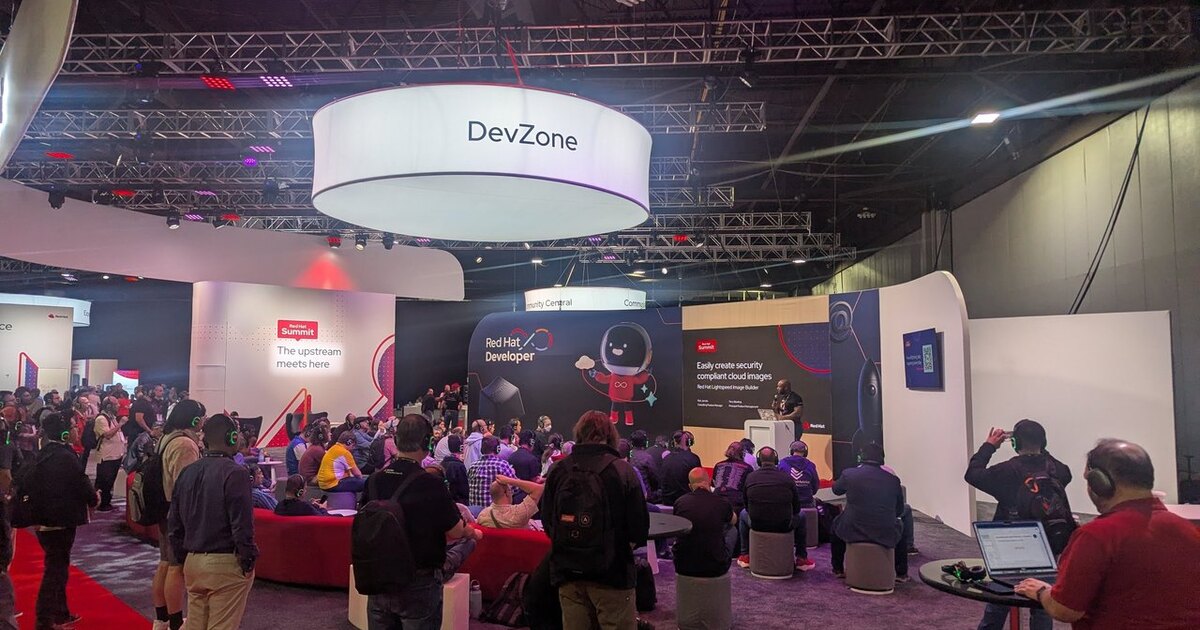
Red Hat Summit 2026: the stage and the floor
Atlanta in May: agents arriving inside the platform, zero trust workload identity, and practitioners on the floor describing a much older set of problems.
-
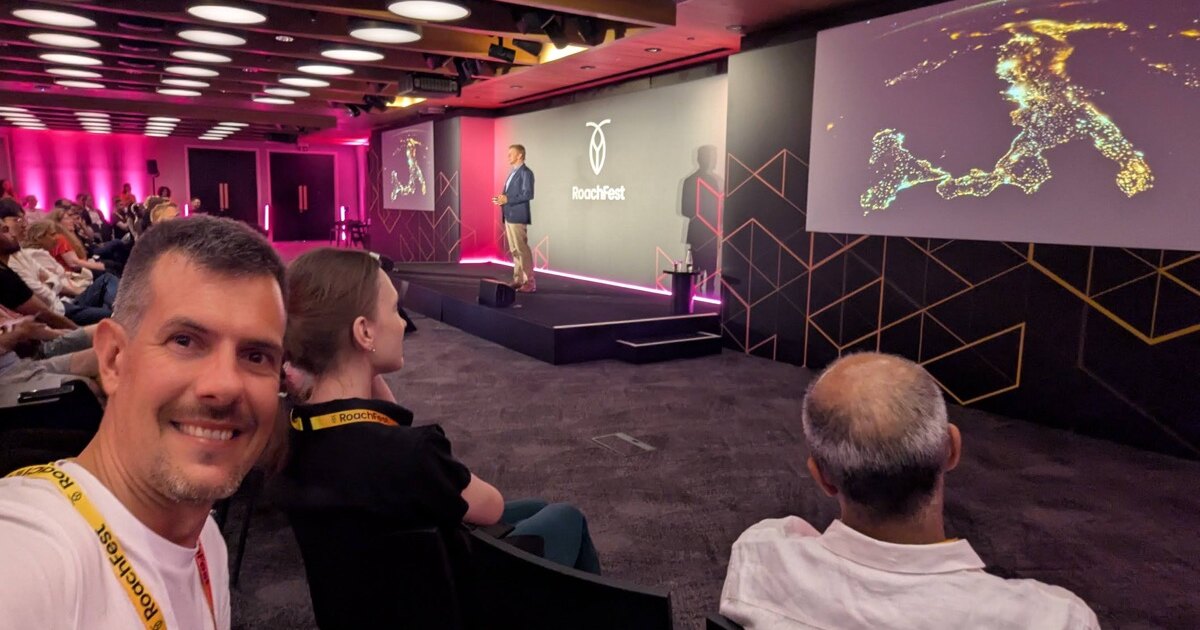
RoachFest London 2026: the database grows agents
An astronaut on resilience, a payments platform surviving a cloud outage, and a database vendor drawing an agent layer on top of its own architecture.
-
Open Source Summit Europe 2026: who we met
The Udienza podcast at Open Source Summit Europe 2026 in Prague: the guests recorded, the people met between takes, and what three days on the floor taught.
-
AGNTCon + MCPCon Europe 2026: who we met
The Udienza podcast at AGNTCon + MCPCon Europe 2026: the conversations on running agents in production, what the stage announced, and where to read more.
-
FOSDEM 2026 in Brussels: where the show began
FOSDEM 2026, where the Udienza podcast filmed its first episode with Monty Widenius: what he said, what else the host saw that weekend, and where to read more.
-
KubeCon Europe 2026 Amsterdam: four conversations
Udienza at KubeCon Europe 2026, Amsterdam: Kat Cosgrove, Sven Mößbauer, Luca Galante and Guido Laout on security, observability, platforms and a European cloud.
-
KubeCon Japan 2026: the week in Yokohama
The Udienza podcast at KubeCon Japan 2026: ten minutes with CNCF CTO Chris Aniszczyk, the press briefing, the keynotes and the community around them.
-
Five questions Season 2026 has asked so far
The first five Udienza episodes on one page: the question each asked, who answered it and the takeaways, from MariaDB's roadmap to agents on Kubernetes.
-
How to be a guest on the Udienza podcast
Being a guest on Udienza is free and takes ten minutes, on camera, at an event you already attend. Who the show looks for, what to prepare, what you get.
-
Where Udienza films: the conferences of 2026
Where the Udienza podcast filmed in 2026: FOSDEM, KubeCon Europe and Japan, AGNTCon + MCPCon and Open Source Summit Europe, and what a media partnership means.
-
What Udienza means, and why the podcast uses it
Udienza is Italian for an audience with someone you don't usually get to meet. What the word means, why it fits a ten-minute show, and how to find it.
-
CNCF: agents are the new microservices
Chris Aniszczyk, CTO of the CNCF, in Yokohama: agents as a new species of distributed system, pervasive local AI, and advice for young engineers.
-
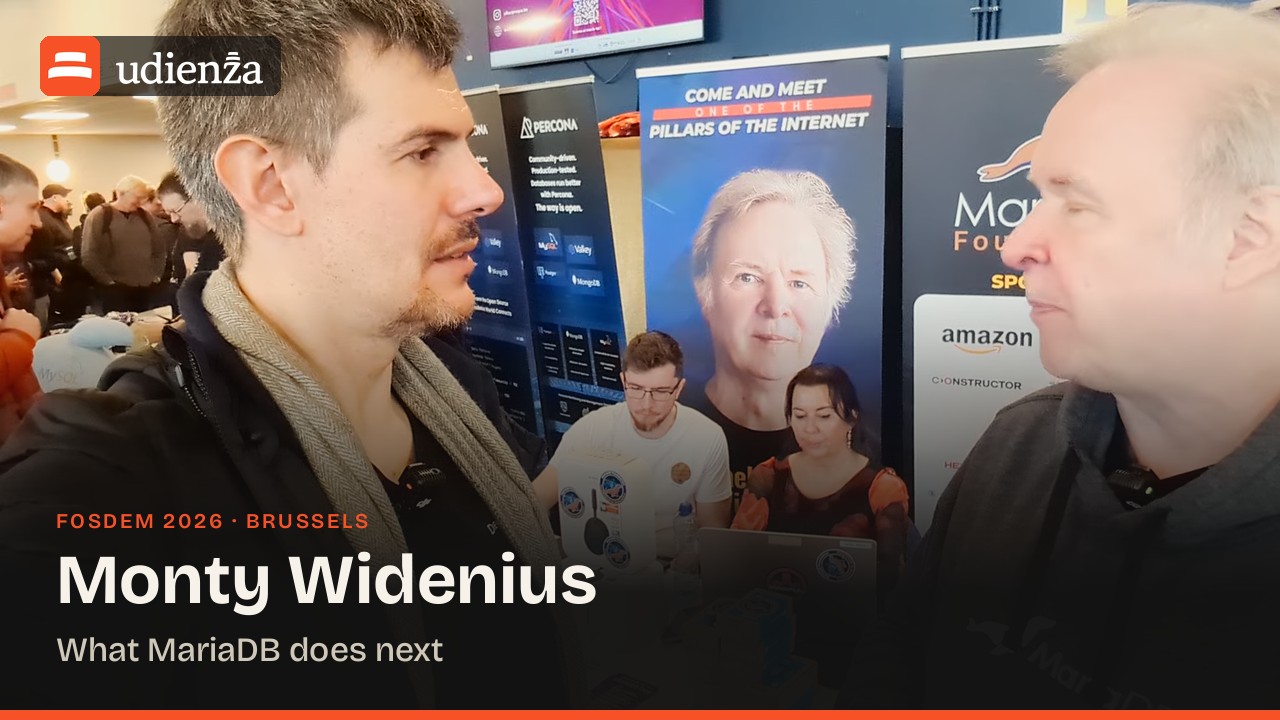
MariaDB: more MySQL compatibility, and a way in
Monty Widenius at FOSDEM 2026 on MariaDB's year: more MySQL compatibility, full outer joins, parallel queries, and how young programmers get hired.