6 min read
AGNTCon + MCPCon Europe 2026: five conversations
The Udienza podcast at AGNTCon + MCPCon Europe 2026: five conversations on running agents in production, what was announced on stage, and where to read more.
By  Luca Berton
Two days at RAI Amsterdam
On 17 and 18 September the Agentic AI Foundation held its first event in Europe, AGNTCon + MCPCon Europe 2026, produced with the Linux Foundation at RAI Amsterdam. For the show it was a first in another way: its first media partnership. The partnership was with the event itself. The Linux Foundation confirmed it in writing, and the listing carried the host’s name, since the show had none of its own yet. How this event sits among the rest of the season is in the show’s overview of the conferences of 2026.
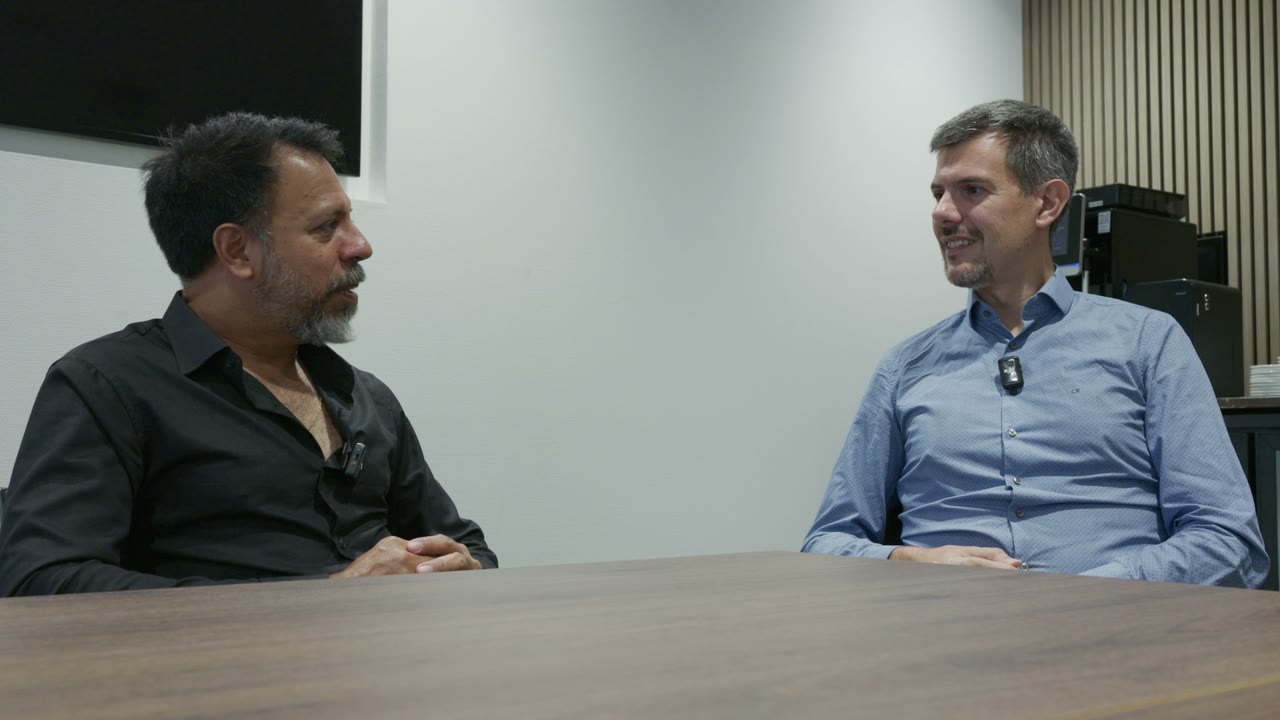
The host, Luca Berton, recorded five conversations over the two days. One is out. The other four are recorded and not released yet; their pages exist, but there is nothing to watch until each one’s Tuesday comes.
The question under all five
Each guest was asked, in one form or another, what has to be true before an agent can run in production. They answer from different layers of the same stack. Manik Surtani speaks for the foundation that governs the protocols. Frédéric Barthelet works on how an agent reaches a product at all. Theo works on research tooling built on MCP. Shannon Williams builds the controls a company puts around its agents, and Dilip Lukose the engine that keeps long-running work on track.
Manik Surtani: who owns the stack
Out since 7 October. The episode is a two-minute cut, and its answer starts at Block. Manik was head of open source there when his team built goose, a coding harness that came before Claude Code. Block released it as open source, and the forks and contributions that followed are where the foundation’s story begins. The cut ends on sovereignty: “I’m a believer in people need to own their own AI destinies, and this is where open source has a huge role to play.”
Earlier that morning he gave the Day 2 keynote, “Catch Them Early”. It argued that the foundation’s entry bar had been set for a mature industry, so it was refusing projects that were real but young. The answer is a Sandbox phase ahead of Growth and Impact. A project needs a working implementation and an active, named maintainer to get in, and it gets infrastructure and a neutral home, nothing more. To move up to Growth, among other conditions, two unaffiliated organisations must run it in production. The keynote also opened the working groups to anyone, with members still proposing and chairing them. The host’s Day 2 notes cover the slides and the rest of the interview.
Frédéric Barthelet: three doors to one product
Recorded, not released yet. Frédéric is CTO and co-founder of Alpic and the author of Skybridge, an open source framework for MCP Apps. His Day 2 keynote, given with Dominic Farolino of Google, put the same product behind three entrances: an MCP server, WebMCP in the browser and a command-line tool. The trade-offs they showed were plain. Of the three, the shell is the one whose tools chain together, and MCP the one with standard authorization, OAuth 2.1. Their conclusion was that the three work together rather than against each other. On the expo floor the day before, he told the host that travel and e-commerce brands had moved first, because their customers now start in an AI assistant; the Day 1 notes have the detail.
Theo of Valency: agent infrastructure at scale
Recorded, not released yet. The episode is about agent infrastructure and the parts of MCP that only appear once agents run at scale. The host’s Day 1 notes describe what Valency builds: an MCP server that lets any language model search open-access scientific papers. Finding papers is not the hard part. Making them comparable across fields with different conventions is, and so is scoring their quality, so the model works from real research. Theo and a colleague were clear that people stay accountable for what science publishes.
Shannon Williams: when a company can trust an agent
Recorded, not released yet. Shannon is President of Obot AI, and the episode is about agents inside the enterprise and what a company must change before it trusts one. The host’s Day 2 notes describe Obot as a control plane, open source and built on Kubernetes, in three parts: gateways for MCP and models, sandboxed agents on the company’s own infrastructure, and controls on employees’ laptops. Every agent gets an identity, and its actions are audited. He named token cost and governance as the two real limits.
Dilip Lukose: orchestrating agentic systems
Recorded, not released yet. Dilip is co-founder and Chief Product Officer of Orkes, which sells the enterprise edition of Conductor, the workflow engine that began as open source at Netflix. In his account, a Conductor workflow can call APIs, agents and people in one flow, and it is not limited to data pipelines. Customer onboarding and reconciling financial transactions were his examples.
What the stage announced
The stage covered the same ground as the guests. The announcements roundup lists everything; four items bear on the question above.
- MCP’s 2026-07-28 revision gave the protocol a stateless core: no sessions, and any server instance can answer any request. Shaun Smith of Hugging Face showed it already carrying about half of tool calls in the week before the event.
- A2A and Agent Router, the former Envoy AI Gateway, joined the foundation as hosted projects. The foundation also announced 57 new members and the Model Context Protocol Associate certification.
- The foundation’s member survey, shown on Day 1, found 81% of respondents with agents in production.
- Several sponsors launched governance products: Solo.io an inventory of the agents on developer laptops, Traefik Labs verifiable records of what an agent was allowed to do, and Grape Up one catalogue of a company’s AI systems, tools and models.
The host’s recap on agents in production ties the sessions together.
Where to read more
The host’s coverage, in order: the preview as media partner, the pre-day meetup on securing agents, Day 1, Day 2, the key takeaways and the people he met. Session recordings are on the Agentic AI Foundation’s YouTube channel.
Next
The four Amsterdam episodes still to come will be released on Tuesdays, like every episode: on YouTube first, then Apple Podcasts, Spotify and Amazon Music. The home page lists every platform.
Built something the rest of us run on? Being a guest is free: how it works.
Built something the rest of us run on? Being a guest is free. Take the other chair
The episodes in this article
All episodes →-
Episode 06 · 7 Oct
Manik Surtani: How goose led to the AAIF
-
Episode 07 · Coming
Frédéric Barthelet: MCP in production
-
Episode 08 · Coming
Theo: Agent infrastructure at scale
-
Episode 09 · Coming
Shannon Williams: When enterprises trust agents
-
Episode 11 · Coming
Dilip Lukose: Orchestrating agentic systems