Conversations
2 min read
MariaDB: more MySQL compatibility, and a way in
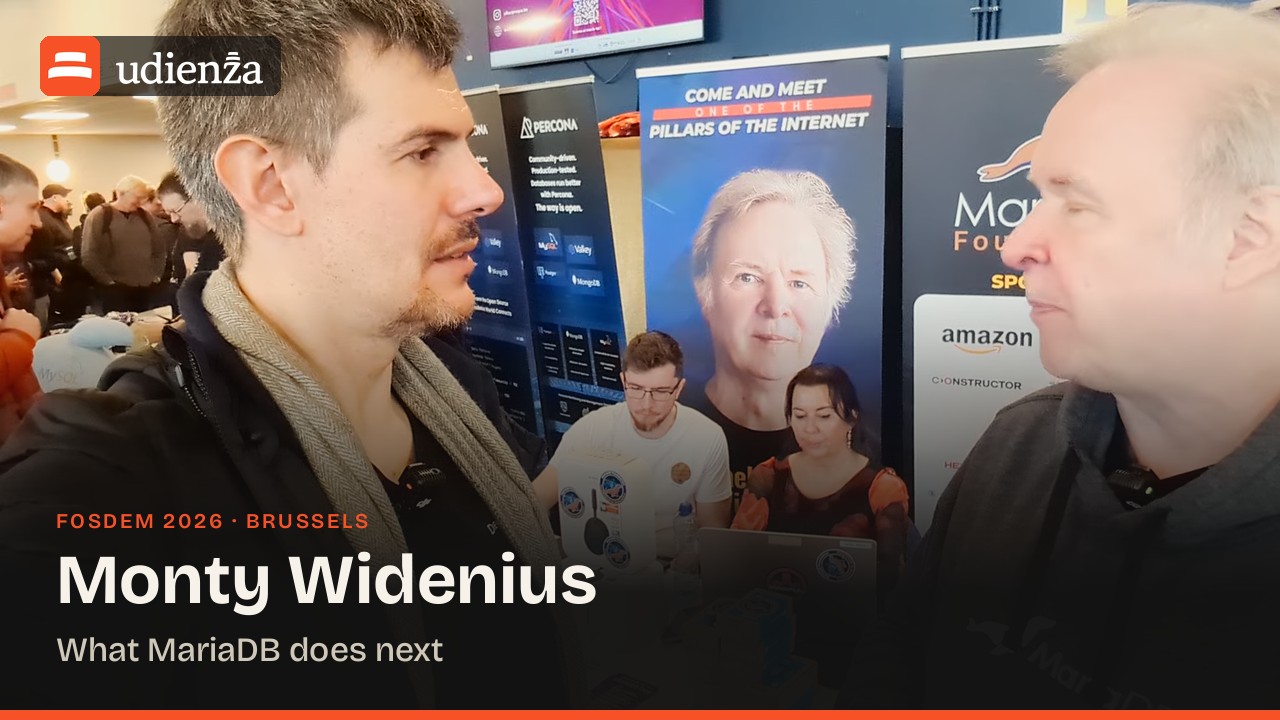
Monty Widenius at FOSDEM 2026 on MariaDB's year: more MySQL compatibility, full outer joins, parallel queries, and how young programmers get hired.
By  Luca Berton
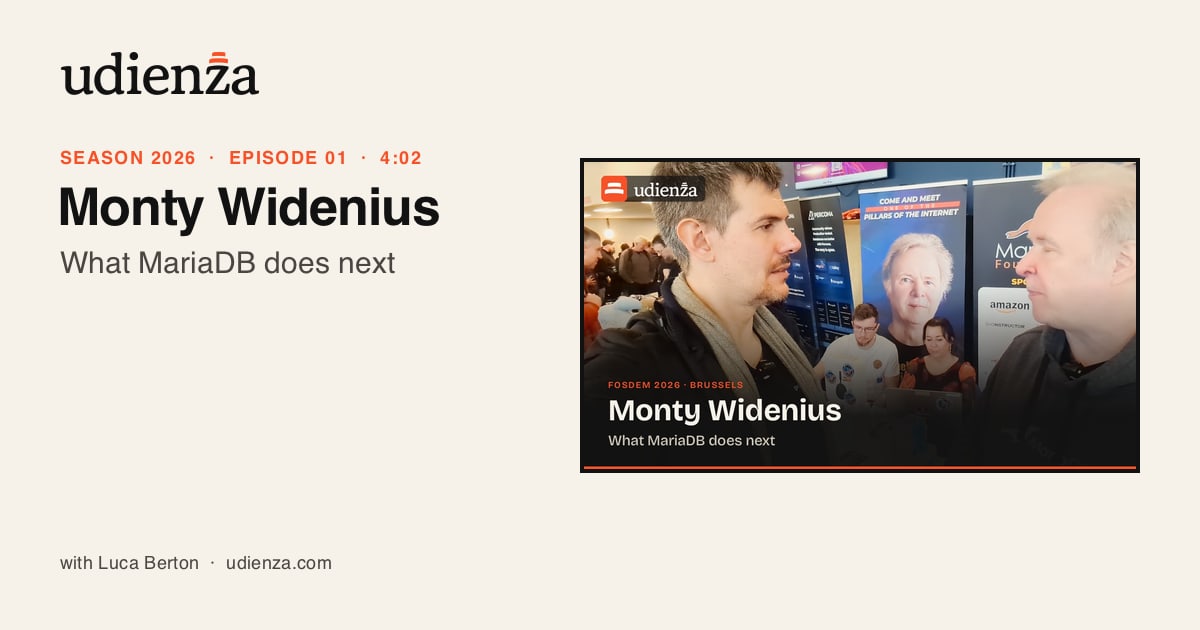
Monty Widenius is the creator of MySQL and MariaDB, and works with the MariaDB Foundation. Luca Berton talked to Monty at FOSDEM 2026 in Brussels on 31 January 2026: about what is on Monty’s desk this year, the databases that speak the same protocol, and how a young programmer gets noticed.
Even more MySQL compatibility
What Monty is working on right now is “even more MySQL compatibility”. Many MySQL users are coming and want to move to MariaDB, Monty says, “because of the entertainment that Oracle has done the last few weeks”. The work is to make that move easier.
Two bigger projects top Monty’s list for the year: full outer joins and parallel queries.
The challenge for 2026
The main challenge, Monty says, is to “increase adoption of MariaDB”. “That’s always been one of our biggest challenges”, together with “ensuring that everybody is happy with us”.
The developer community keeps growing, and thanks to the Foundation the project can manage all the pull requests it gets. Now universities want their students to submit pull requests to MariaDB as part of their courses, to show that they can collaborate with open source. Managing all of those will probably be one of the bigger challenges of the year.
Same protocol, different databases
Luca asked about other implementations of the same protocol, such as TiDB, which offers to be a one-to-one replacement. Monty does not see it that way: “They have a similar protocol and similar features, but we’re all different.”
MariaDB has about 400 million installations, “so we may be the biggest open source database except, of course, SQLite”. Still, Monty grants that “MySQL has a really good name and lots of press around them”, and that “it will take some time before we overcome them in the mind of the developers.”
How young talent gets noticed
Luca’s last question was how people, young talent above all, can connect with the Foundation and its opportunities. Monty’s answer: “for anybody who is a programmer and want to be able to show their talents for the world, the easiest way they can do that is to be part of some open source project.”
MariaDB, and the Foundation especially, try to make that very easy. In MariaDB’s Jira, its bug tracker and feature tracker, some features are marked beginner friendly: a place to start for anyone who wants to contribute to the source and make a name for themselves. The reward, in Monty’s words: “after you’ve done lots of contributions, you will be known and people will compete to hire you.”
More
The conversation is What MariaDB does next. More about the Foundation on Udienza: MariaDB Foundation on Udienza.
Questions and answers
Is TiDB a one-to-one replacement for MariaDB?
Not in Monty's view: they have a similar protocol and similar features, but, in Monty's words, "we're all different".
What is MariaDB's main challenge for 2026?
Increasing adoption of MariaDB and making sure everybody is happy with it, while managing a growing number of pull requests, university students' among them.
How can a young programmer get noticed through the MariaDB Foundation?
By contributing: MariaDB's Jira marks features beginner friendly, and after lots of contributions, in Monty's words, people will compete to hire you.
Built something the rest of us run on? Being a guest is free. Take the other chair
Related articles
All articles →-
Conferences · 4 min read
FOSDEM 2026 in Brussels: where the show began
FOSDEM 2026, where the Udienza podcast filmed its first episode with Monty Widenius: what he said, what else the host saw that weekend, and where to read more.
-
Open Source · 1 min read
Monty Widenius, creator of MySQL and MariaDB
Monty Widenius (Creator of MySQL and MariaDB) on Udienza: Where is MariaDB going in 2026, and does it still speak MySQL?
-
Conversations · 4 min read
ownCloud: own your files, Pi to Kubernetes
Jordana Fung of ownCloud on Infinite Scale: one Go binary with no database, Apache 2.0 with nothing gated, and a company re-engaging its community.
The episodes in this article
All episodes →-
Episode 01 · 17 Mar
Monty Widenius: What MariaDB does next