
4 min read
PlatformCon London 2026: the harness around AI
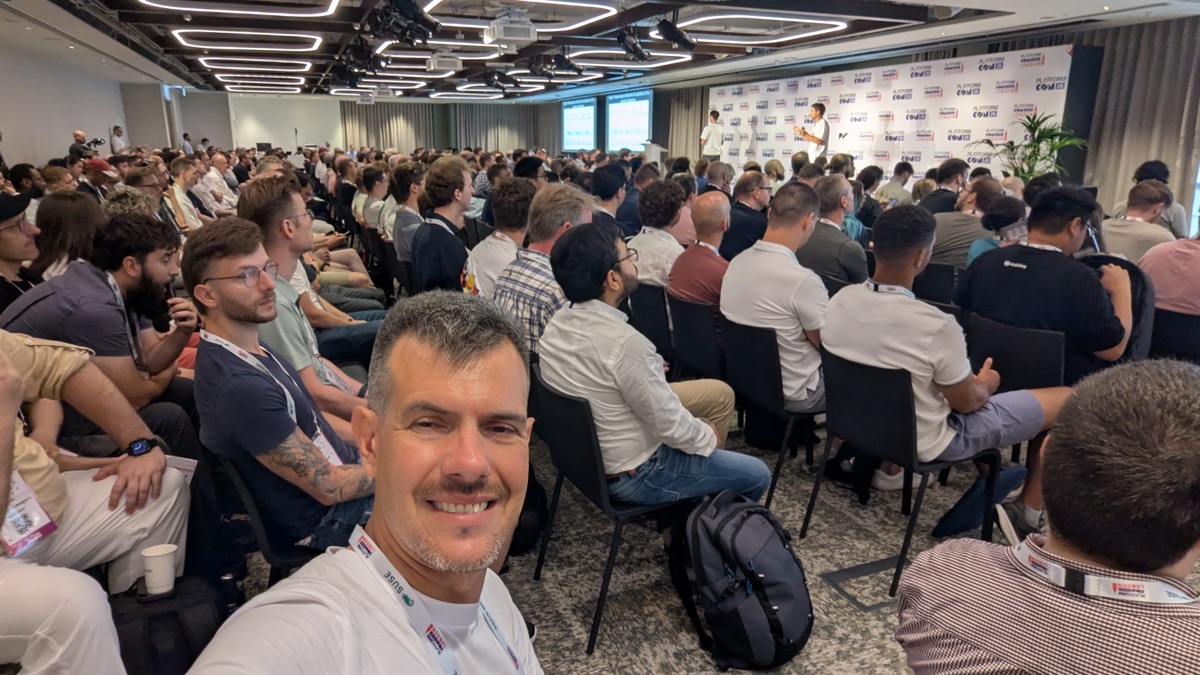
A packed room in London arguing one point from every angle: the age of AI runs on platform engineering, and the harness matters more than the model.
By  Luca Berton
One room, one argument
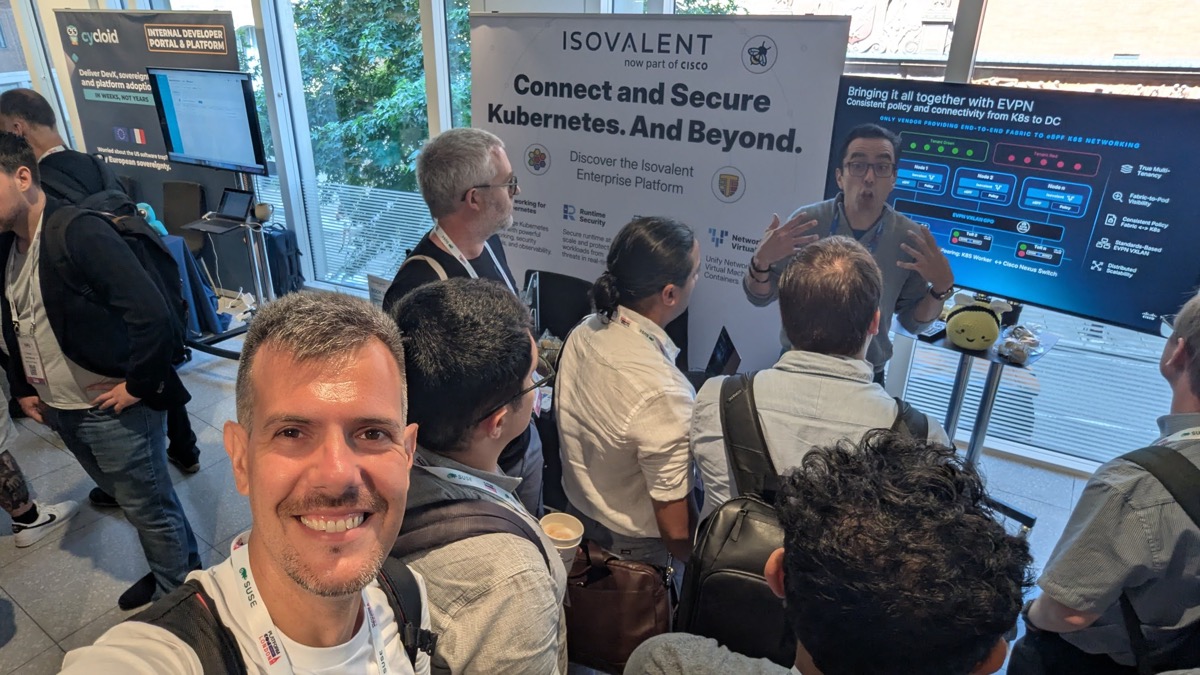
PlatformCon Live Day London ran on 23 June 2026, and it spent the whole day restating a single claim from a dozen directions: the age of AI runs on platform engineering. Main stage, workshops, roundtables and a booth crawl, all circling the same point. The show recorded no episodes there, but the host, Luca Berton, was in the room, and the event’s organiser is someone this show has already interviewed — Luca Galante, who made a version of the same argument at KubeCon in Amsterdam three months earlier.
Context is the new code
The sharpest framing of the day fitted on one slide: an agentic coding harness is a system that drives the LLM to make good code. Not a better model, not a better prompt — a harness.
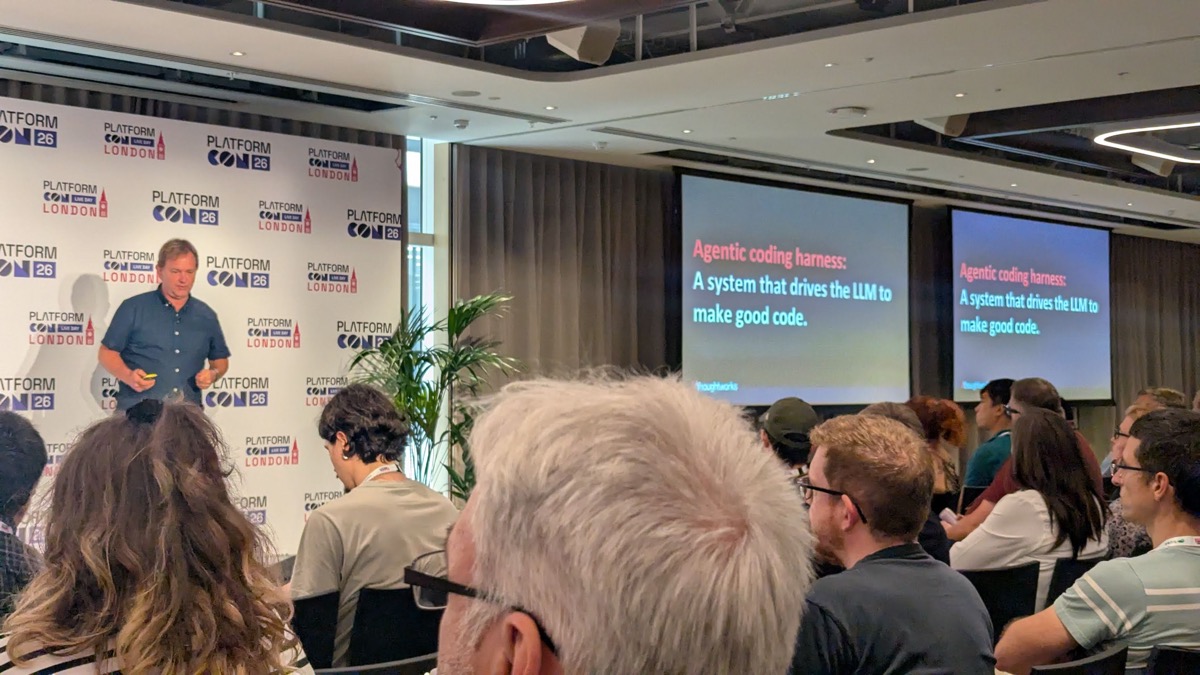
That is a platform statement dressed as an AI statement. The tests, the linting, the golden paths, the review gates — the scaffolding that already existed for humans — turn out to be the thing that makes agent output usable. Teams that skipped building it do not get to skip it now; they get to discover why it was there.
Humans on the loop, not in it
Kief Morris of Thoughtworks took the operational half of the same problem, and the distinction in his title is worth stealing.
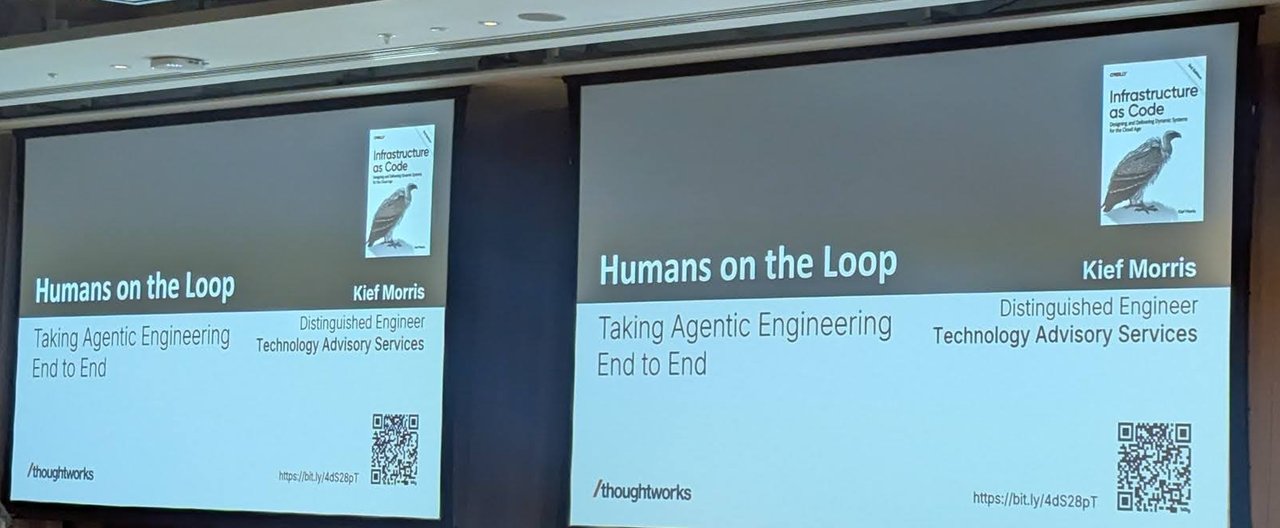
Human in the loop means a person approves each step, which stops scaling the moment agents are useful. Human on the loop means the person supervises the system rather than each action — and his warning was that this degrades into rubber-stamp oversight nobody actually exercises unless the platform makes the supervision real.
The same conference supplied the scale argument from Booking.com, where Mansi Mittal and Bruno Passos described a GenAI platform serving more than 3,000 developers. Past a certain size, the platform is the only way most developers ever touch AI-assisted development, so every governance, security and reliability decision taken at the platform layer is silently inherited by thousands of people who never see it.
Governance stopped being a slide
Two things on the floor made that concrete rather than aspirational. Kyverno graduated from the CNCF, which changes the adoption calculus for anyone who has to justify a policy engine to a risk committee; Nirmata was showing an AI governance layer sitting between users and LLMs, on top of the deterministic enforcement core rather than instead of it. And OpenBao’s Alex Scheel — who also turns up in the show’s Open Source Summit article — made the least glamorous and most useful point of the week: secrets hygiene is the on-ramp to agentic AI. An agent you cannot issue a short-lived credential to is an agent you cannot safely run.
The thread
Three conferences this season have now arrived at the same place from different doors. London said the harness around the model is the product. Atlanta put agents inside the platform and shipped workload identity as an operator. Stockholm said an agent you cannot identify is an agent you cannot rate-limit, budget or revoke.
Different vocabularies, one conclusion: the interesting work is no longer the model, it is everything built around it to make its output safe to accept. That is platform engineering, and the people who have been doing it unglamorously for a decade are the ones with a head start.
Where to read more
The host’s write-ups on lucaberton.com:
- The AI era runs on platforms, the day in full.
- Your IDP is the foundation for agentic AI, with the reference architecture and the governance plane.
- Kief Morris on being human on the loop.
- OpenBao on secrets management for AI agents.
- Kyverno graduates, and Nirmata adds AI governance.
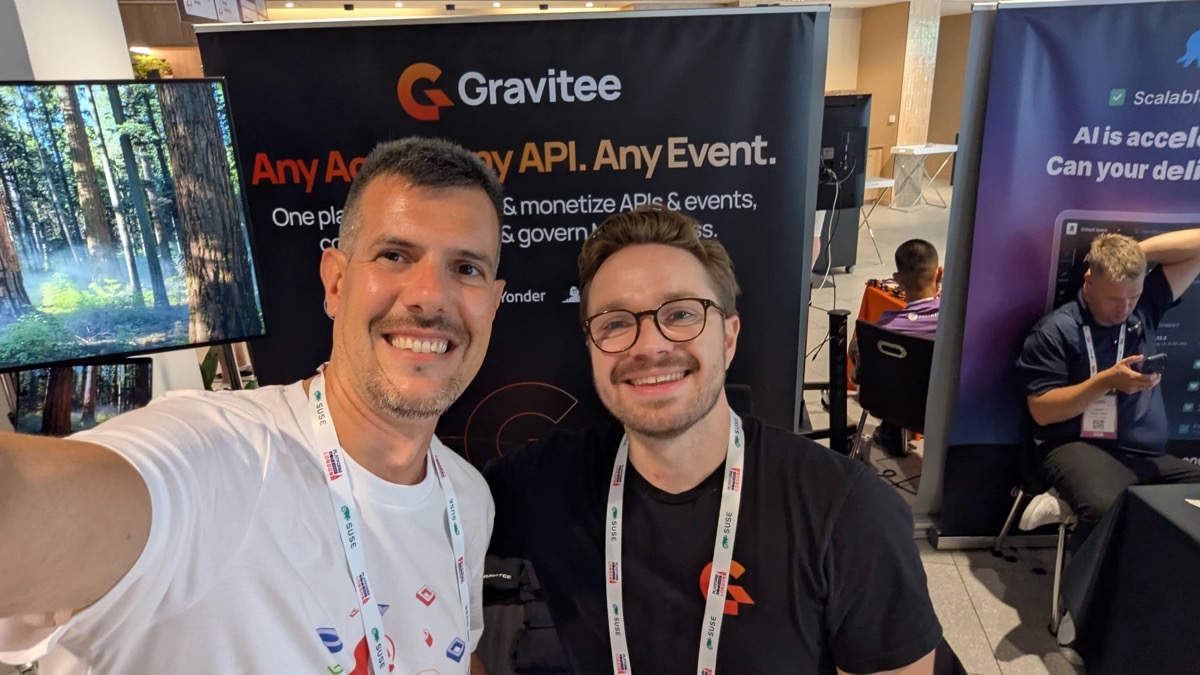
- Gravitee on securing agentic AI traffic and Isovalent on Kubernetes networking.
Next
New episodes every Tuesday, on YouTube first, then Apple Podcasts, Spotify and Amazon Music; every platform is listed on the home page.
Built something the rest of us run on? Being a guest is free: how it works.
Built something the rest of us run on? Being a guest is free. Take the other chair