3 min read Updated
Five questions Season 2026 has asked so far
The first five Udienza episodes on one page: the question each asked, who answered it and the takeaways, from MariaDB's roadmap to agents on Kubernetes.
By  Luca Berton
Every Udienza episode opens with one question, the one a person who runs systems, or decides what runs, would ask. Five episodes are out. Here are their five questions, who answered them, and what to remember. Each card opens the episode, with the video, the chapters and the full transcript.
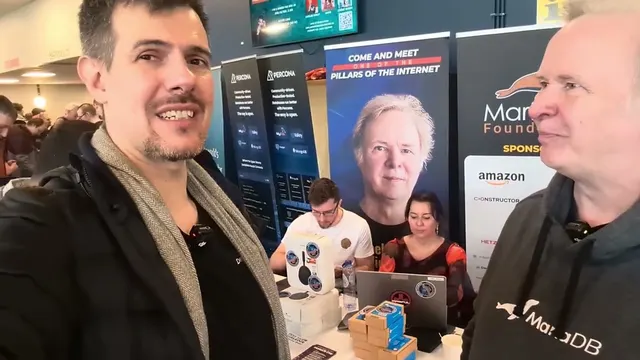
Where is MariaDB going in 2026, and does it still speak MySQL?
- 2026 is about MySQL compatibility: making the one-to-one move to MariaDB as frictionless as possible.
- The two big technical projects on Monty’s own desk are full outer joins and parallel queries.
- With around 400 million installations, MariaDB is likely the largest open source database after SQLite.
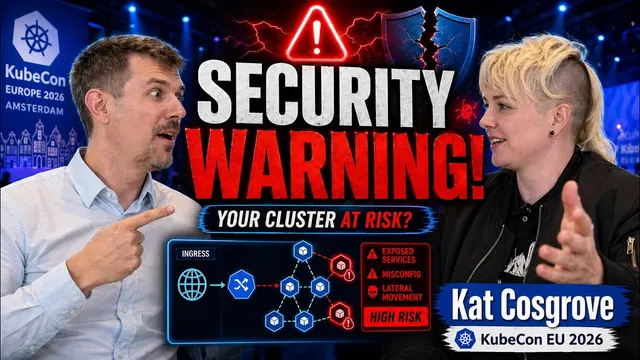
Is the open source in your cluster part of your security posture?
- Open source running in production is a security responsibility: track it, audit it, plan for its deprecation.
- The Ingress NGINX shutdown is a warning. Migrate unsupported components before an incident finds them.
- SBOMs are becoming mandatory, and images go stale in days, not months: automatic rebuilds are not optional.
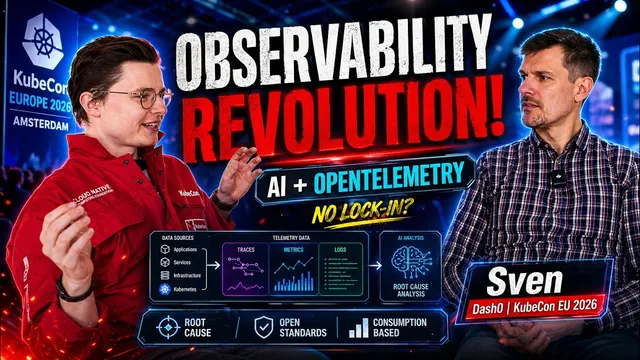
Can observability run on open standards without the lock-in?
- Open standards are not optional: if your queries, alerts and dashboards are not portable, you are locked in.
- AI in observability only pays off when it is deeply integrated and has context, not bolted on as a chatbot.
- Technical lock-in and commercial lock-in compound. Watch for both.
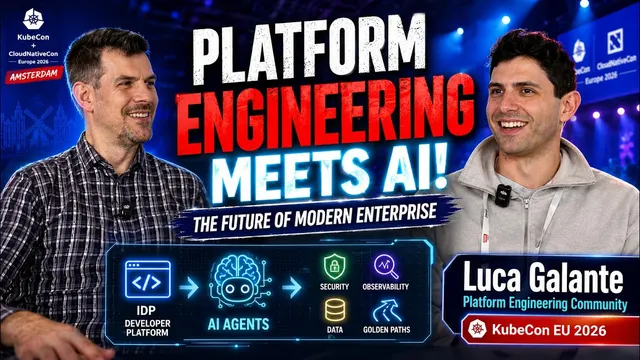
Does AI make platform teams more necessary, or less?
- Platform engineering is the operating model of the modern enterprise, not a team that manages Kubernetes clusters.
- AI increases the need for platforms: faster code generation demands stronger guardrails and golden paths.
- Internal developer platforms must evolve into agentic development platforms that serve humans and agents.
Is your Kubernetes platform ready for agents?
- Agents are the new microservices: a different species of distributed system, GPU-bound and non-deterministic, but still a distributed system.
- Cloud native was built for human speed. Agents run faster and put far more demand on infrastructure.
- Advice to the young: learn the fundamentals, then run a model locally and build your own agent, the way we once built our own kernels.
What the five have in common
Five people, four rooms, one thread. In each domain the next step is operational rather than conceptual: make the migration frictionless, track the open source you run, keep your telemetry portable, give fast code generation guardrails, and treat agents as the distributed systems they are. None of the five was describing a product launch. All of them were describing work for the people who run it.
Next
New episodes every Tuesday. Six more conversations are already recorded, five of them from AGNTCon + MCPCon Europe in Amsterdam on what agents need in production, and one on a European public cloud; where they were filmed is in Where Udienza films. Follow the show on YouTube, where every episode is published first, or take the audio from the home page.
Built something the rest of us run on? Being a guest is free. Take the other chair
The episodes in this article
All episodes →-
Episode 01 · 17 Mar
Monty Widenius: What MariaDB does next
-
Episode 02 · 25 Mar
Kat Cosgrove: Securing containers before they ship
-
Episode 03 · 5 May
Sven Mößbauer: Observability without the lock-in
-
Episode 04 · 26 May
Luca Galante: Platform Engineering 2.0
-
Episode 05 · 1 Oct
Chris Aniszczyk: After Kubernetes, what's next