
5 min read
RoachFest London 2026: the database grows agents
An astronaut on resilience, a payments platform surviving a cloud outage, and a database vendor drawing an agent layer on top of its own architecture.
By  Luca Berton
London, 25 June
RoachFest London ran on 25 June 2026. No episodes of this show were recorded there, but the host, Luca Berton, spent the day on the floor and came away with three written interviews — with Cockroach Labs’ co-founder and chief executive, with a customer mid-migration, and with a Cockroach Labs engineer who had the least fashionable opinion in the building.
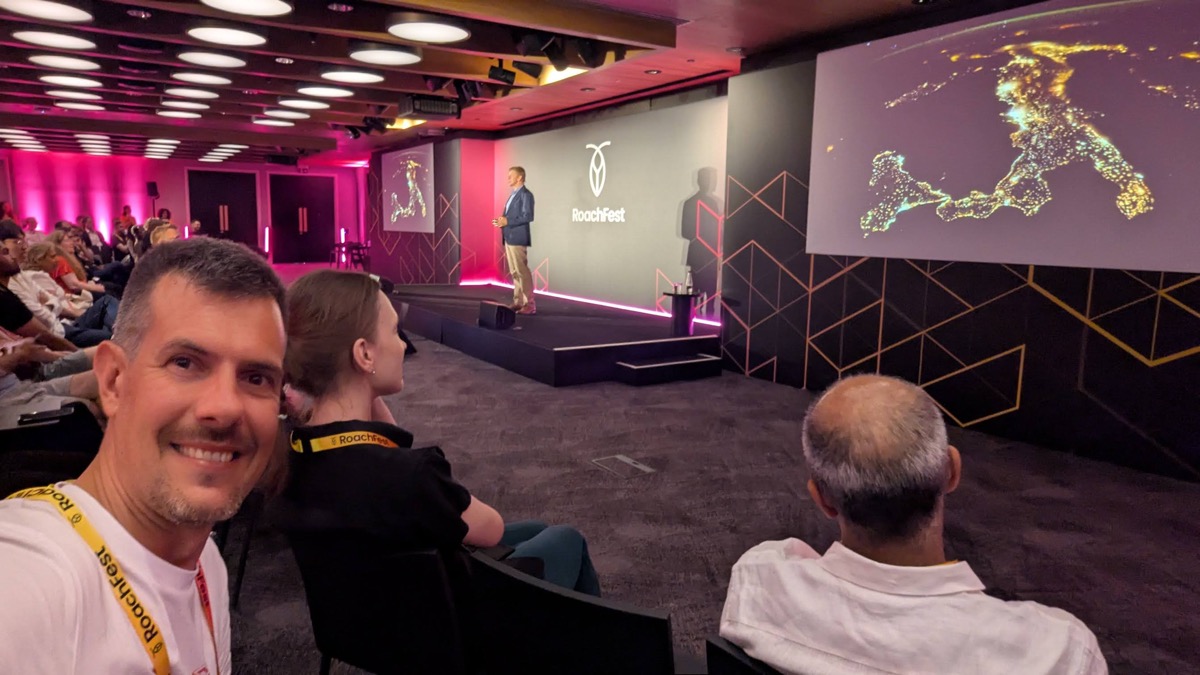
An astronaut on failure
Major Tim Peake keynoted, and the talk was not a motivational set piece. It covered launch day, the fear before a spacewalk and how VR jet-pack training deals with it, cave training as a way of teaching soft skills, and psychological safety as an operational requirement rather than an HR one.
Put that in front of a room of database engineers and it lands differently. Everything Peake described is what you do when a system has no undo: rehearse the failure, make it safe for the most junior person present to say something is wrong, and decide in advance who decides. The industry rediscovers this every few years and calls it something new.
What the vendor says it is becoming
Spencer Kimball, Cockroach Labs’ co-founder and chief executive, gave the strategy talk, and one slide said more than the rest of the day.
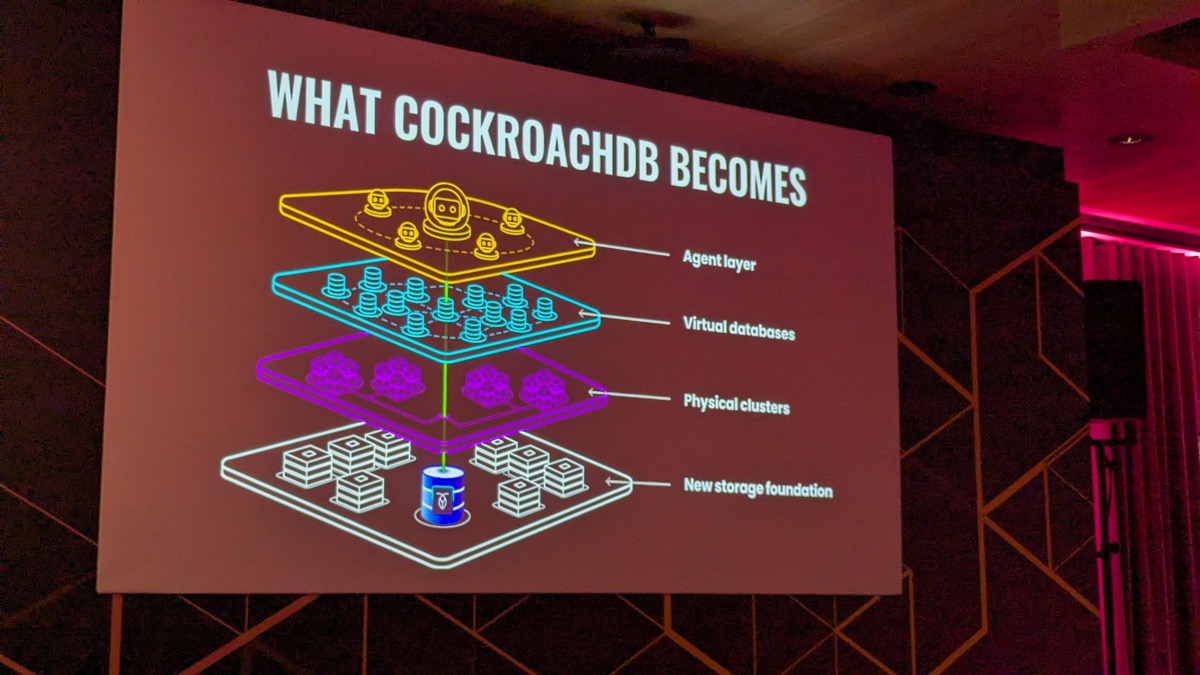
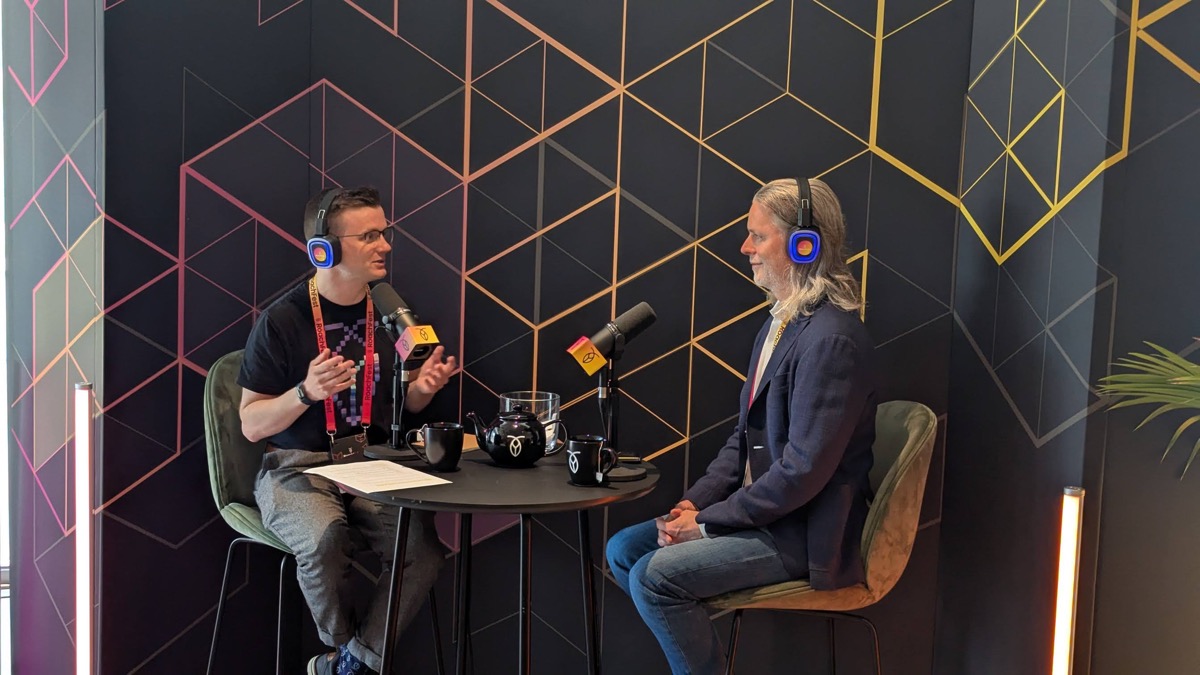
An agent layer, virtual databases, physical clusters, a new storage foundation. In his interview with the host he traced eleven years of telling people “we’re not Google” — of distributed SQL being a mission-critical exception rather than a default — and argued that the complexity-versus-cost calculation has now flipped, with “agent-native” meaning something specific rather than a label.
Whether that is right is a separate question. What is notable is that a database company now draws agents as a layer of its own architecture diagram, in the same season that Red Hat put agents inside the platform and PlatformCon argued the harness matters more than the model. Three different vendors, three different stacks, the same new top layer.
The counter-argument, from inside
The most interesting interview of the day was the sceptical one. A Cockroach Labs engineer talked about automation creep and used WALL-E as the analogy: not killer robots, but a slow drift where people stop doing things they are still capable of, because something else does them adequately. Coming from someone employed to build the agent layer, that is worth more than any keynote.
The part that was actually hands-on
The vector search workshop gave the clearest technical argument of the day, and it was made by crashing something on purpose. The lab ran the same ingestion twice: once against a dual-database setup with a separate vector store, once against CockroachDB with vectors and rows in one transaction.
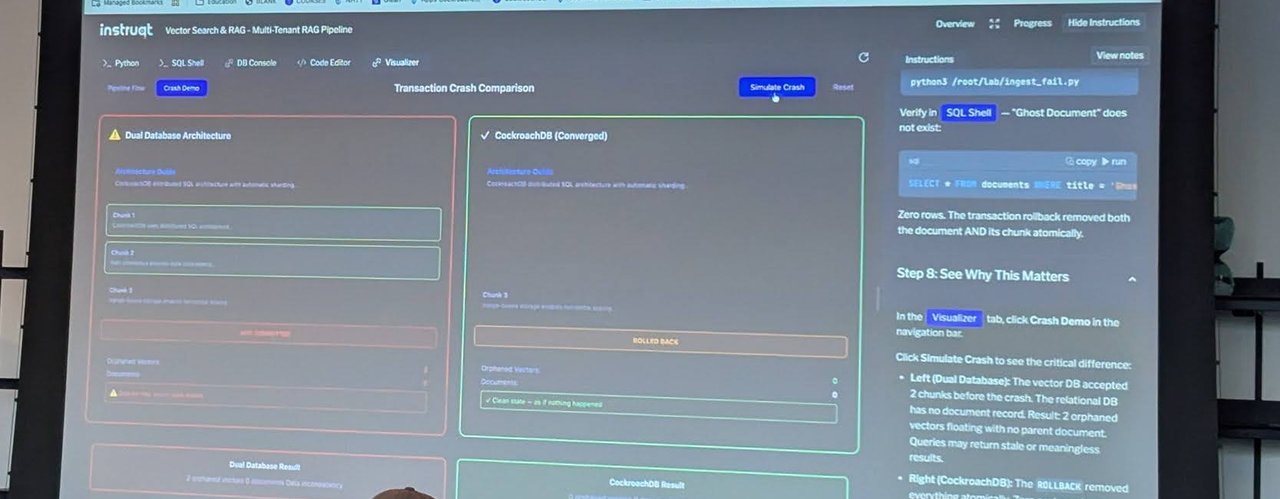
On the dual-database side the vector store had accepted two chunks before the crash while the relational side had no document record — two orphaned vectors pointing at nothing, and queries that return stale or meaningless results. On the converged side the rollback removed both, atomically. That is the entire argument for transactional vector search in one screen, and it is more persuasive than any benchmark.
Resilience with a real outage behind it
Form3 described how a real-time payments platform survives a cloud provider failing: three clouds as one logical system, and overnight chaos testing automated so the failure modes are exercised rather than assumed. Primer’s Vik Bhatti covered the other kind of pressure — migrating under live payment traffic, before hitting the write ceiling rather than after, with the warning that it is not a drop-in replacement and you have to design for the cost model.
Both stories have the same shape as the astronaut’s: the people who survive the outage are the ones who rehearsed it.
The thread
Cockroach Labs spent a decade selling survival — a database that keeps working when a region dies — and arrived in 2026 selling an agent layer on top of it. The two halves of the day sat oddly together, and that is the honest finding. The engineering content was about failure you can reason about: atomic rollback, chaos testing, migration before the ceiling. The strategy content was about agents, which are failure you cannot yet reason about.
The company’s own engineer was the one who said so.
Where to read more
The host’s interviews and notes on lucaberton.com:
- Spencer Kimball: from ‘we’re not Google’ to CockroachDB’s agentic future.
- Will AI make us the humans from WALL-E?, the counter-argument.
- Vik Bhatti: move before you hit the write ceiling.
- Form3: how a payments platform survives cloud outages and surviving a real GCP outage.
- Major Tim Peake on what space missions teach engineers.
- The C-SPANN vector search workshop and the day in full.
Next
New episodes every Tuesday, on YouTube first, then Apple Podcasts, Spotify and Amazon Music; every platform is listed on the home page.
Built something the rest of us run on? Being a guest is free: how it works.
Built something the rest of us run on? Being a guest is free. Take the other chair