Conversations
5 min read
CNCF: agents are the new microservices
Chris Aniszczyk, CTO of the CNCF, in Yokohama: agents as a new species of distributed system, pervasive local AI, and advice for young engineers.
By  Luca Berton
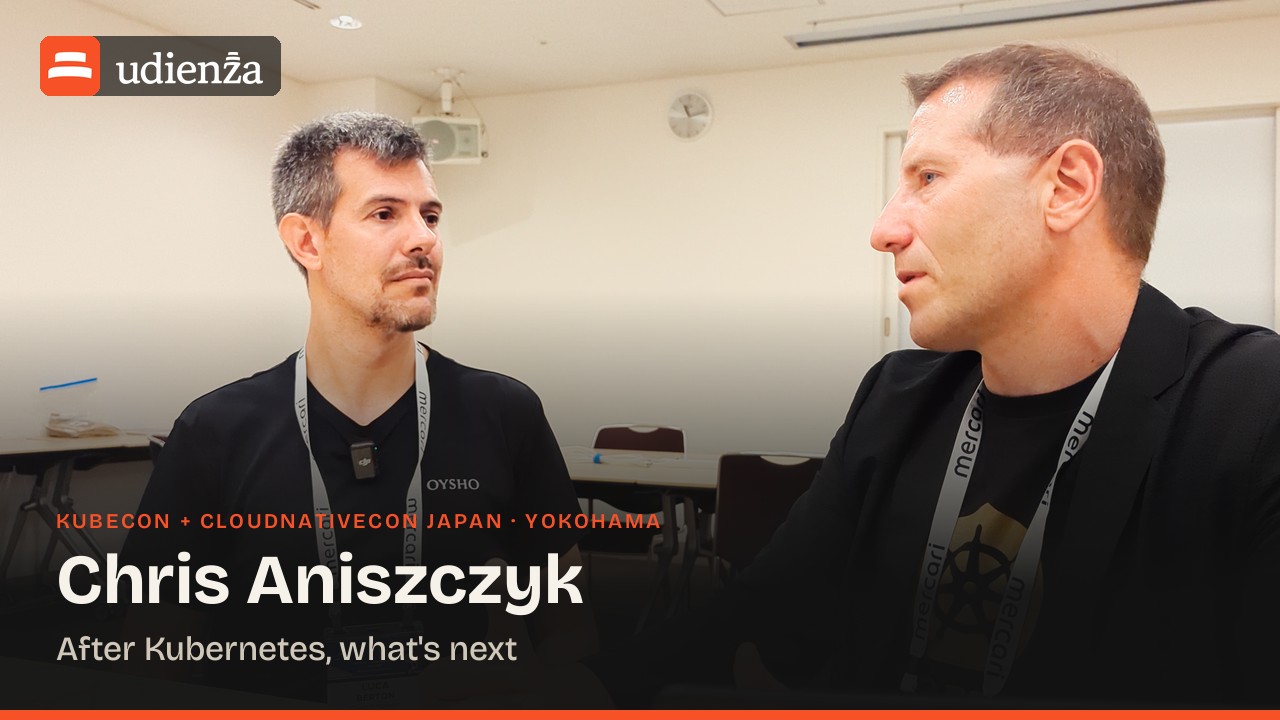
Chris Aniszczyk is CTO of the Cloud Native Computing Foundation, the Linux Foundation home of Kubernetes and the open source projects built around it. Luca Berton talked to Chris at KubeCon + CloudNativeCon Japan in Yokohama on 29 July 2026, about where the workloads are going, what the next ten years look like, and what to tell the young.
Japan and the state of cloud native
KubeCon Japan, Chris says, is one of the CNCF’s largest events in Asia, and one of the larger cloud events too. The foundation used it to release a state of cloud native report for Japan, covering the number of cloud native developers there and the companies that are “requiring developers to upskill for AI related stuff”.
Japan, in cloud native, has historically lagged Europe and North America in actual cloud adoption. In AI inference adoption, Chris sees “a little bit similar patterns”.
Agents are the new microservices
When Luca suggested the industry is heading toward agentic AI, Chris agreed, with a line Chris always uses: “agents are kind of the new microservices, like they’re a new type of workload.”
On the keynote stage that day, with Jonathan, Chris tried to reiterate one point. Kubernetes “was really designed to really help, you know, scale distributed systems”. It brought a reconciliation loop, a simple API server and an extensibility mechanism, and that concept has served containers, traditional workloads and microservices extremely well.
Agents are basically a service, with different characteristics. They tend to need GPUs, they sometimes have to load up a large model, and they are “a little non-deterministic”. They are usually GPU-bound, sometimes use CPUs too, and can need custom ASICs. “But at the end of the day, you’re dealing with a distributed system, things that could go away, go wrong, fail.”
So it is not a different animal, Luca said. “I think it’s like, yeah, it’s a different species.” Everything needed to build a scalable, fault-tolerant distributed system, the work the CNCF has done for the last ten years, is in Chris’s words “still extremely relevant” for agents.
The next ten years: pervasive and local
Looking ten years ahead is hard, Chris admits, but the direction is clear: AI becomes part of our personal lives and of the tools we use. “I think everyone’s going to have their own personalized agent that probably runs locally in some way”, maybe on a watch or a local computer. Inference becomes more localised, while the cloud keeps its place.
That puts a lot of demand on infrastructure. “Cloud native originally was built for essentially human speed”, Chris says: humans on computers and phones, shopping or calling a ride. “Agents operate significantly faster”, and the need for infrastructure keeps rising, especially as everyone gets agents that help with programming, scheduling meetings or other parts of life.
Chris’s example is One Medical, an app Chris uses in the US to book health appointments. It recently added an AI feature that looks at your medical information and gives you advice, “essentially an inference-based service”. Imagine every app we interact with carrying some type of inference workload. Chris is sure the CNCF will rise to the challenge of supporting AI and inference workloads: “We’re already there.”
A Linux distro for every taste
Chris also expects more local AI, because people will want to control which data they share with AI and how it is personalised, and a lot of options. Open source started with very limited choices; today there are many open source databases, MySQL and PostgreSQL among them. AI is heading the same way, with many open models to choose from.
The normal consumer will not care which model is underneath. Developers, though, “we’re going to have so much choice”, as with the number of Linux distributions, from Red Hat to Fedora. “And I think all that choice and competition is going to lead to innovation.”
191 countries, collaborating and competing
“We have 191 countries contributing to CNCF”. Some contributors are learning the technology on their own; others work for companies, from Google to Fujitsu, that sometimes compete with each other. At the governing board meeting the day before, Google, Microsoft, Apple, Red Hat and Huawei sat in the same room. “They all both collaborate and compete at the end of the day.”
For Chris that is what makes open source beautiful: people share knowledge and build what’s useful, but also compete, so things get better faster. Ecosystems with one dominant winner do not allow for innovation. “You need to enable that competition. I think that’s what CNCF does.” The result is choice for end users and better solutions.
Advice for young engineers
Chris has two pieces of advice. First, know the basics: how Linux works, how open source like Kubernetes works, how networking works, the operating system fundamentals a computer science degree teaches. That baseline is always going to be useful.
Second, “set up your own Hermes agent or set up your own OpenClaw.” Figure out how to run models locally: Ollama makes it pretty easy, and you can install GLM fairly easily through it. Play with these assistants, learn how to craft a prompt properly, and learn the tricks you pick up by doing and experimenting. Chris has noticed that with a lot of history and context, a model’s results can get worse: “sometimes you have to flush the history”.
It reminds Chris of growing up with computers: learning to compile and build your own Linux distribution, and building the kernel. You learn a ton about how things work, and “the same thing applies for agents.” Running your own agent with an open source or open weights model and tweaking it “is almost equivalent to building and customizing your own Linux distribution.” Chris’s recommendation: “Always tinker, always try to run locally.”
More
The episode with Chris Aniszczyk: After Kubernetes, what’s next. Everyone the show has met at the foundation is on Cloud Native Computing Foundation on Udienza.
Questions and answers
Why does Chris Aniszczyk call agents the new microservices?
Because they are basically a service with different characteristics: they tend to need GPUs, sometimes load a large model and are a little non-deterministic, but they are still a distributed system where things go away, go wrong and fail.
What does Chris advise young engineers to learn?
The fundamentals first, such as how Linux and networking work; then run models locally, for example with Ollama, and set up and customise their own agent.
Why does competition matter inside the CNCF?
Ecosystems with one dominant winner do not allow for innovation; the CNCF enables competition between companies that also collaborate, and that competition leads to choice for end users and better solutions.
Built something the rest of us run on? Being a guest is free. Take the other chair
Related articles
All articles →-
Conversations · 2 min read
Solo.io: AI agents as microservices, but more
Lin Sun of Solo.io on the infrastructure that runs AI agents in production: agentgateway, kagent and Agent Substrate on Kubernetes, and how to keep up.
-
Conversations · 3 min read
Diagrid: durable execution for business agents
Mark Fussell, Chief Product Officer and co-founder of Diagrid, on agents that recover their state after a crash, signed agent steps, and running at the edge.
-
Conversations · 5 min read
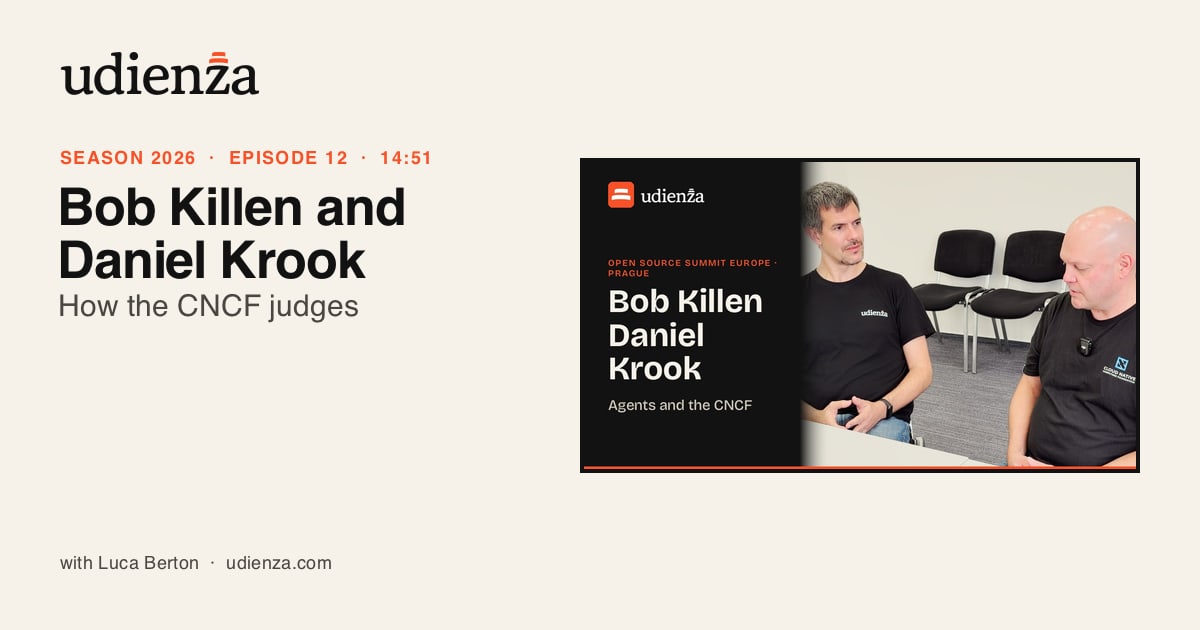
CNCF: who judges a project, and what agents ask
Bob Killen and Daniel Krook of the CNCF on how the Technical Oversight Committee moves projects up, and on the load AI agents put on Kubernetes.
The episodes in this article
All episodes →-
Episode 05 · 1 Oct
Chris Aniszczyk: After Kubernetes, what's next