Dutch Cloud Native Day
7 min read
Dutch Cloud Native Day 2026: who we met
Friday 30 October in Utrecht: nine conversations at Dutch Cloud Native Day, on sovereign clouds and forges, security, feature flags and community.
By  Luca Berton
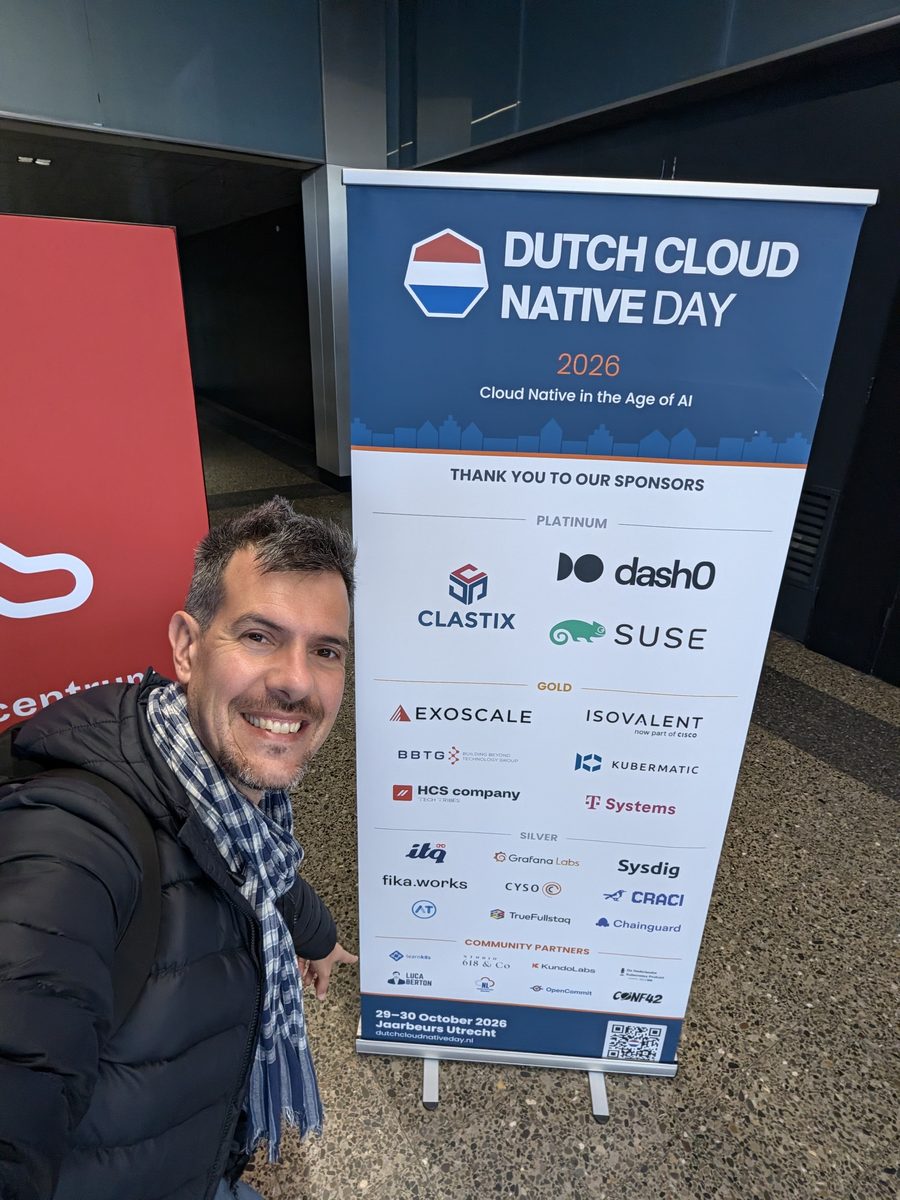
Friday 30 October 2026, the conference day of Dutch Cloud Native Day at the Jaarbeurs in Utrecht. The event was sold out, its theme was “Cloud Native in the Age of AI”, and it describes itself as “A vendor-neutral, inclusive and community-first event — organized by the community, for the community.” Udienza was one of its community partners, and recorded nine conversations on the show floor, from the Chainguard booth in the morning to Katharina Sick of Dynatrace late in the afternoon. The word that came back most often was Europe: where data lives, who owns the cloud, where code is hosted.
The day in numbers
- 9 conversations recorded, at the booths and at the community booth.
- 6 communities at the community booth, “One open ecosystem.”
- 09:30 to 17:25: the talks, then drinks until 18:00.
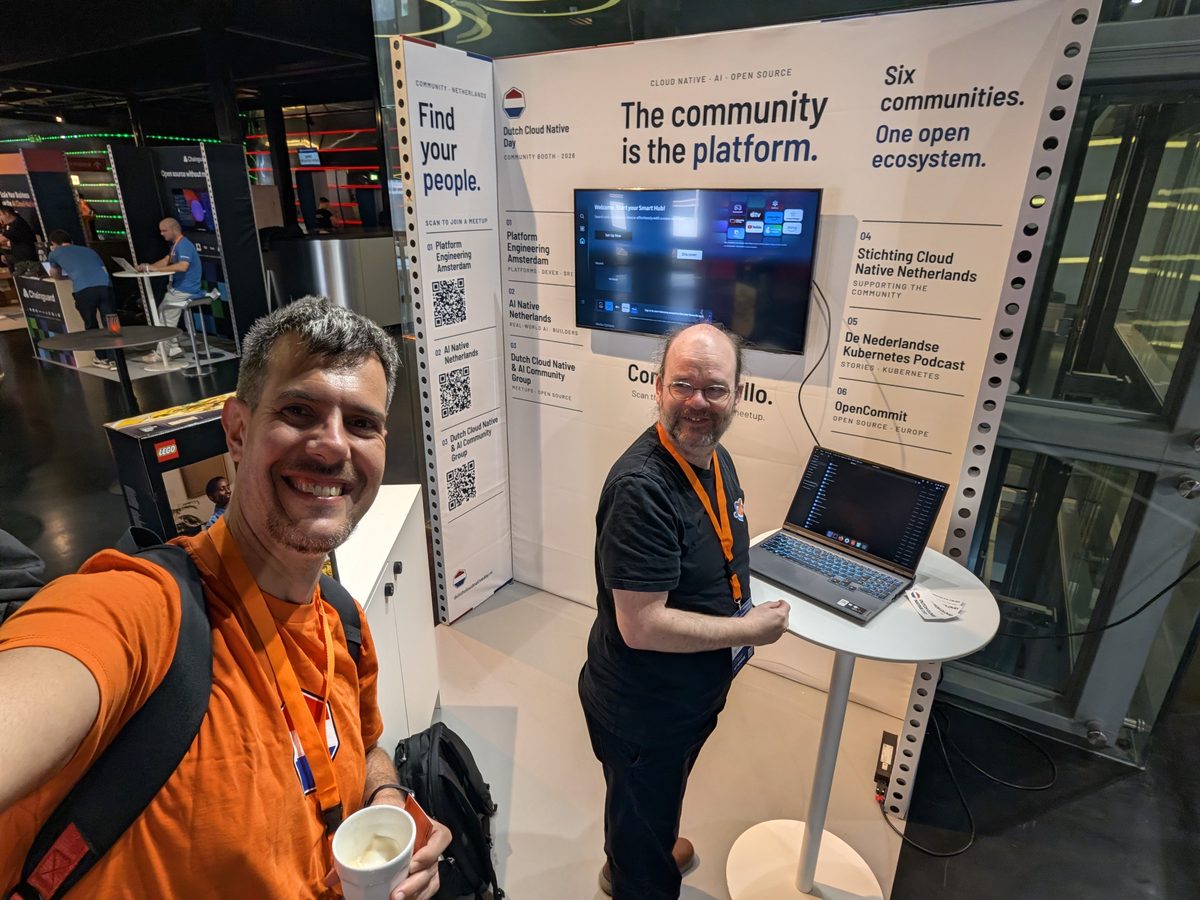
09:54 — The community booth
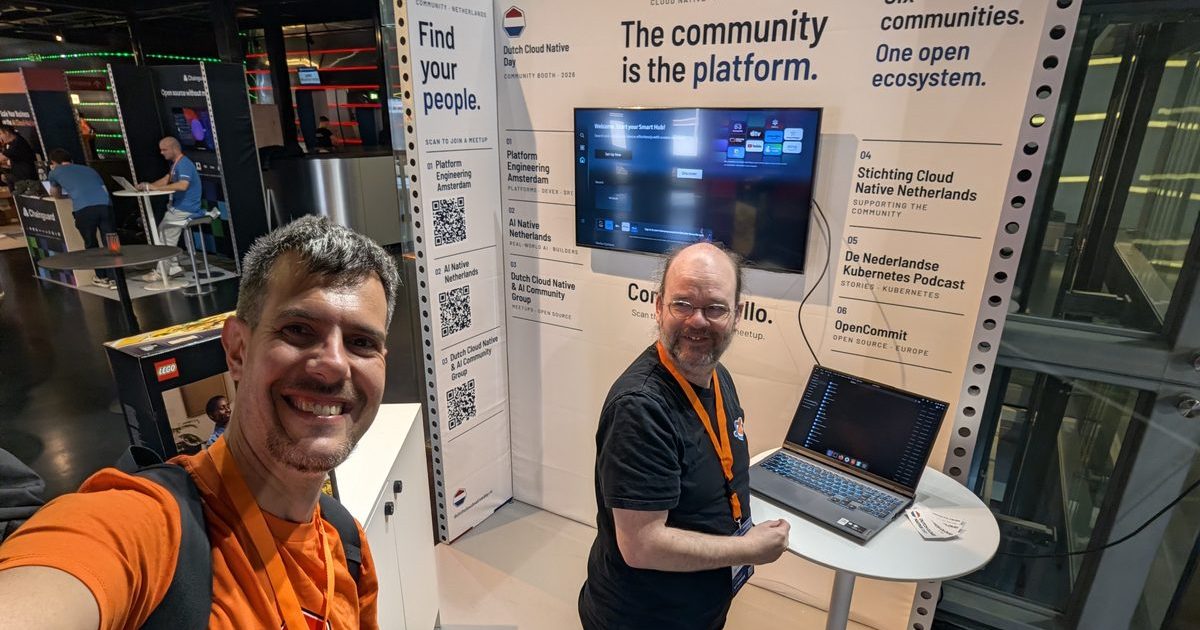
“The community is the platform.” The community booth gathered six groups: Platform Engineering Amsterdam, AI Native Netherlands, the Dutch Cloud Native & AI Community Group, Stichting Cloud Native Netherlands, De Nederlandse Kubernetes Podcast and OpenCommit. “Find your people”, said its wall, with a code to scan for each meetup. Two of the day’s conversations were recorded there.
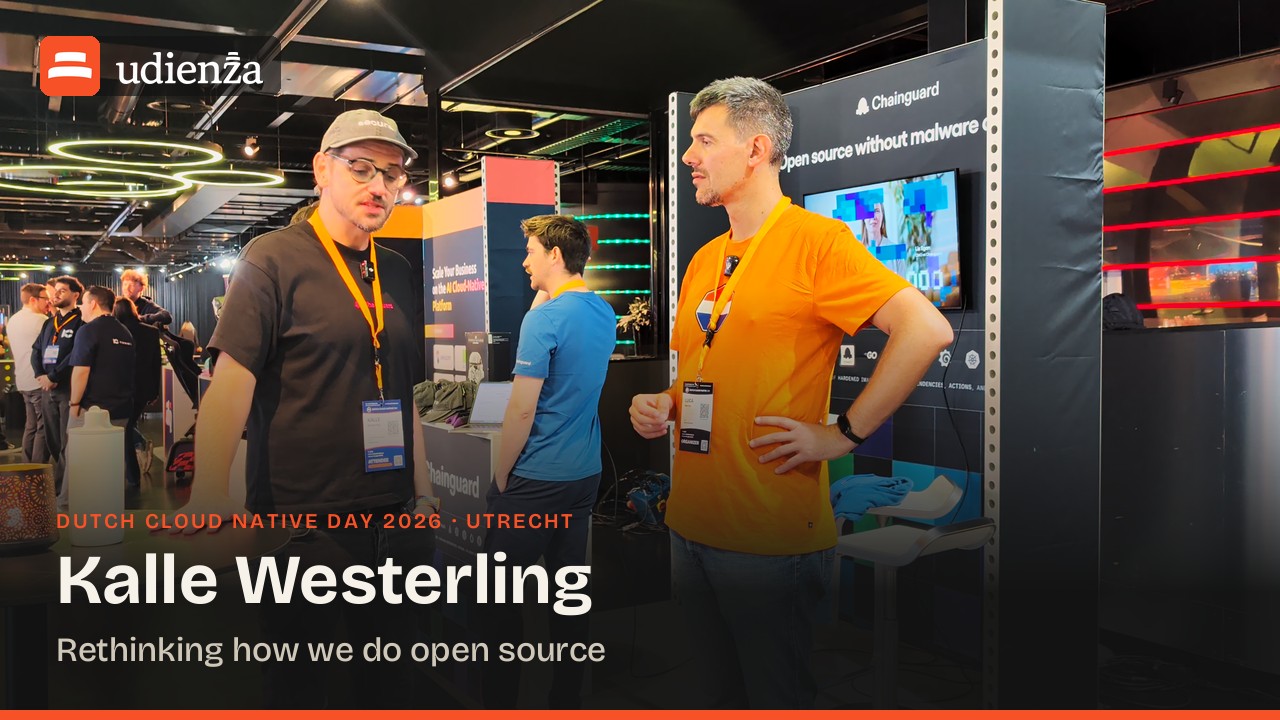
09:59 — Kalle Westerling, Chainguard
The first conversation was at the Chainguard booth. “Every day I wake up with a new security flaw”, said Kalle Westerling, Staff Developer Relations Engineer at Chainguard: frontier models are finding vulnerabilities “both in new releases, in old releases, in end-of-life releases”. Chainguard’s answer is to start left, rebuilding open source from source: “So we’re essentially we’re rolling our own OS.” Its free catalog has 60 images, and “We have over 3,000 images right now”.
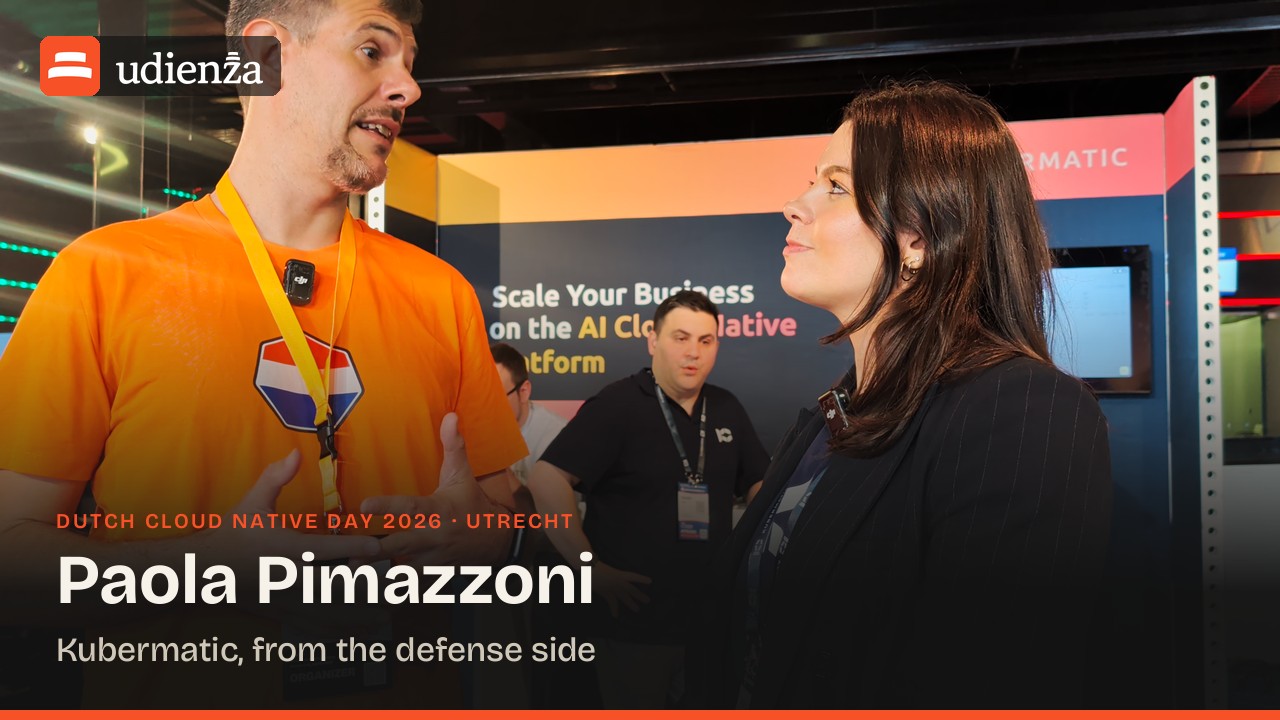
10:12 — Paola Pimazzoni, Kubermatic
At the Kubermatic booth, Paola Pimazzoni told the story of a new client: “the BWI, which is the Bundeswehr IT system from the military part from Germany”. “And they are very strict with data.” The other theme was vendor lock-in: “So we have that Broadcom topic going on, right? So everybody wants to not be in a vendor lock-in, so we have our product for that.” Swisscom is moving off VMware with Kubermatic. “Yes, exactly, and we are a German company, we are European vendors”.
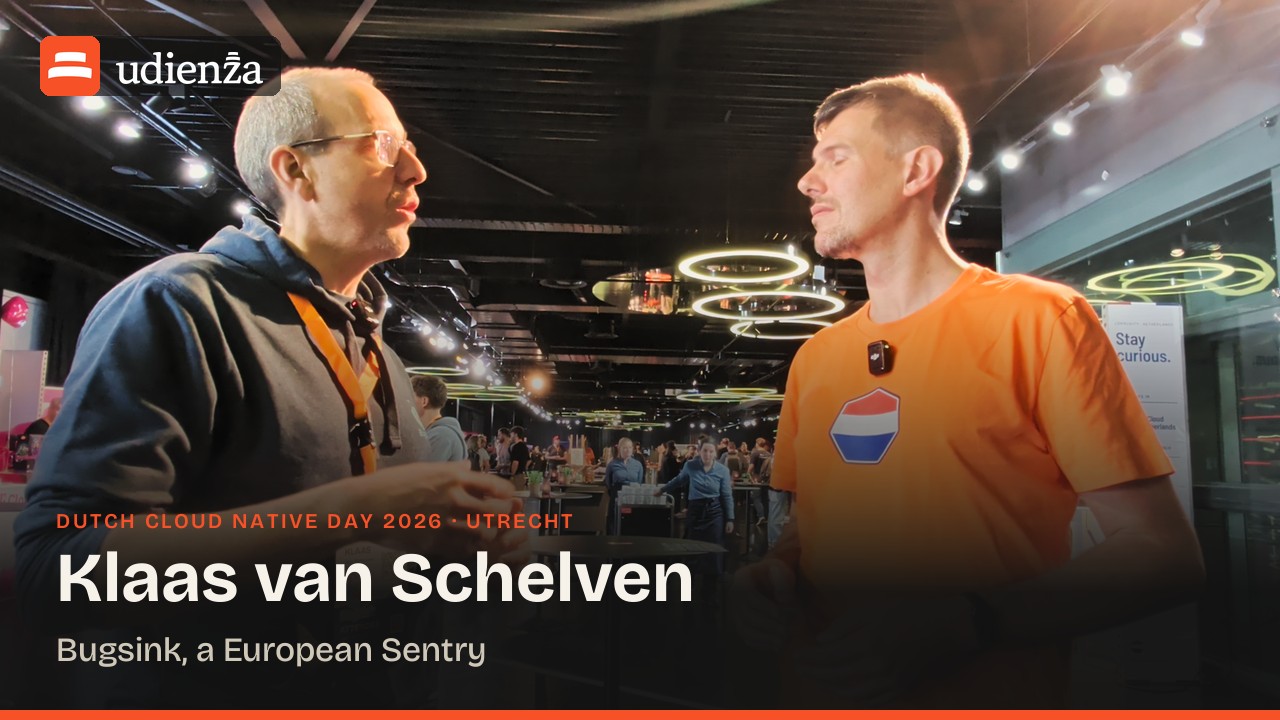
11:04 — Klaas van Schelven, Bugsink
“So, Bugsink is an error tracking solution. So, depending on where you are, it is the European alternative to Sentry”. Klaas van Schelven, its founder, gave three reasons to switch: it is compatible (“if you just switch the one line, which is called the DSN, you switch it out”), it is European, and it is simpler, and a fourth, “which is that it’s much cheaper.” Customers, he said, “want their data not to go to San Francisco and the NSA or they have compliance demands.”
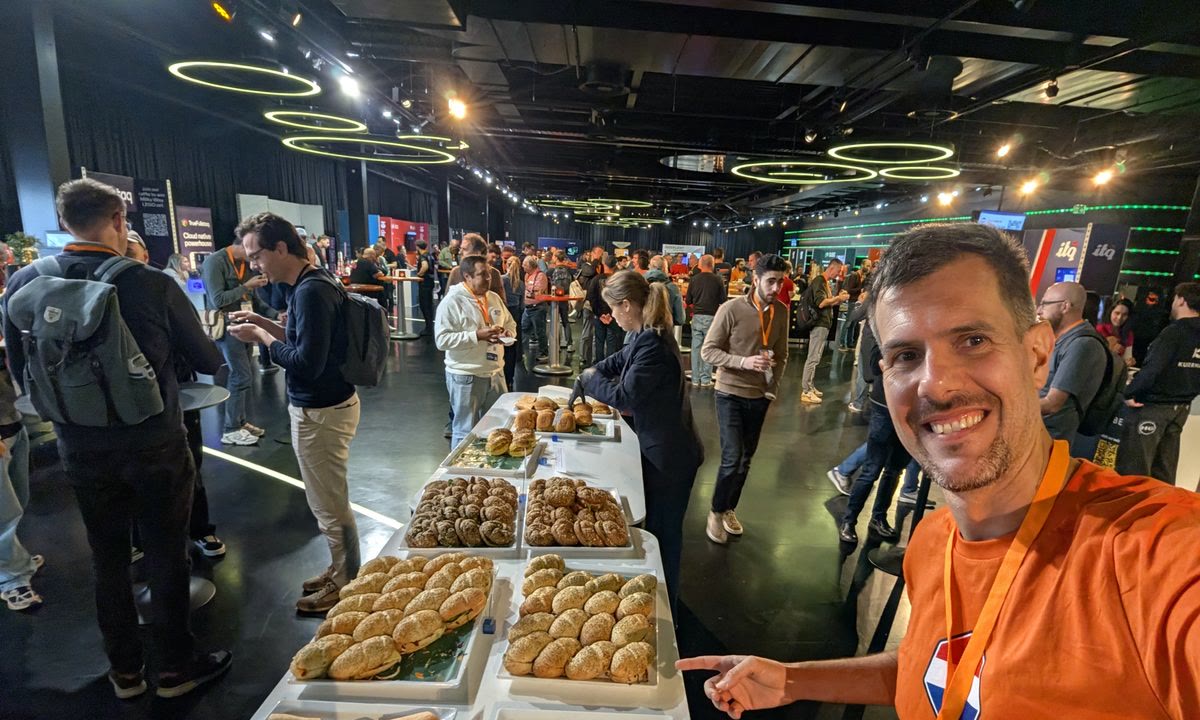
12:51 — Lunch
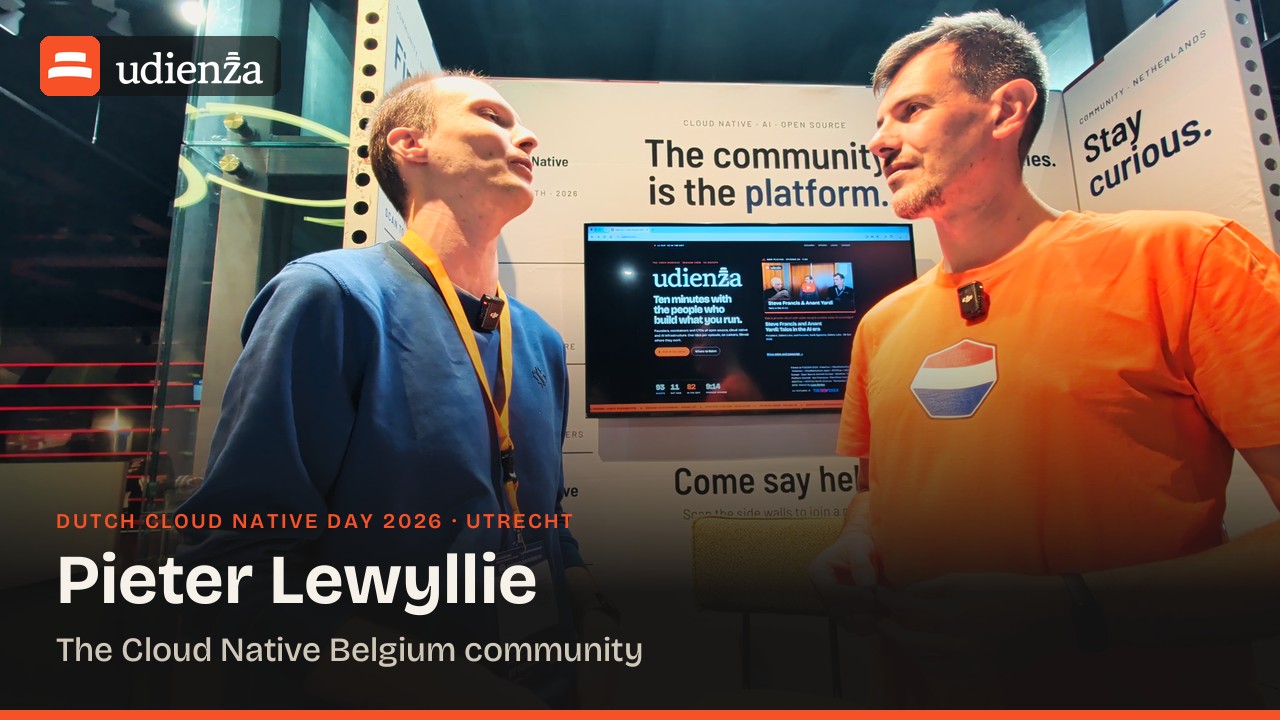
14:40 — Pieter Lewyllie, Cloud Native Belgium
Back at the community booth, Pieter Lewyllie, Solutions Architect at Red Hat, spoke for a community next door: “we are the Cloud Native Belgium group on meetup.com”. “We try to do it once a quarter”, because “It takes, you know, energy and time and on top of our day jobs, of course, to do this kind of thing.” The next one, on 26 November in Ghent, would be “a mix of security and networking”.
15:33 — Benoit Schipper, OpenCommit
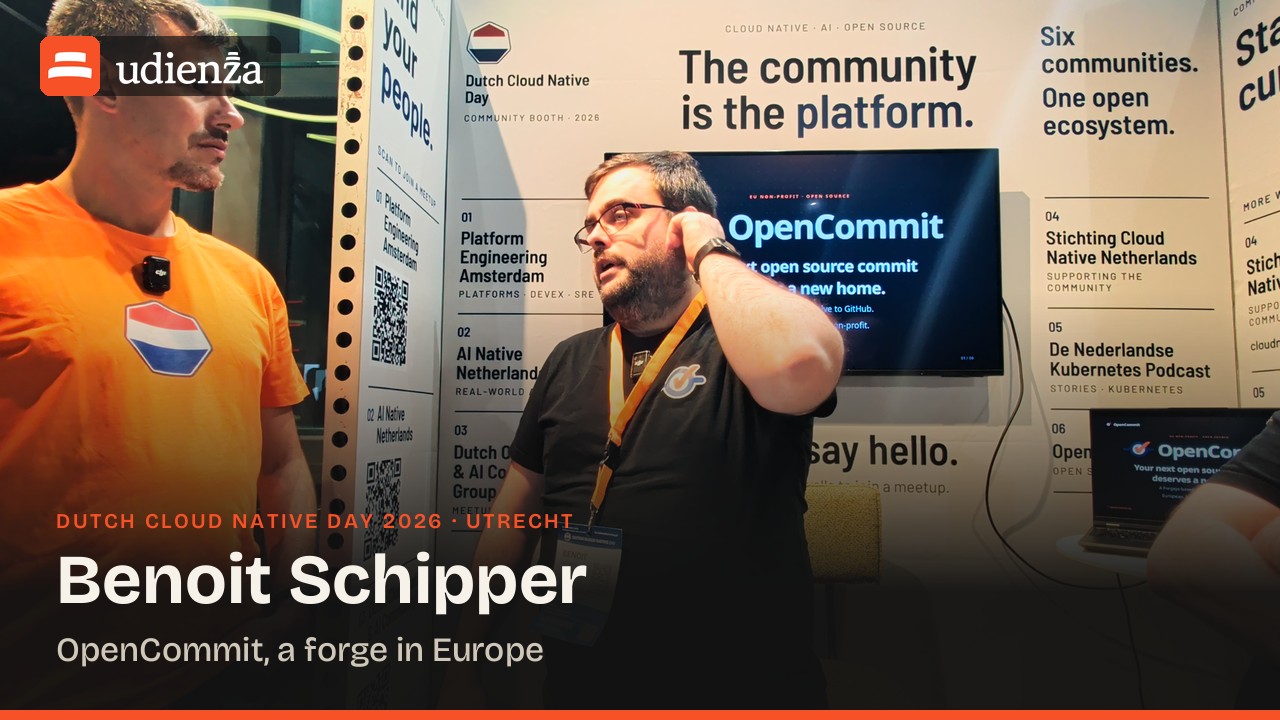
“OpenCommit is basically born out of our joint frustration that basically nothing is European or nothing is hosted in Europe.” Benoit Schipper, Treasurer of OpenCommit, described a forge built on Forgejo and hosted on Hetzner, with one button to move a project from GitHub: “we have a 95, 96% compatibility with your CI”. It is free for open source, “as long as you keep as much of your repository open source, that’s our goal.”
15:44 — Frank Stavenuiter, T Cloud
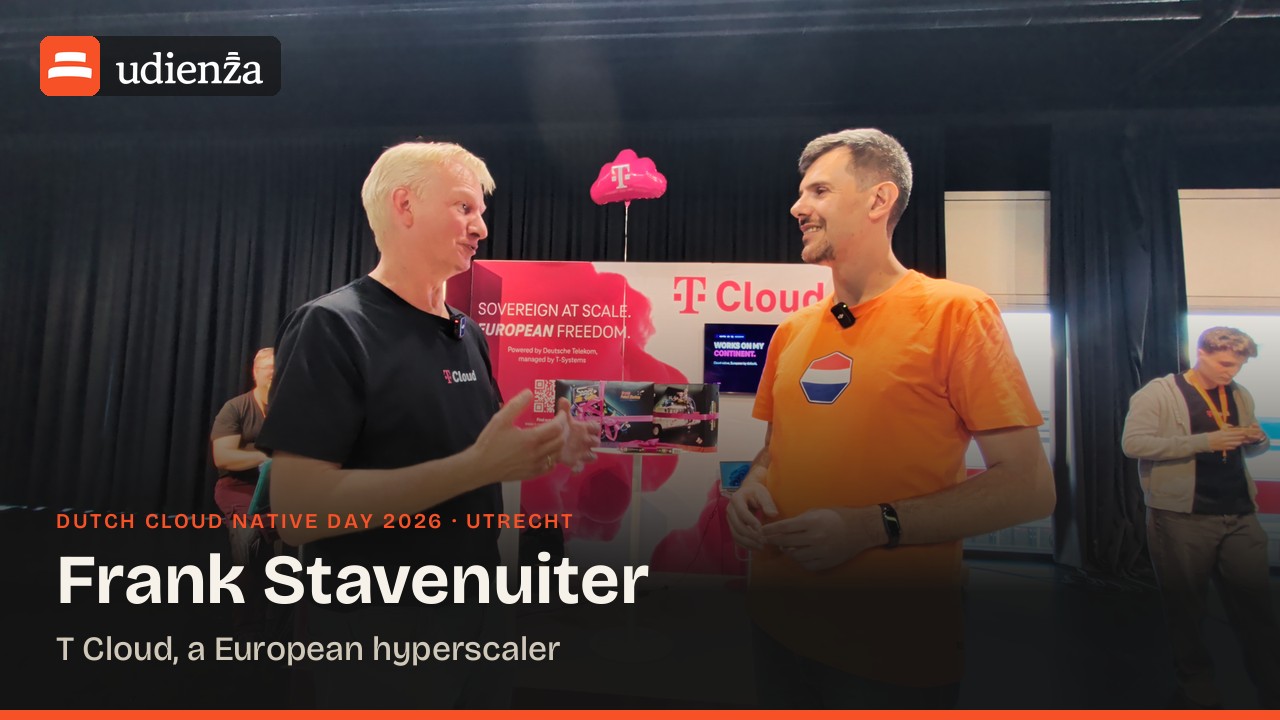
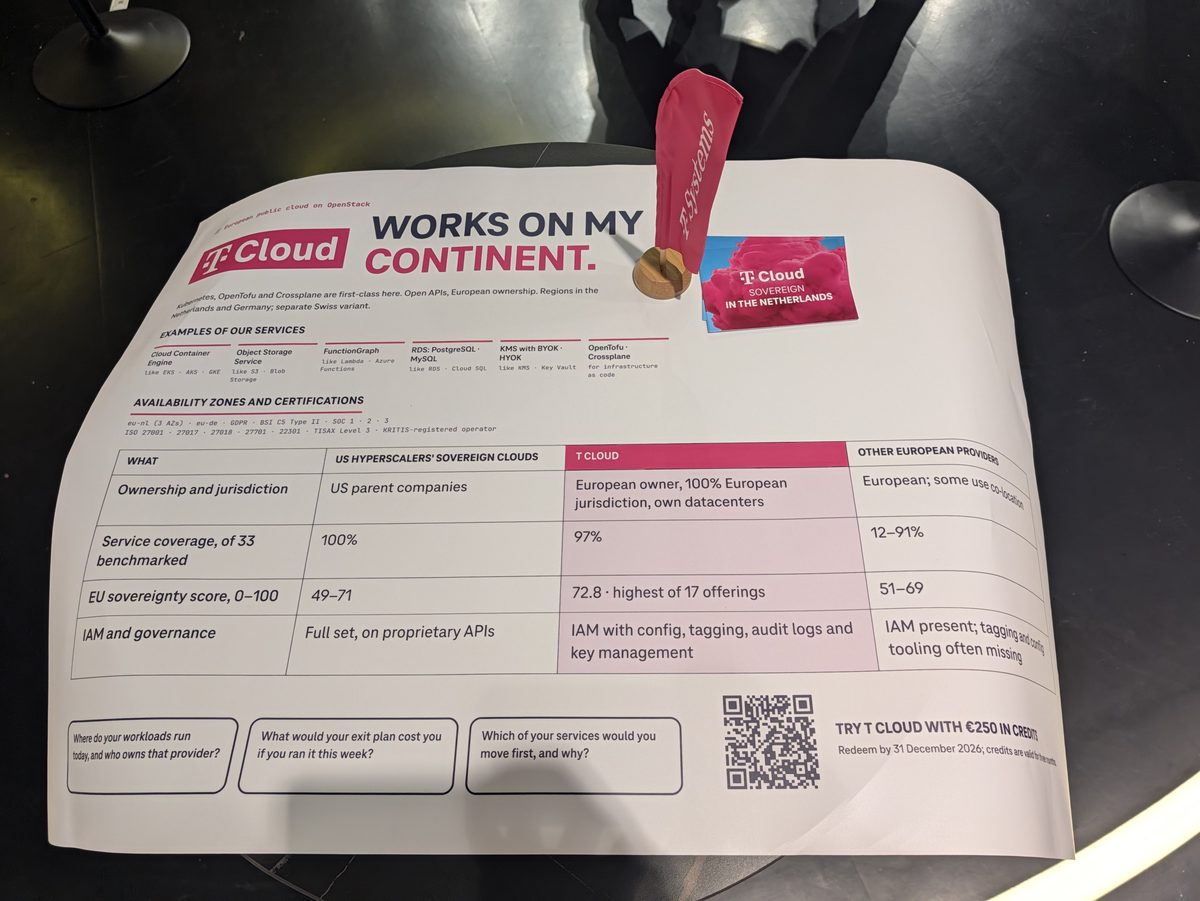
“T Cloud is the real European hyperscaler, an alternative for specific workloads on data or workloads which should reside in Europe.” Frank Stavenuiter, Chief Sovereignty Officer at T-Systems, did not ask anyone to leave the US hyperscalers: “for sure some data should reside in Europe, so that’s what we offer, we want to become an alternative.” A fire in a data center in Almere had tested T Cloud for real: “you cannot really test it, and then we found out that it works actually.” And on public money: “it’s European money, it’s taxpayer money, let’s spend it in Europe”.
15:56 — Simon Schrottner, OpenFeature
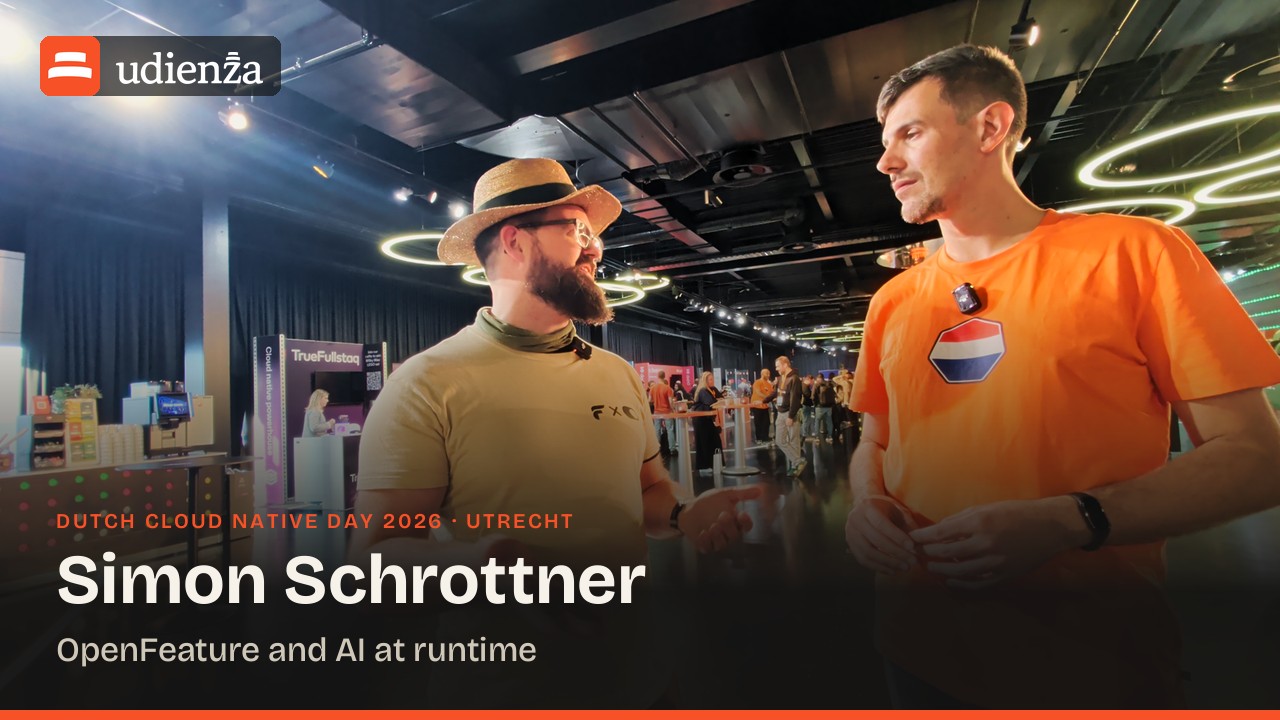
Simon Schrottner, an OpenFeature maintainer, had spoken that morning on runtime agent control with OpenTelemetry and OpenFeature. Feature flags, he explained, change a system at runtime “without a code deployment”, and with AI they “define actual boundaries” for what it may change. The everyday benefit is calmer: switch the feature off and “do it normally on Monday rather than on a Friday evening when the error appears.”
16:08 — Dario Tranchitella, Clastix
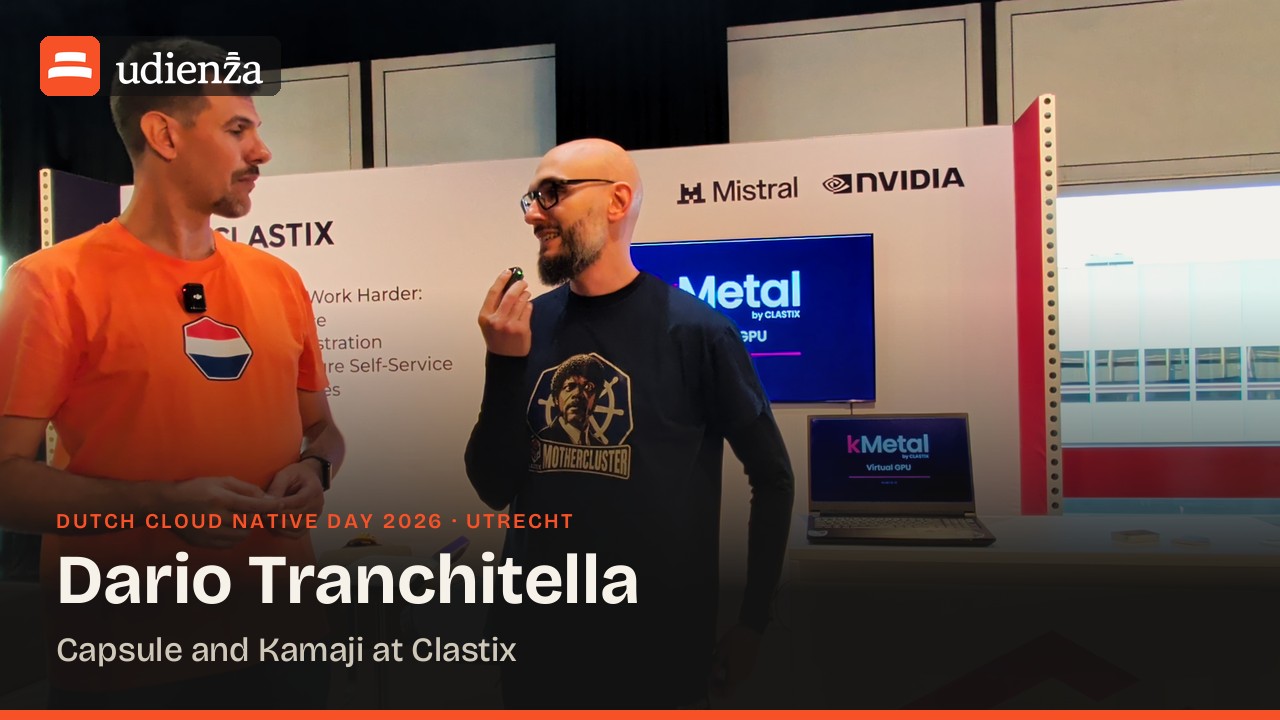
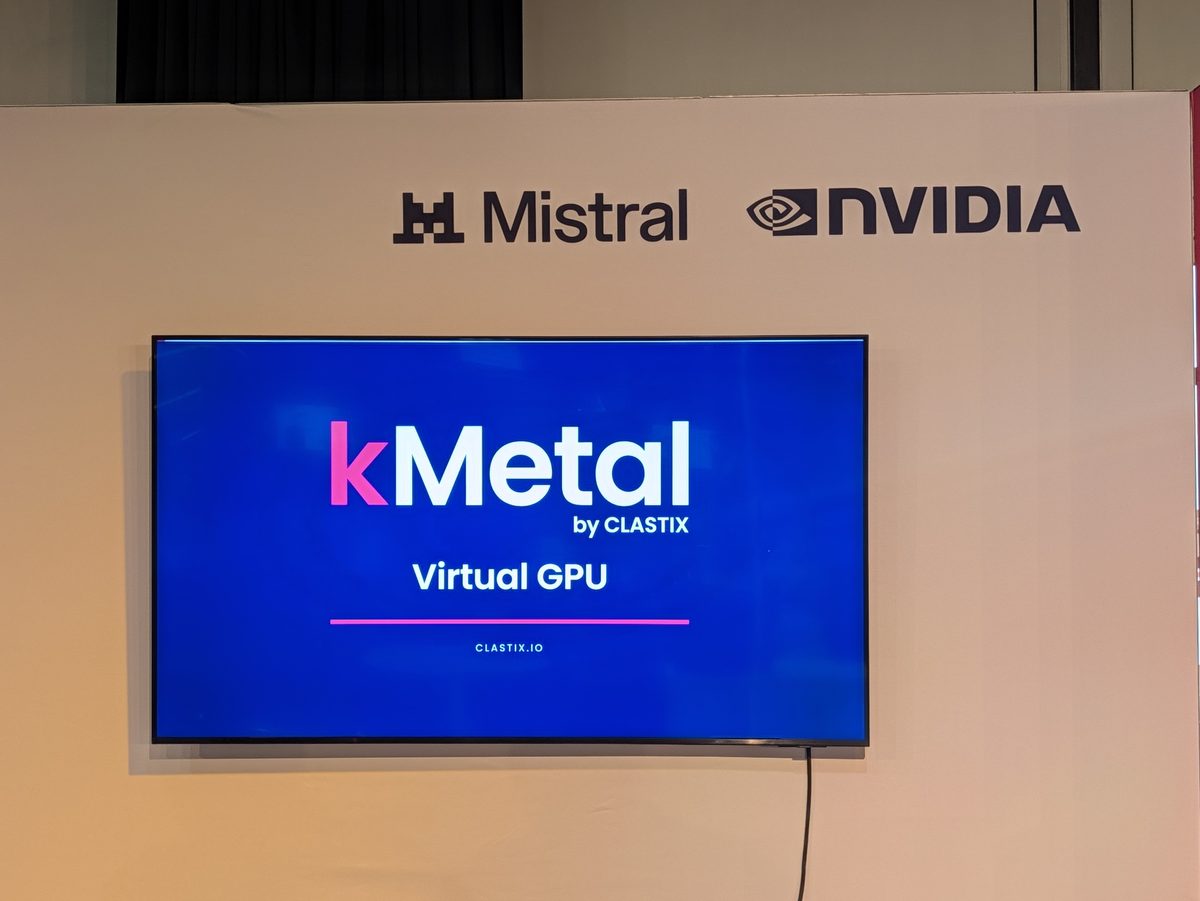
At the Clastix booth, Dario Tranchitella, its co-founder and CTO, told how the company began: “it was born from my experience in managing multiple Kubernetes clusters.” His projects are Capsule, donated to the CNCF, and Kamaji, which runs control planes “within pods from a management cluster”. Mistral runs Kamaji in production, “the backbone for training the models”, and NVIDIA uses Clastix’s technology to orchestrate its DPUs: “everything is all about network.”
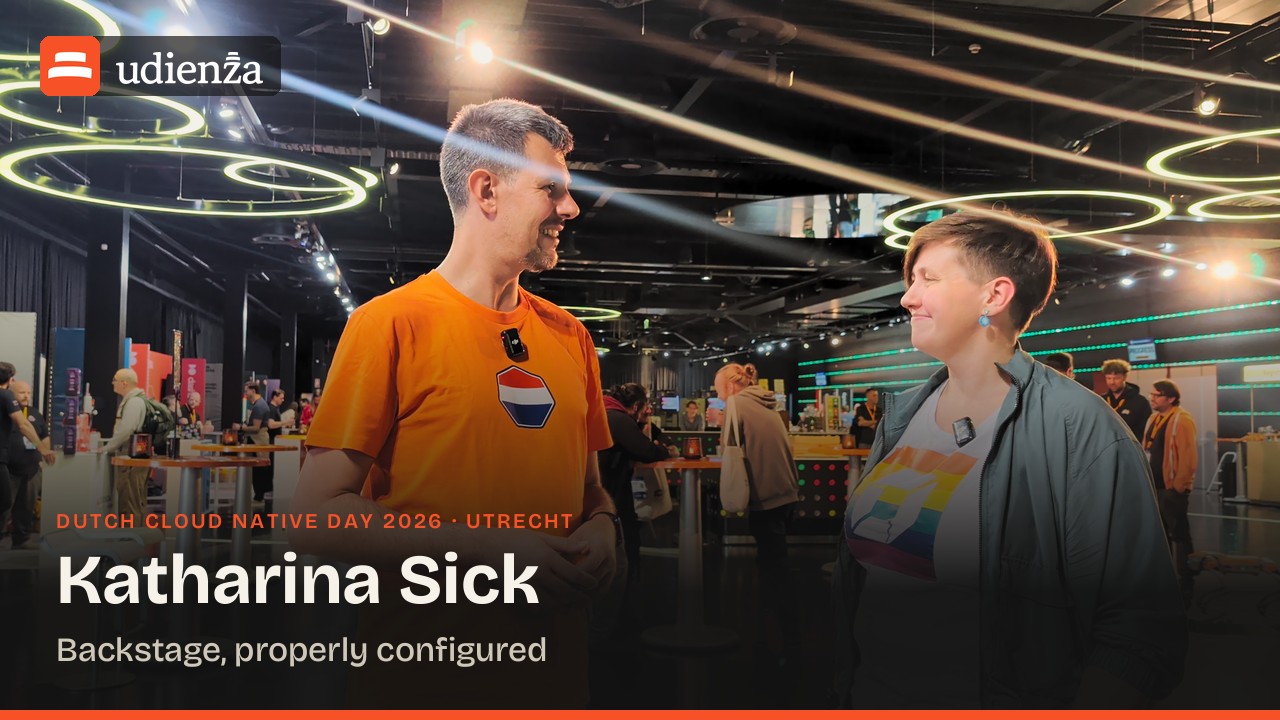
16:21 — Katharina Sick, Dynatrace
The last conversation was with Katharina Sick, developer advocate at Dynatrace, after her talk: “I spoke about Backstage today because I found out that many people actually like, you know, deploy Backstage but never properly configure it.” Her advice: “do not think about which tools you want to have, but think about the problems you want to solve.” She is building a cloud-native advent calendar for December, a new project every other day.
16:39 — Sovereignty, measured
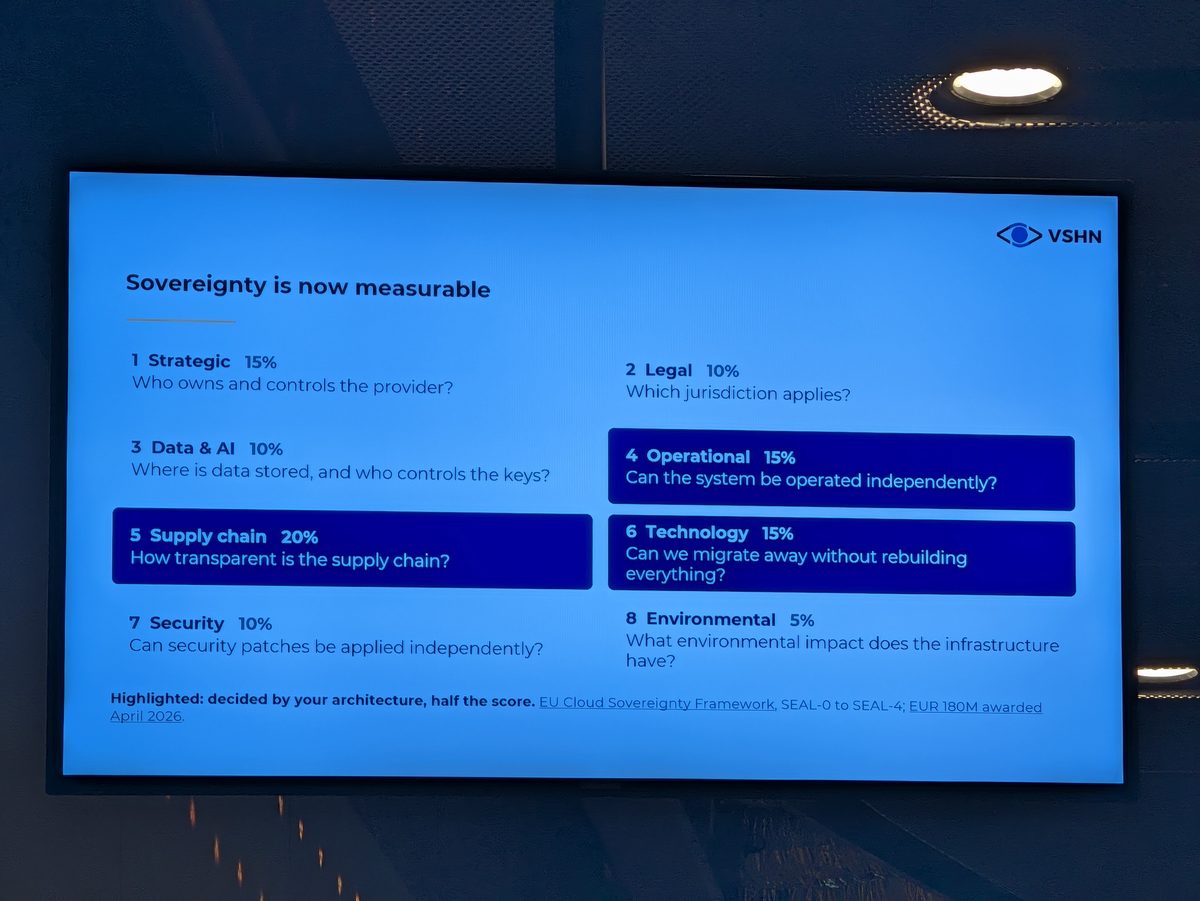
In the Progress room, Aarno Aukia of VSHN closed his talk, “Data Sovereignty Is Built, Not Bought”, with a slide that put numbers on the day’s theme: “Sovereignty is now measurable”. Eight criteria, from who owns the provider to whether you can migrate away without rebuilding everything; the operational, supply chain and technology ones, “decided by your architecture”, make half the score.
The conversations
All nine are edited, each with its own page:
- Kalle Westerling: Rethinking how we do open source
- Paola Pimazzoni: Kubermatic, from the defense side
- Klaas van Schelven: Bugsink, a European Sentry
- Pieter Lewyllie: The Cloud Native Belgium meetup
- Benoit Schipper: OpenCommit, a forge in Europe
- Frank Stavenuiter: T Cloud, a European hyperscaler
- Simon Schrottner: OpenFeature and AI at runtime
- Dario Tranchitella: Capsule and Kamaji at Clastix
- Katharina Sick: Backstage, properly configured
Like every episode, they go out on YouTube first, then on Apple Podcasts, Spotify and Amazon Music.
Built something the rest of us run on? Being a guest is free. Take the other chair
Related articles
All articles →-
Kubecon · 5 min read
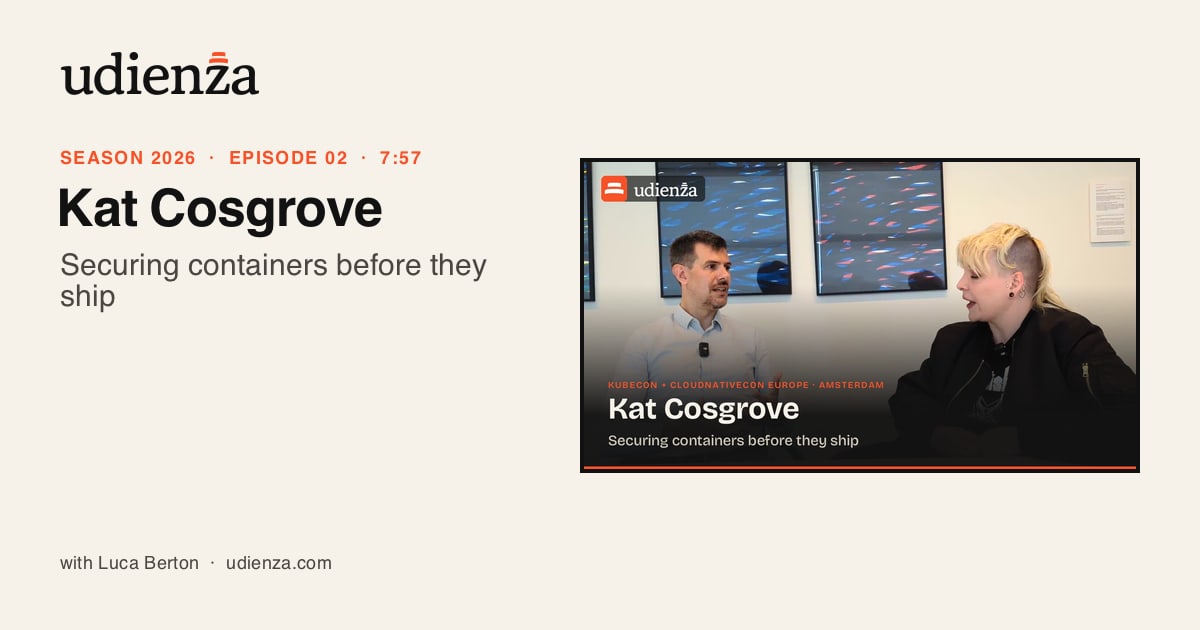
KubeCon + CloudNativeCon Europe 2026: who we met
Amsterdam, 25 and 26 March: four conversations at KubeCon + CloudNativeCon Europe, on container security, observability, agents and a European cloud.
-
Conferences · 5 min read
KubeCon Europe 2026 Amsterdam: four conversations
Udienza at KubeCon Europe 2026, Amsterdam: Kat Cosgrove, Sven Mößbauer, Luca Galante and Guido Laout on security, observability, platforms and a European cloud.
-
Kubecon · 4 min read
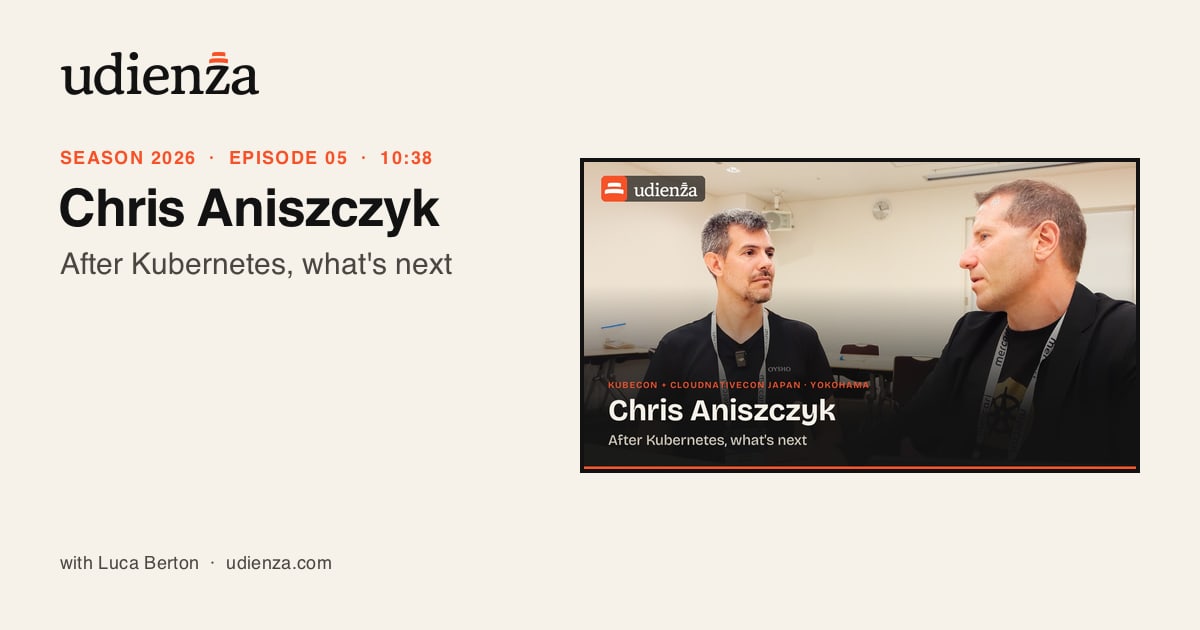
KubeCon + CloudNativeCon Japan 2026: Yokohama
29 July 2026 in Yokohama: one conversation at KubeCon + CloudNativeCon Japan, with CNCF CTO Chris Aniszczyk on agents, local AI and young engineers.
The episodes in this article
All episodes →-
Episode 98 · Coming
Kalle Westerling: Rethinking how we do open source
-
Episode 99 · Coming
Paola Pimazzoni: Kubermatic, from the defense side
-
Episode 100 · Coming
Klaas van Schelven: Bugsink, a European Sentry
-
Episode 101 · Coming
Pieter Lewyllie: The Cloud Native Belgium meetup
-
Episode 102 · Coming
Benoit Schipper: OpenCommit, a forge in Europe
-
Episode 103 · Coming
Frank Stavenuiter: T Cloud, a European hyperscaler
-
Episode 104 · Coming
Simon Schrottner: OpenFeature and AI at runtime
-
Episode 105 · Coming
Dario Tranchitella: Capsule and Kamaji at Clastix
-
Episode 106 · Coming
Katharina Sick: Backstage, properly configured