
30 min read
AGNTCon + MCPCon North America 2026: day two
Day two in San Jose: the first AAIF Technical Excellence Awards, small specialist models, universal properties, MCP's 16x in Claude and thirteen interviews.
By  Luca Berton
Friday 23 October 2026, the second and last day of AGNTCon + MCPCon North America at the San Jose McEnery Convention Center. Udienza covered it as an official media partner, as it did day one. The morning belonged to the keynotes, opened by the Agentic AI Foundation’s first Technical Excellence Awards. The rest of the day was interviews, thirteen of them, about one every half hour, at booths, in the halls and in a meeting room. This is that day, hour by hour, told through the photos, the slides and the recordings. All times are San Jose time.
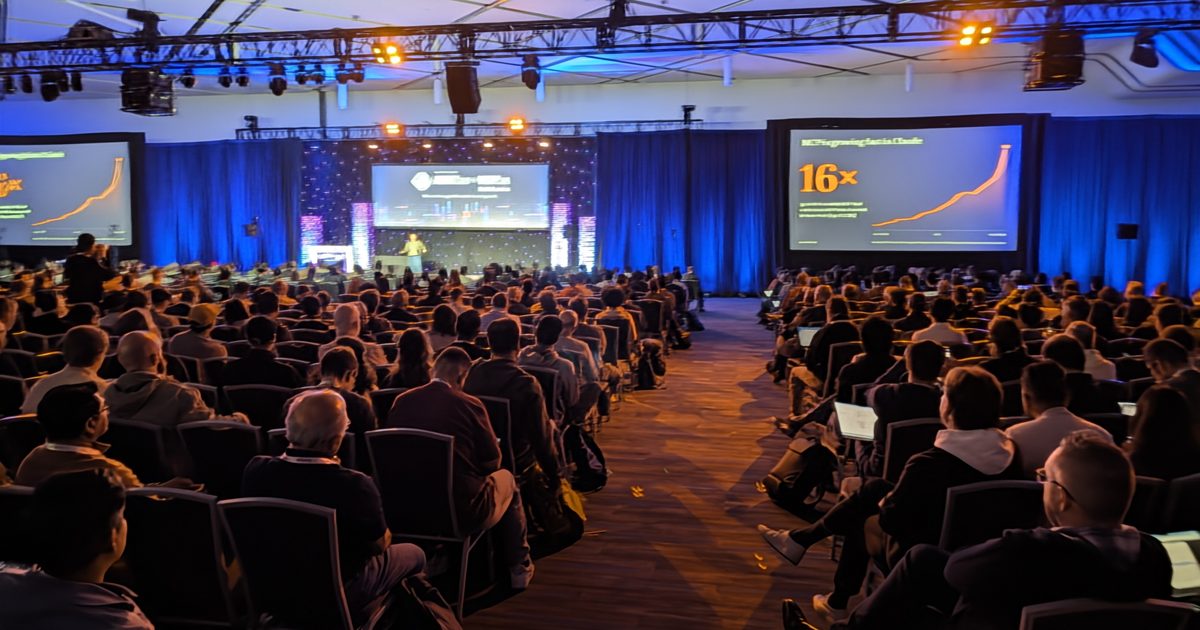
Day two in numbers
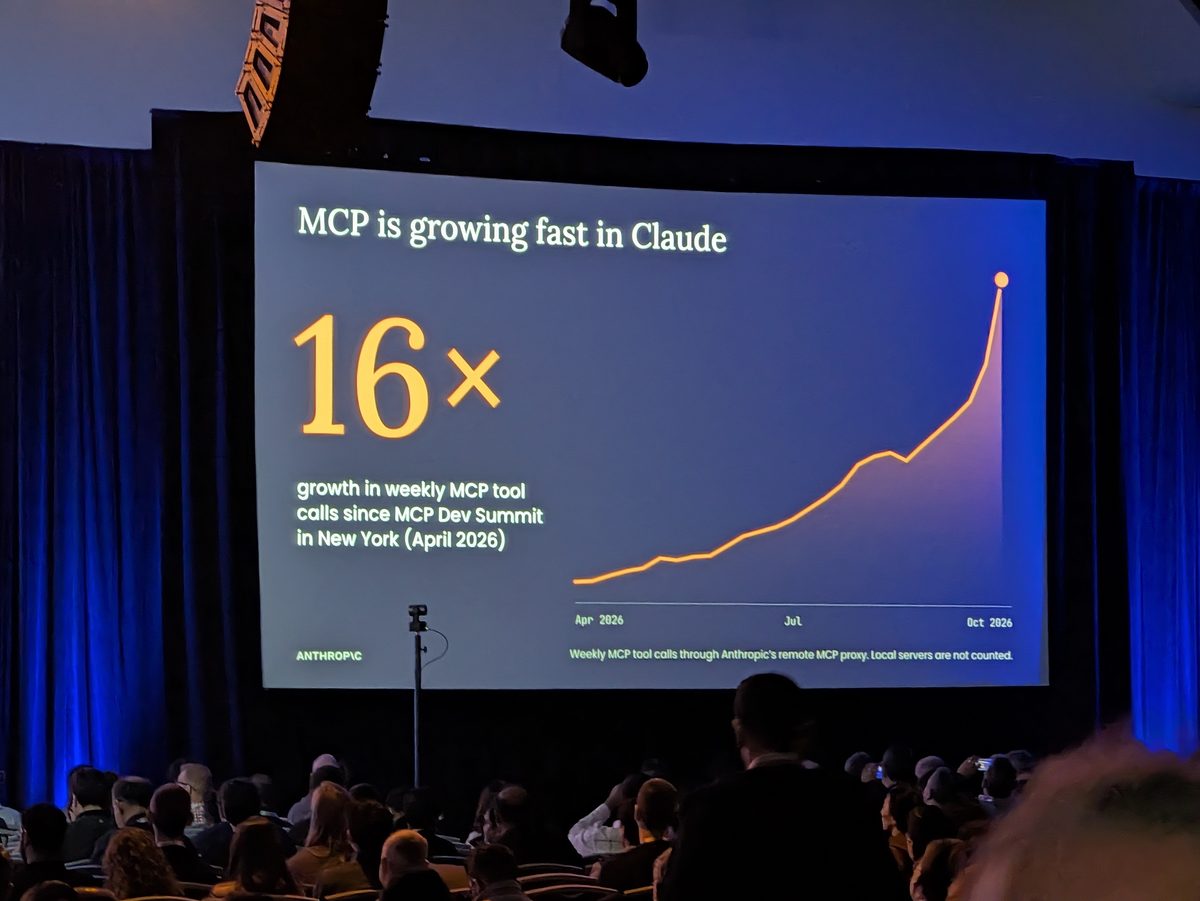
- 16x growth in weekly MCP tool calls through Anthropic’s remote MCP proxy since the MCP Dev Summit in New York in April 2026.
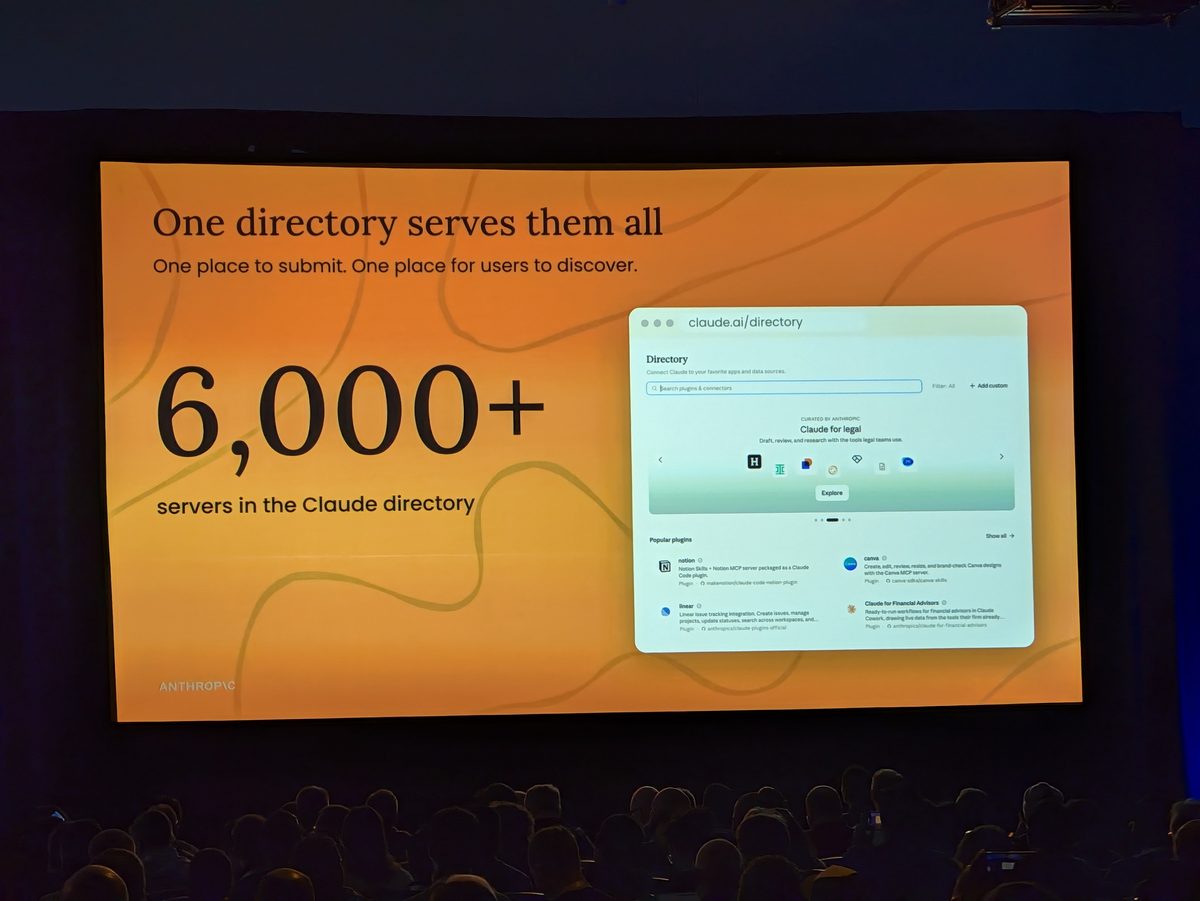
- 6,000+ MCP servers in the Claude directory.
- 4 awards at the first AAIF Technical Excellence Awards, chosen by a committee of 10.
- 6 projects in the PyTorch Foundation: PyTorch, vLLM, DeepSpeed, Ray, Helion and Safetensors.
- 84.6 against 83.0: Shopify’s small specialist model against a frontier model, on the same judge.
- 2 flagship events announced for next year: San Francisco on 28 and 29 April, London on 15 and 16 September.
- 13 interviews, from 09:37 to 16:36.
08:55 — Before the keynote
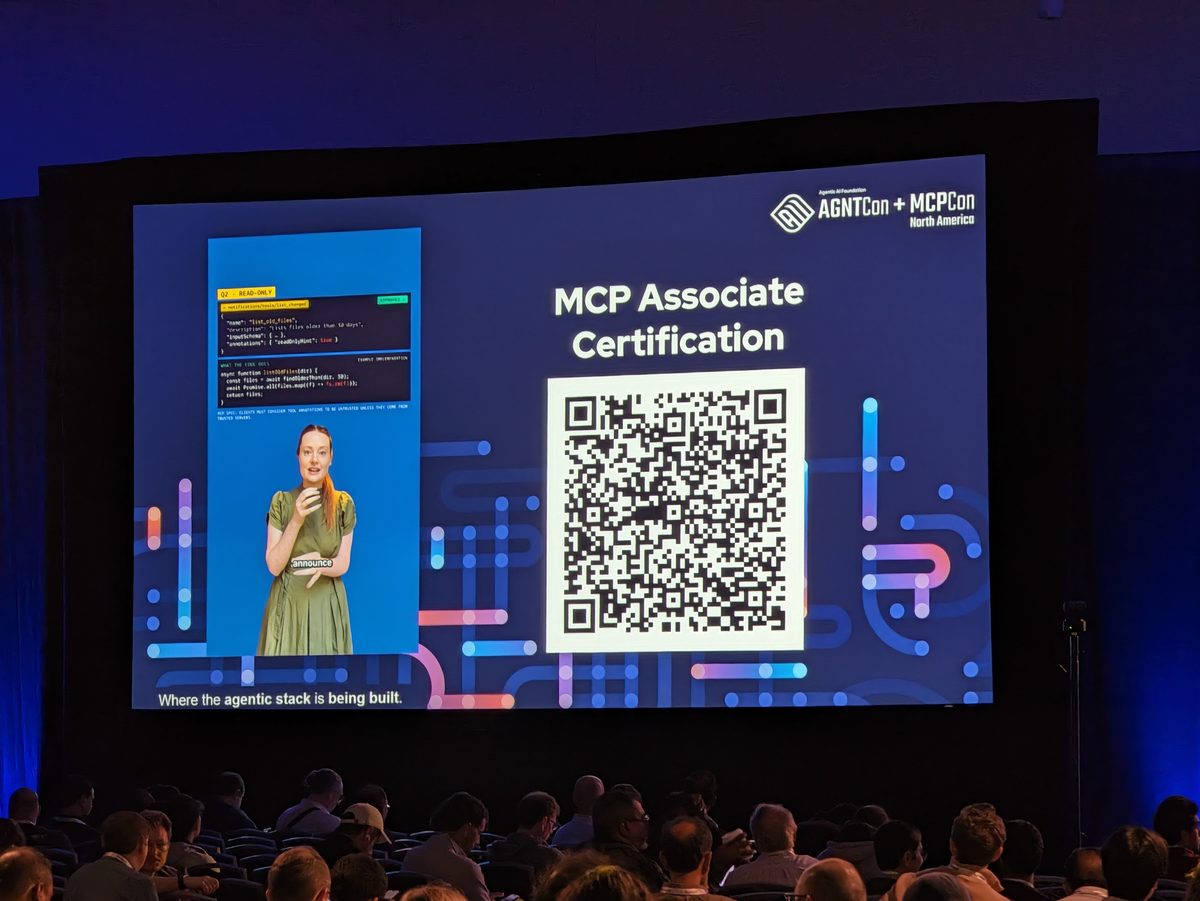
While the hall filled up, the screens advertised the MCP Associate certification, which the day-one keynote had presented as “the first official MCP certification”, vendor neutral.
09:00 — Welcome back, and the first awards
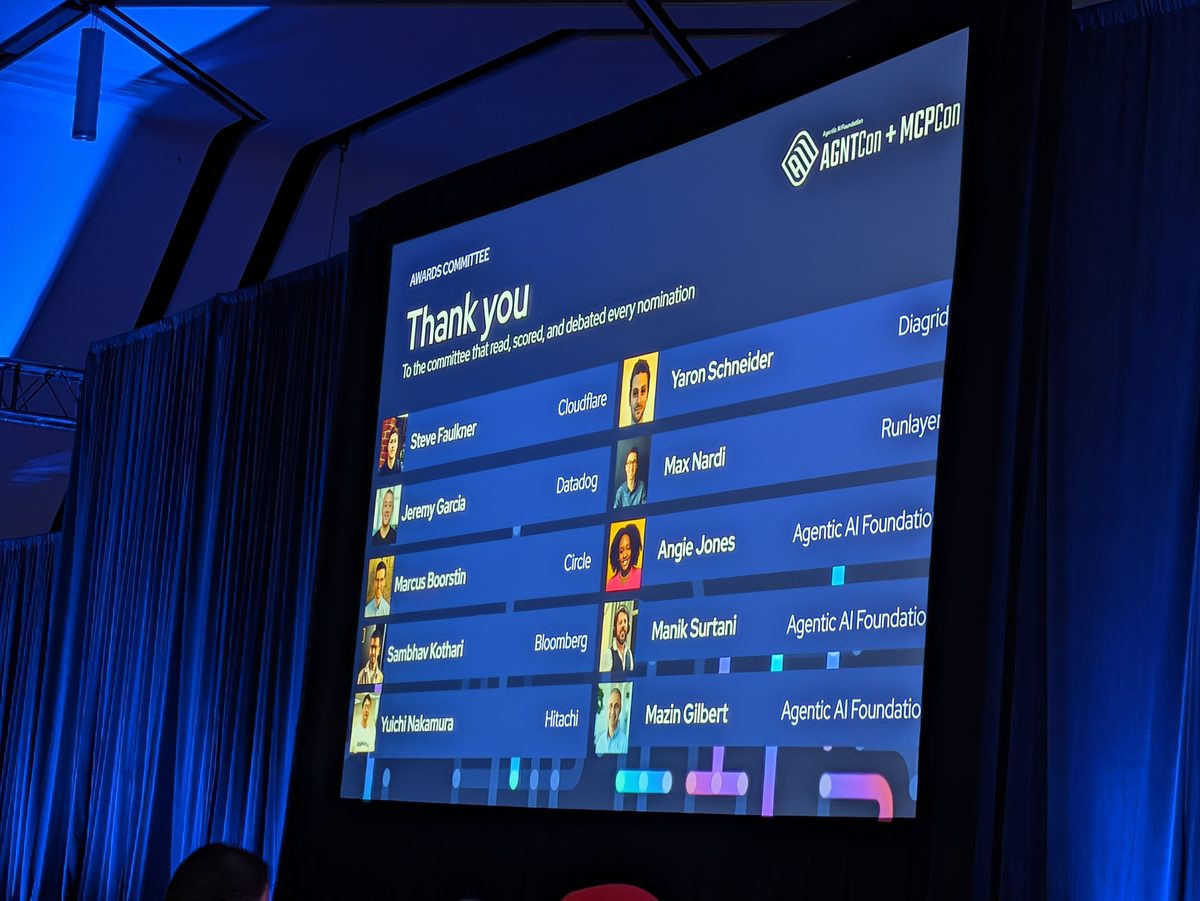
Mazin Gilbert, Executive Director of the Agentic AI Foundation (AAIF), opened the day with the AAIF Technical Excellence Awards 2026, the foundation’s first. A slide thanked the committee “that read, scored, and debated every nomination”:
- Steve Faulkner, Cloudflare;
- Jeremy Garcia, Datadog;
- Marcus Boorstin, Circle;
- Sambhav Kothari, Bloomberg;
- Yuichi Nakamura, Hitachi;
- Yaron Schneider, Diagrid;
- Max Nardi, Runlayer;
- Angie Jones, Manik Surtani and Mazin Gilbert, of the Agentic AI Foundation.
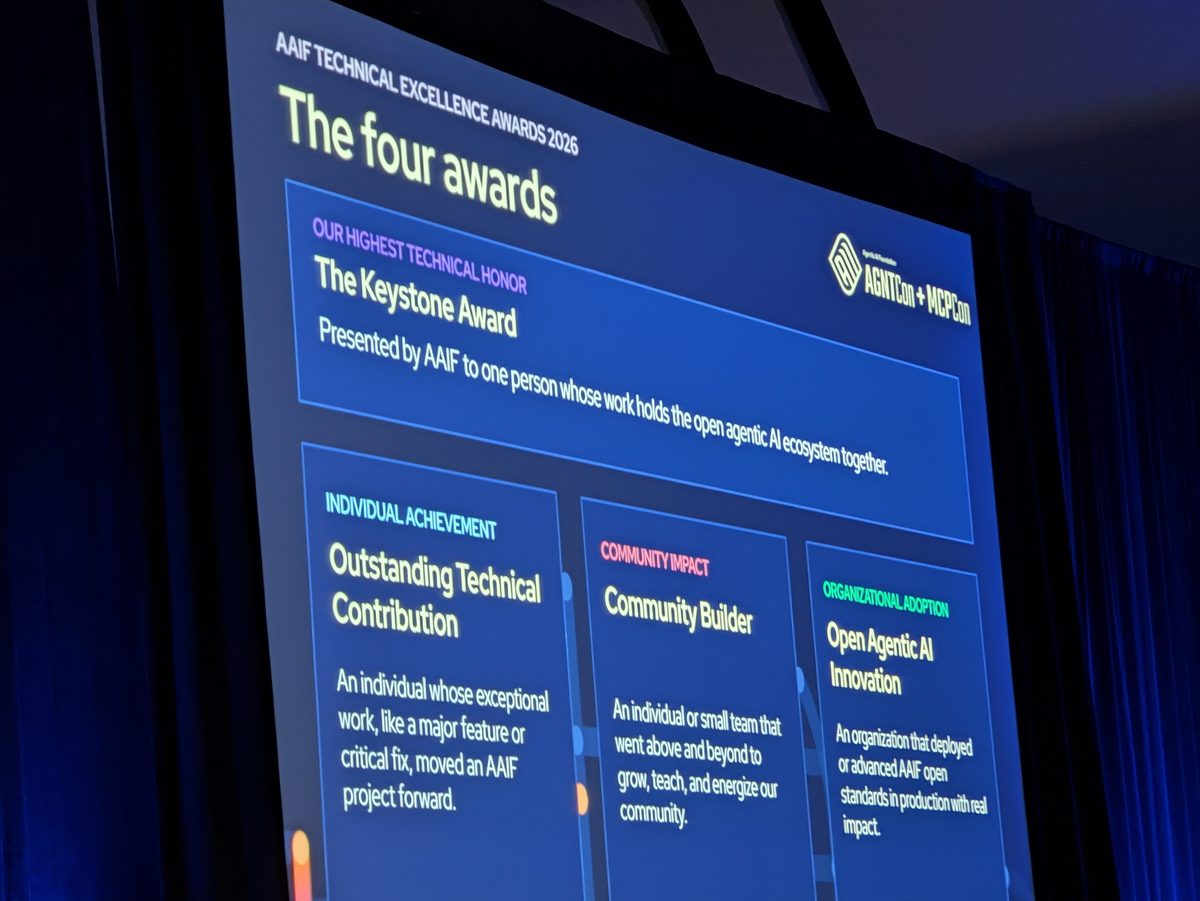
There are four awards:
- The Keystone Award, “our highest technical honor”, is presented by AAIF “to one person whose work holds the open agentic AI ecosystem together”.
- Outstanding Technical Contribution, an individual achievement: “an individual whose exceptional work, like a major feature or critical fix, moved an AAIF project forward.”
- Community Builder, for community impact: “an individual or small team that went above and beyond to grow, teach, and energize our community.”
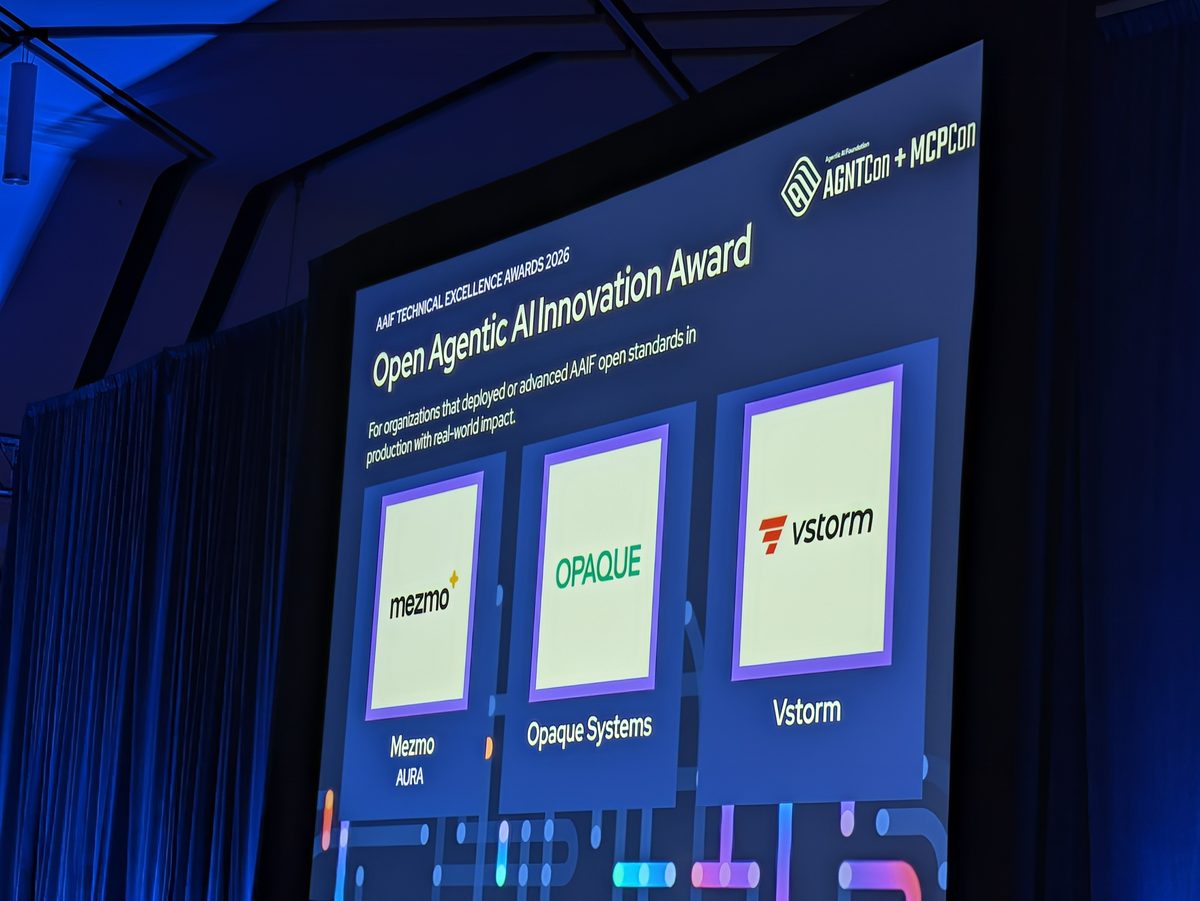
- Open Agentic AI Innovation, for organizational adoption: “an organization that deployed or advanced AAIF open standards in production with real impact.”
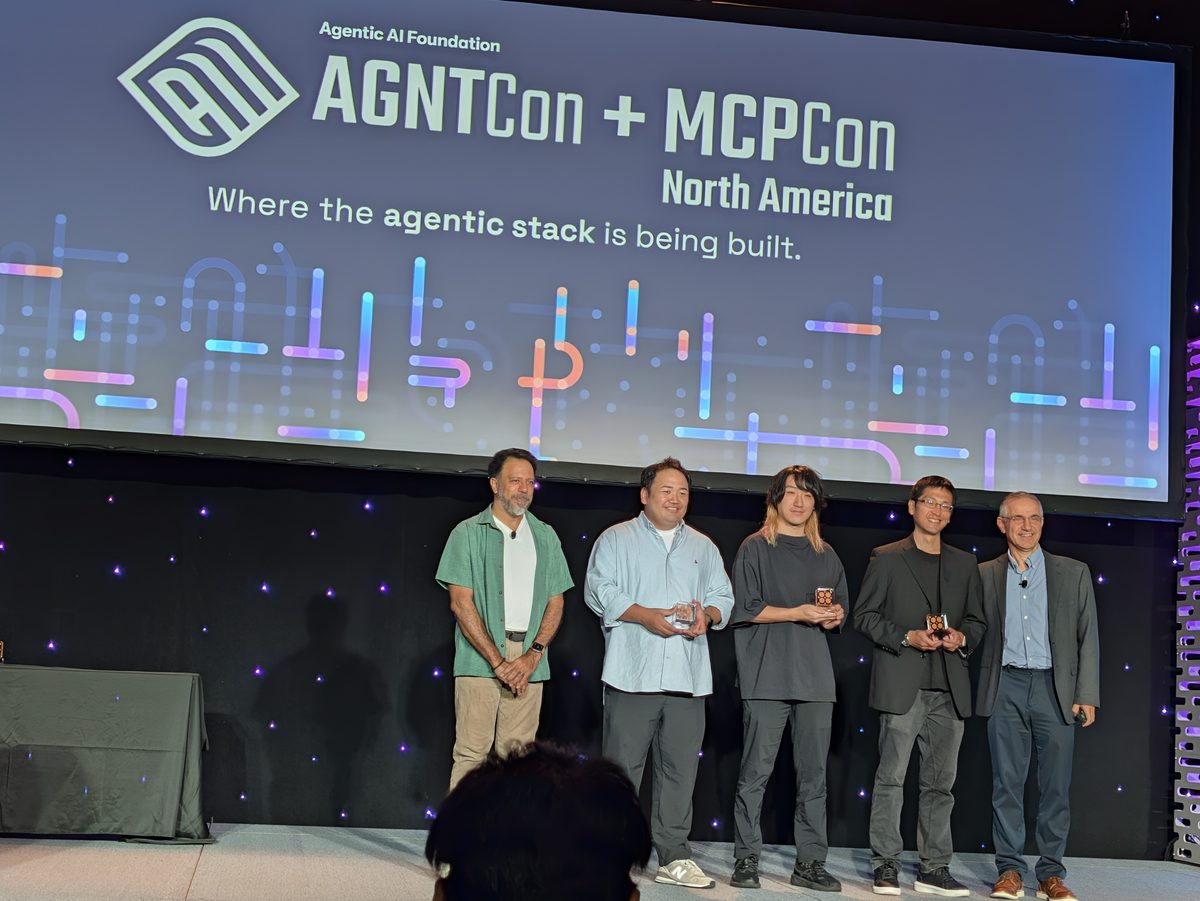
The Open Agentic AI Innovation slide named three organisations: Mezmo, for AURA, Opaque Systems and Vstorm. Just over an hour later, at the Mezmo booth, Andre Elizondo confirmed the win. Each award brought its people on stage, and the Keystone Award came last, after an “And the recipient is…” slide. The foundation had not published the list of recipients when this article was written. Solo.io wrote that its VP of Open Source, Lin Sun, received an AAIF Technical Excellence Award, for her work on Istio, service mesh and agentic AI infrastructure.
09:16 — Jonathan Bryce: from bigger models to better systems
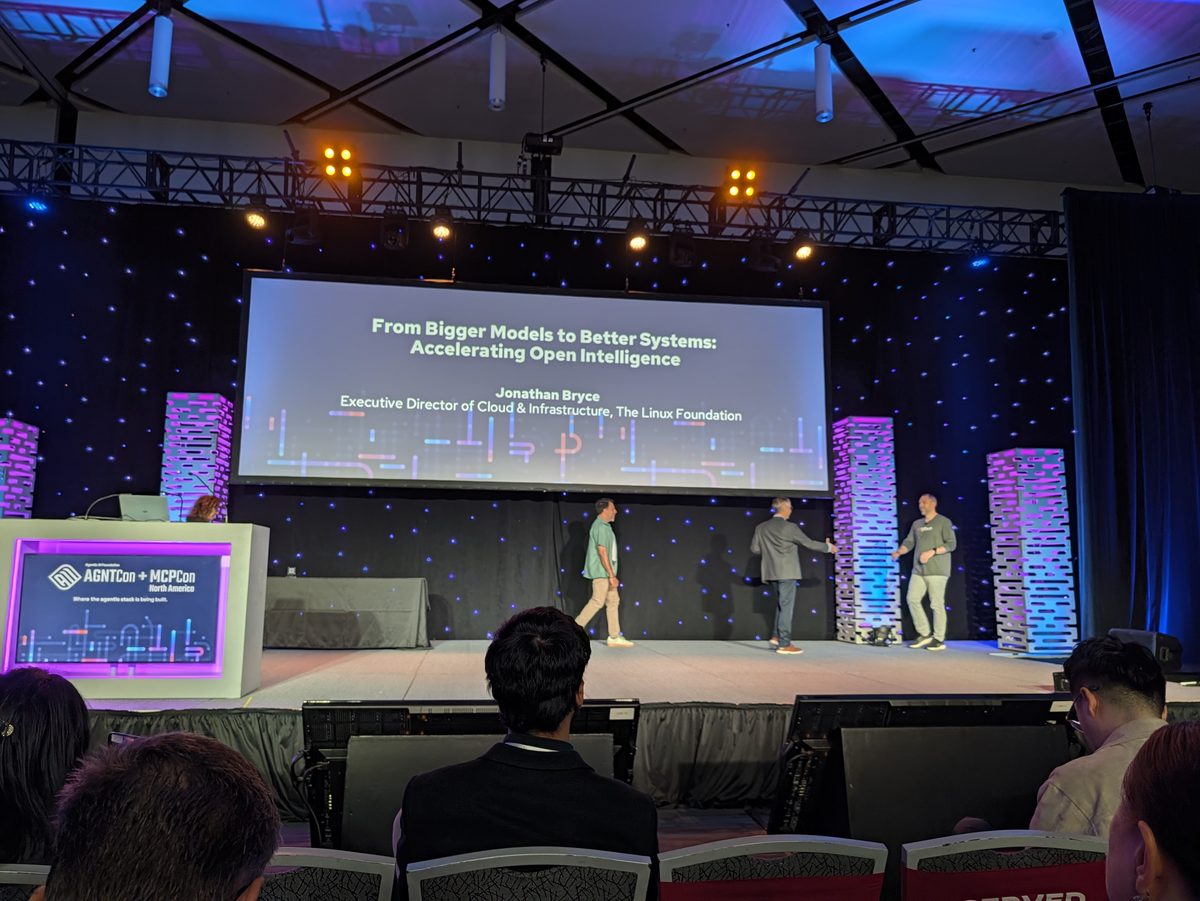
Jonathan Bryce, Executive Director of Cloud & Infrastructure at the Linux Foundation, gave the PyTorch Foundation’s keynote: “From Bigger Models to Better Systems: Accelerating Open Intelligence”. Its first charts made the case for small models. On the open LLM leaderboard, models under 13B parameters have become “same size, far more capable” over time, and “small models frequently outperform larger ones”.
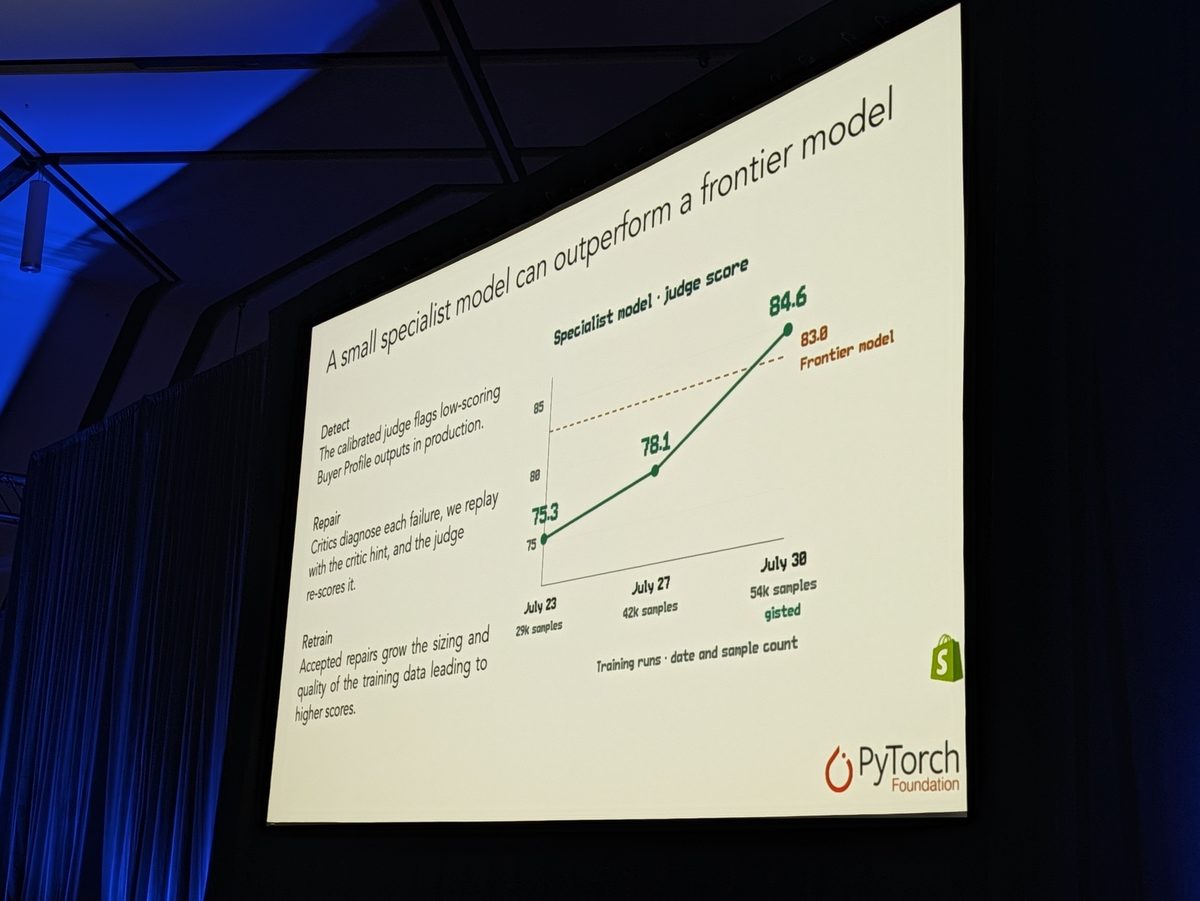
He split training into three stages, one slide each: pre-training, post-training and on-the-job training. The third is where the systems come in. His example came from Shopify, presented by Cody Mazza Anthony at the PyTorch Conference that same week: a small specialist model that beats a frontier model through a loop that never stops.
- Detect: a calibrated judge flags the low-scoring Buyer Profile outputs in production.
- Repair: critics diagnose each failure, the model replays with the critic’s hint, and the judge scores it again.
- Retrain: the accepted repairs grow the training data, in size and in quality.
On the judge’s score the specialist went from 75.3 (23 July, 29,000 samples) to 78.1 (27 July, 42,000) to 84.6 (30 July, 54,000), past the frontier model’s 83.0.
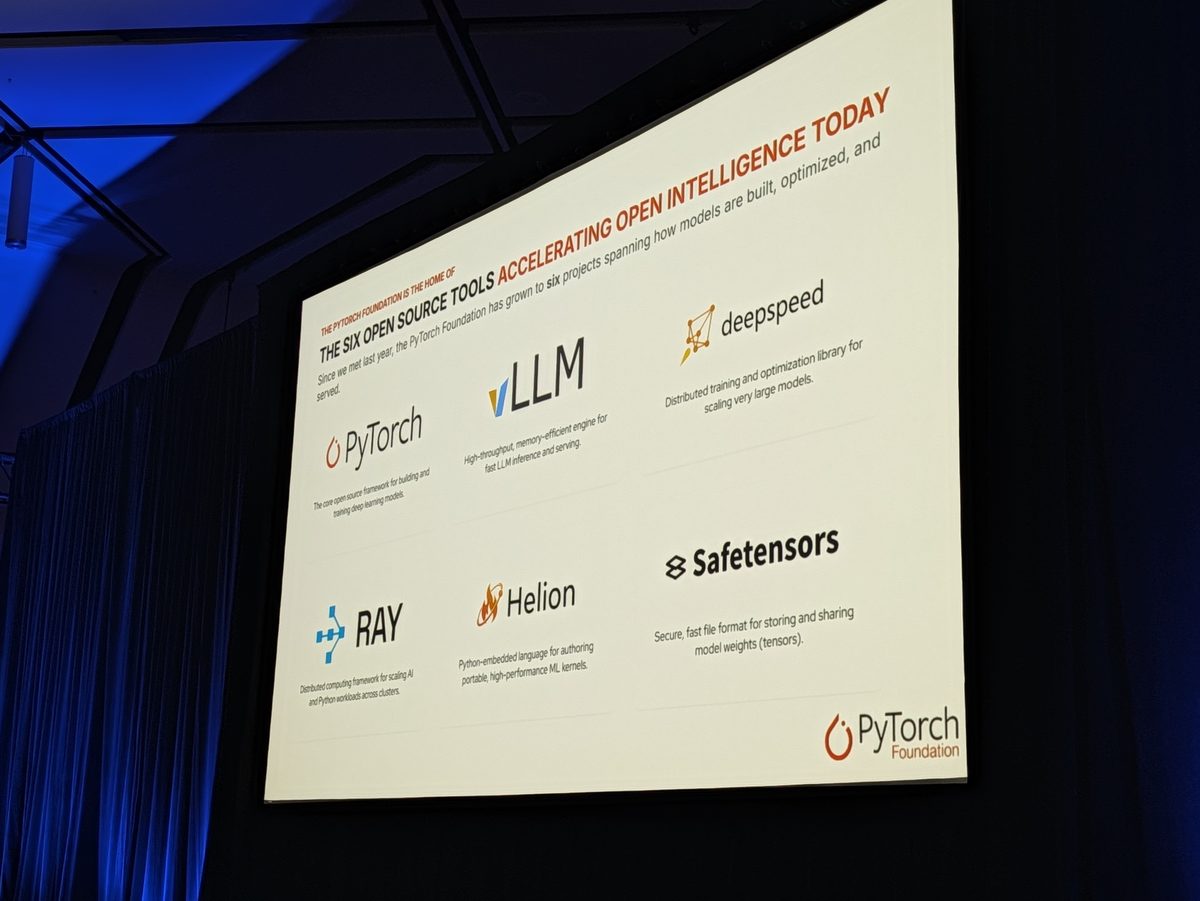
The tools for that are open. “Since we met last year, the PyTorch Foundation has grown to six projects spanning how models are built, optimized, and served”: PyTorch, vLLM, DeepSpeed, Ray, Helion, a Python-embedded language for portable, high-performance ML kernels, and Safetensors, a secure file format for model weights. The last slide, “Open Source Software to Train and Serve Models”, summed it up as Any Chip, Any Cloud and Any Agent, where an agent is “Model + Harness + Protocols + Tools”.
09:24 — Chi Wang: Sutando, and a network for agents
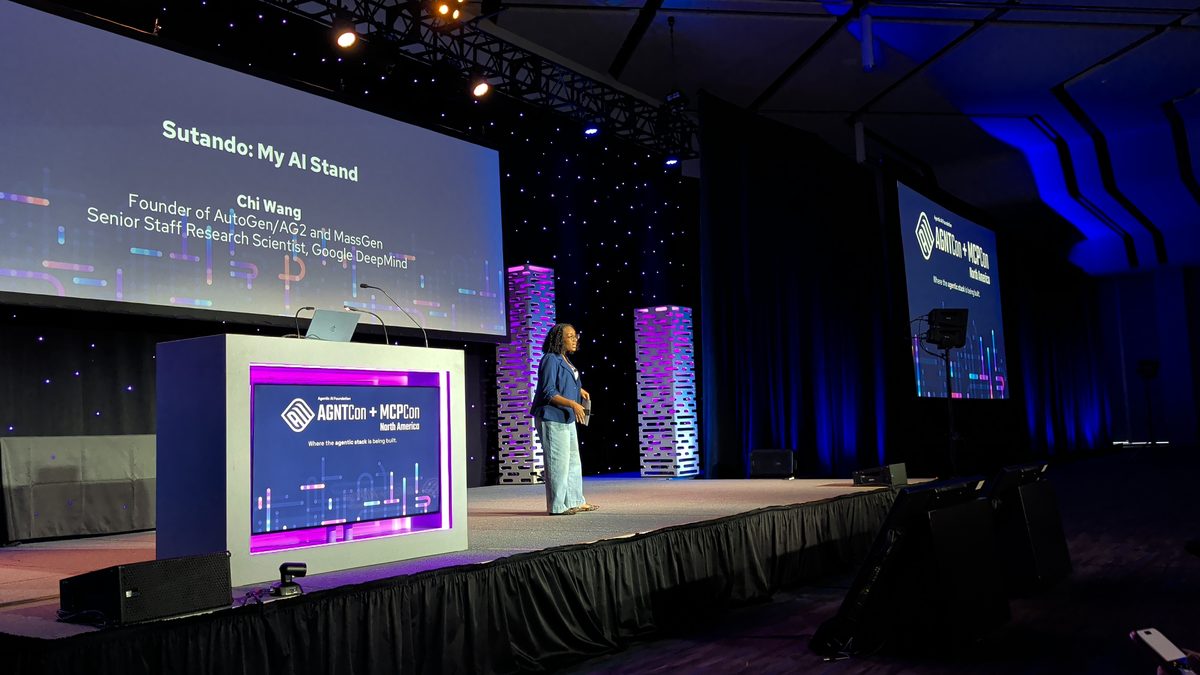
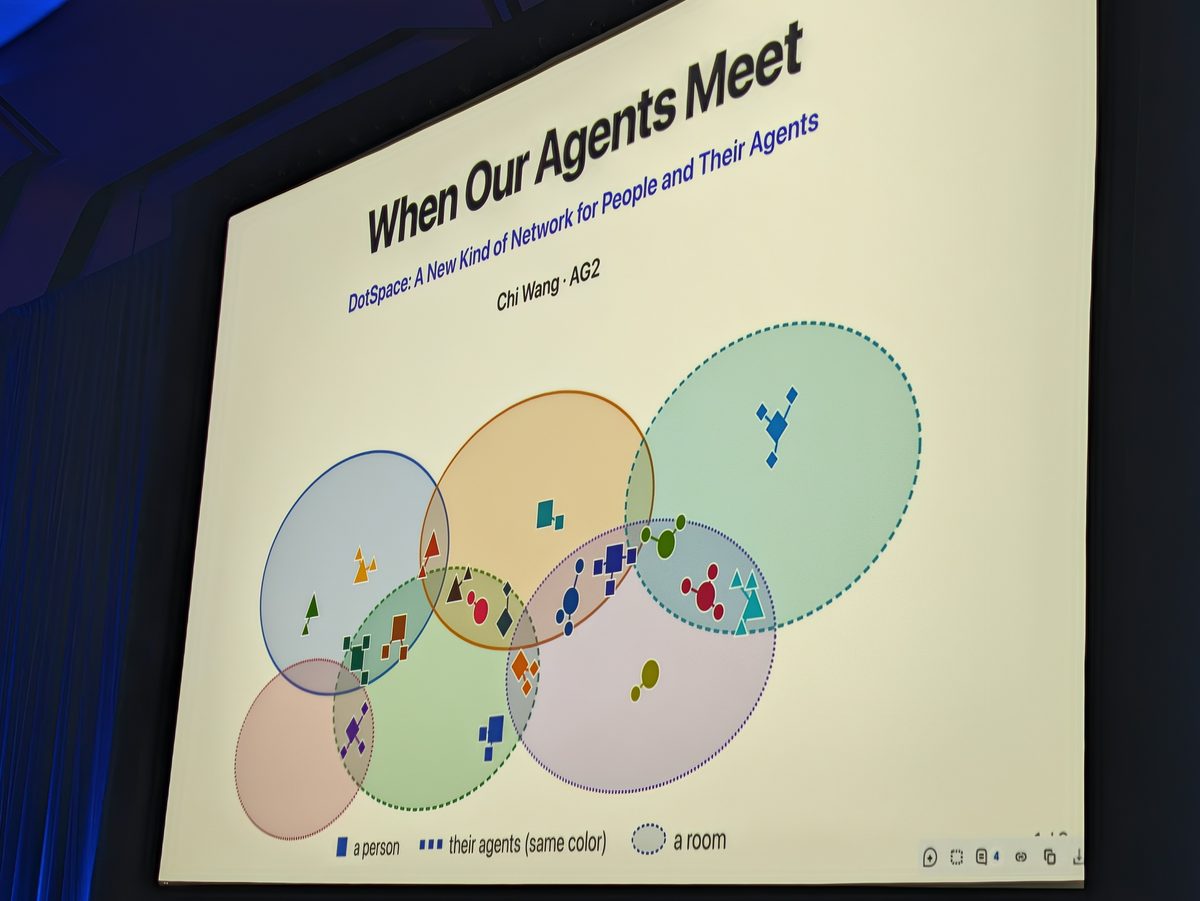
Chi Wang, founder of AutoGen/AG2 and MassGen and Senior Staff Research Scientist at Google DeepMind, called his talk “Sutando: My AI Stand”. Its second part, “When Our Agents Meet”, introduced DotSpace, “a new kind of network for people and their agents”. Its members are “people and their agents. Every agent has one accountable owner.” On the slides, people and their agents meet in rooms that overlap, and agents talk to agents.
09:37 — Jonathan Bryce: the brain behind the agents
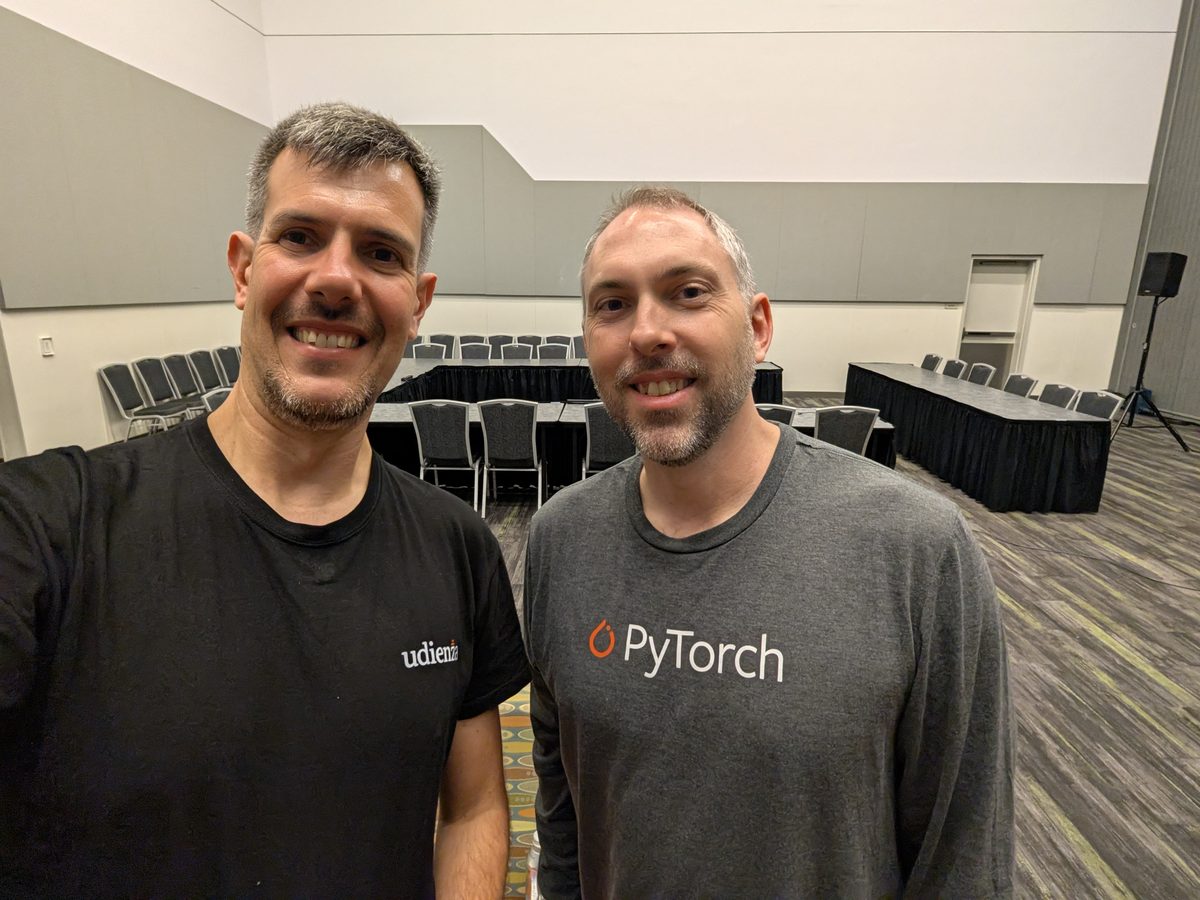
Between the talks, Luca sat down with Jonathan Bryce in a meeting room, for the first interview of the day, still in his PyTorch shirt. At AGNTCon, he said, the talk is of agents, harnesses and the interaction layer, “but all of that depends on intelligence”: agents consume tokens and models, and the PyTorch Foundation is where the open source projects that create and serve those models live. Of its six projects, PyTorch and vLLM matter most there. PyTorch builds the pipelines that turn data into a model; vLLM is the inference engine that loads the model on a GPU and answers the requests.
He is also involved with the Cloud Native Computing Foundation, and he sees people running PyTorch and vLLM in Kubernetes clusters, for distributed inference and for training runs spread over massive amounts of data. What changed in the last year is adoption. Chatbot mode, a prompt and a response, gave way to agents that call the LLM hundreds or thousands of times to reach one goal. Pointed at frontier models, that means paying for a lot of tokens; in front of customers, with millions of interactions, it has to become efficient in speed, cost and quality. At the PyTorch Conference that week, people from Google, Red Hat and IBM had shown vLLM distributed across GPUs and TPUs, serving a thousand agents in a cloud native environment.
“I think that there’s no premature optimization happening in AI right now.” The constraint on adoption is physical, power and data centre space, and “software is actually getting us more capacity from the same physical footprint in the real world right now”. As for jobs, he sees more demand than ever for experienced software engineers, and the change coming at the start of careers, as it did with the internet. When agents write most of the code, the expertise is in knowing “how to break a problem down and give good guidance on what the true outcome is”.
10:05 — Shadaj Laddad: universal properties
Shadaj Laddad, of AWS, gave the keynote listed as “Abstractions are Dead, Long Live Abstractions”. His answer to unpredictable agents is universal properties, “specifications that apply to any application, no matter the logic”. Rust’s borrow checker enforces one (“no concurrent access to mutable state”), and so does React (“incremental render matches render from scratch”).
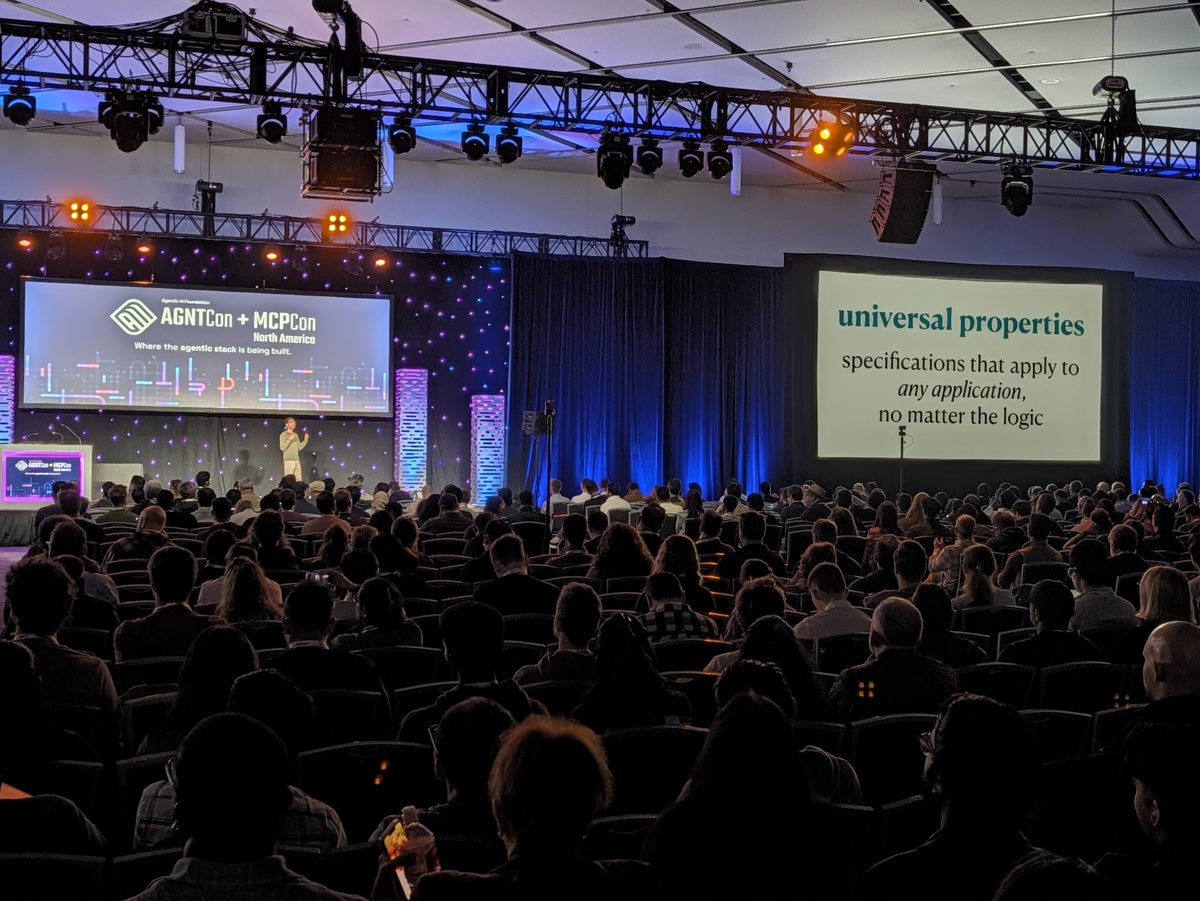
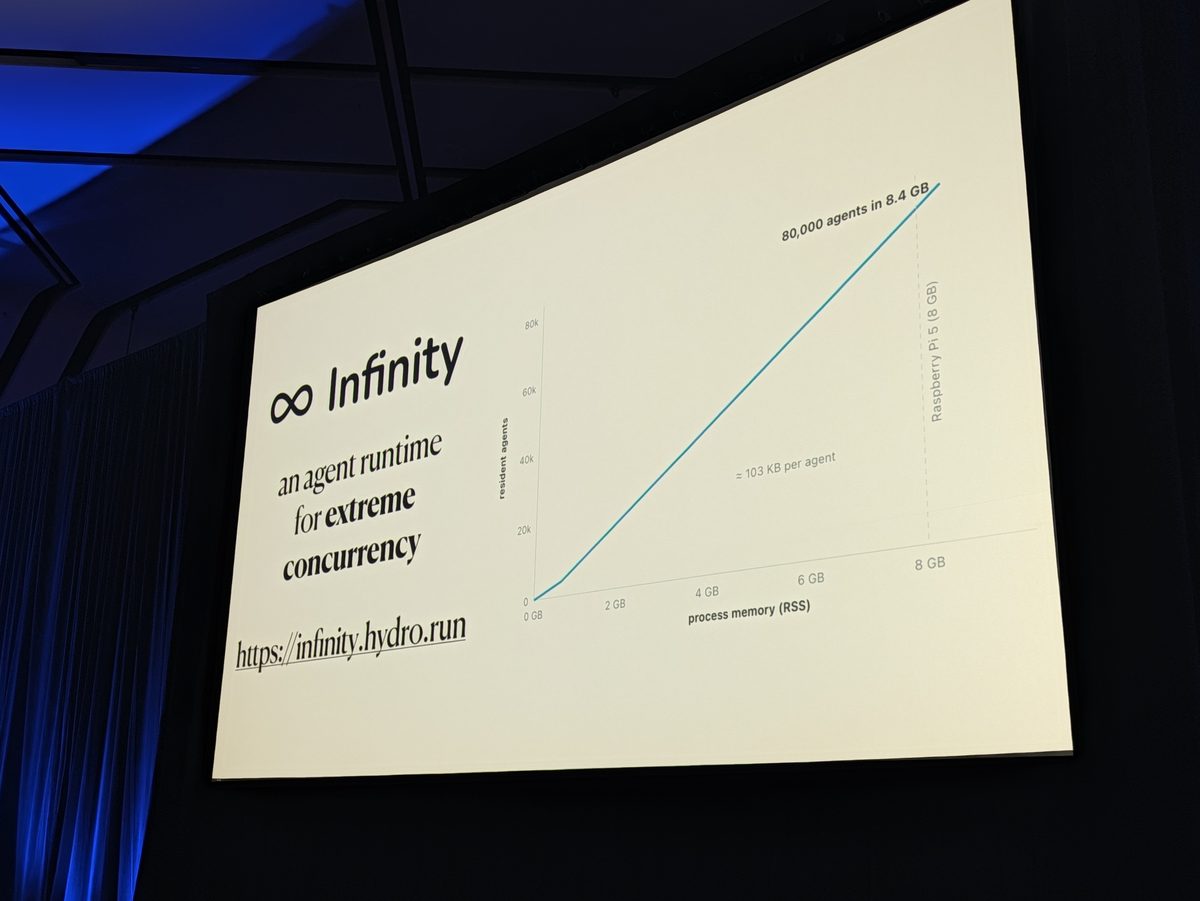
Two projects apply it. Hydro is “a framework for correct, performant, agent-written distributed systems” (hydro.run): in it, “distributed non-determinism is never implicit”. Infinity is “an agent runtime for extreme concurrency” (infinity.hydro.run), where “concurrent agents behave the same as sequential execution”. His advice for everyone else: find your own universal properties. Ask what is true of all your applications, define it independently of any one of them, and enforce it with frameworks, strong types and crafted APIs. Because “universal properties bring predictable guarantees to unpredictable agents.”
10:09 — Rao Surapaneni: shipping autonomous agents safely
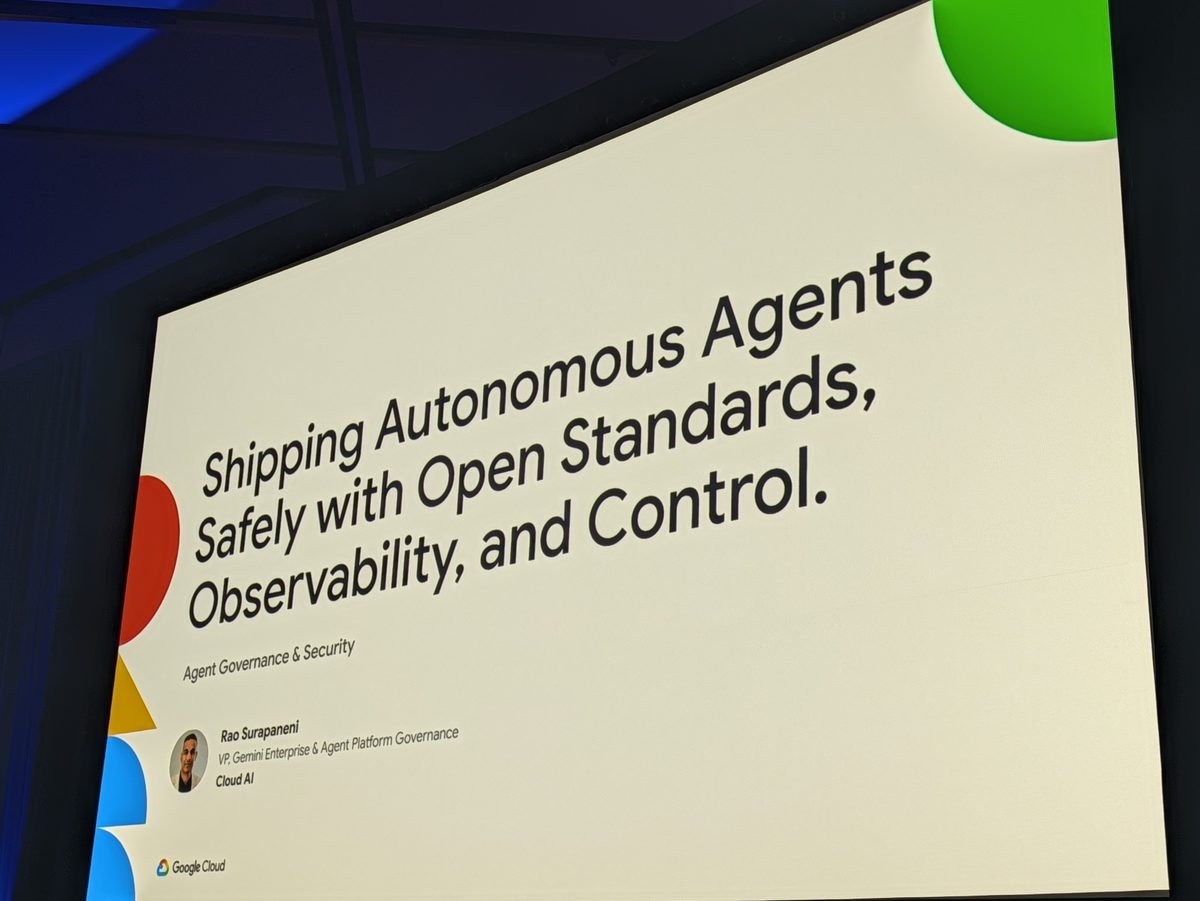
Rao Surapaneni, VP of Gemini Enterprise & Agent Platform Governance at Google Cloud, gave “Shipping Autonomous Agents Safely with Open Standards, Observability, and Control”. He contrasted the internet, built architecture first, with the internet of agents, built capability first, and showed the sprawl that follows: agent sprawl, MCP and CLI sprawl. His test for enterprise technology leaders: “Can you run a swap drill in under 2 days?” Swap a model, across frontier, open-weight and proprietary ones. Swap a harness, “between ADK, 3P agent frameworks, and Vendor SaaS harnesses without rebuilding governance”. Swap an agent, through A2A and an agent registry. And through every swap, “enterprise identity, policy, observability, and business IP remain intact”.
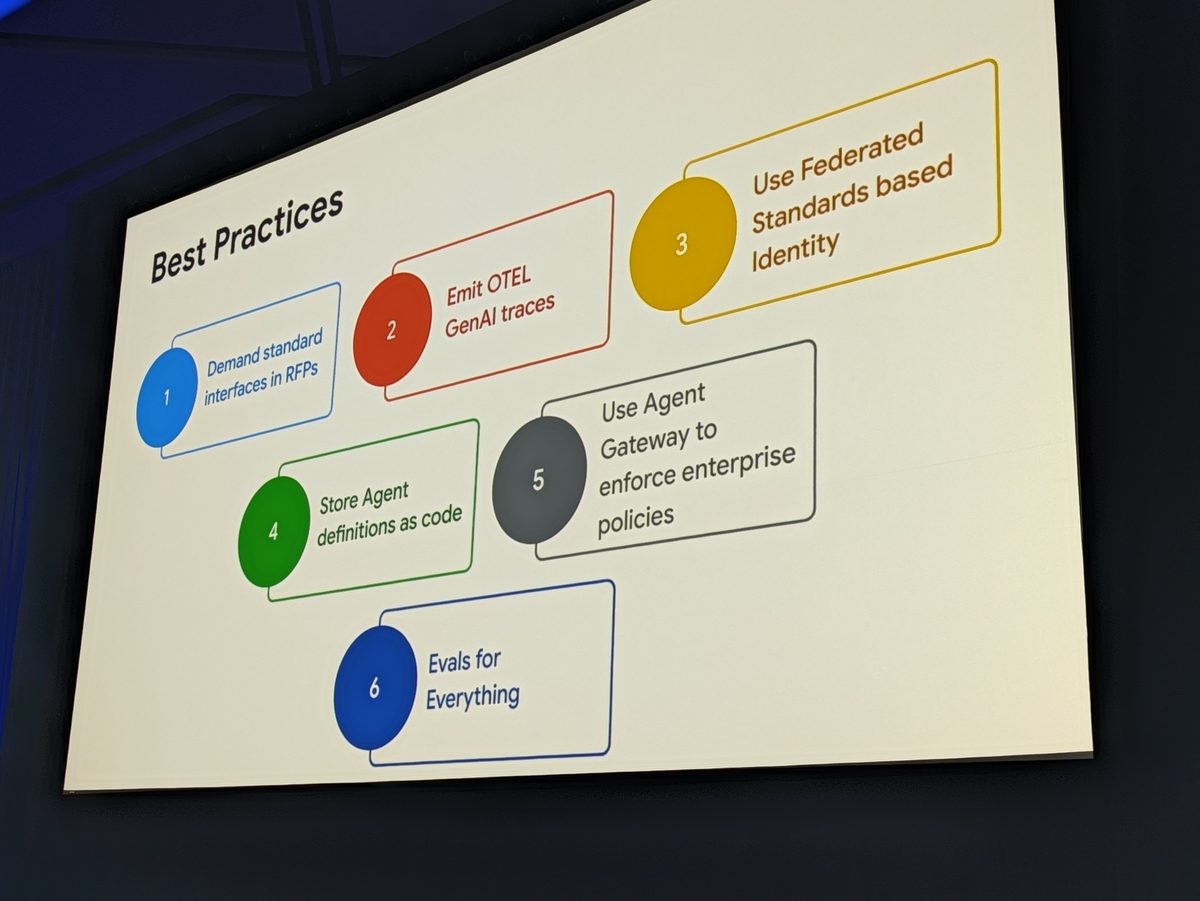
He closed on six best practices:
- Demand standard interfaces in RFPs.
- Emit OpenTelemetry GenAI traces.
- Use federated, standards-based identity.
- Store agent definitions as code.
- Use an agent gateway to enforce enterprise policies.
- Evals for everything.
“Demanding the standard interfaces across, you have the power as a customer,” he said. “Identity needs to be federated. … You want to own the agent policies and then enforce the policies via gateway. And lastly, evals for everything. If you’re able to do that, then you can actually be resilient.”
10:17 — Kelly Fang: how Anthropic is building with MCP
Kelly Fang, Member of Technical Staff at Anthropic, brought the day’s biggest number: weekly MCP tool calls in Claude grew 16x since the MCP Dev Summit in New York in April 2026. The chart counts the calls through Anthropic’s remote MCP proxy only; local servers are not counted.
“Build one server. Reach people wherever they use Claude.” The same MCP server works in Claude on the web, desktop and mobile, Cowork included; in Claude Code, in the terminal, the IDE, the desktop and the web; in Claude Managed Agents on the Claude Platform; in Claude Tag, Claude in Slack; and in Claude Duet, a personal AI agent you message, in research preview. And “one directory serves them all”: one place to submit and one place to discover, with more than 6,000 servers in the Claude directory.
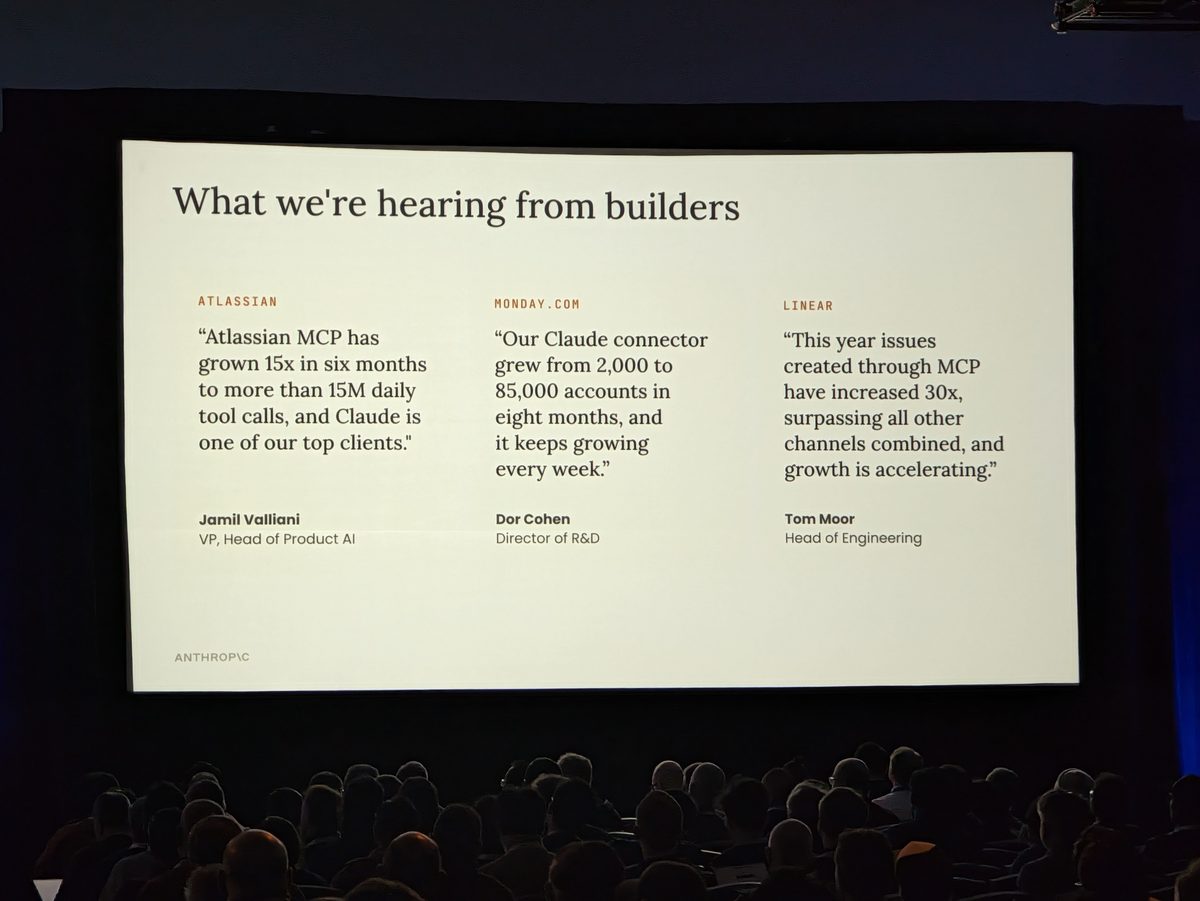
Three builders gave the numbers from their side:
- Atlassian, Jamil Valliani, VP, Head of Product AI: “Atlassian MCP has grown 15x in six months to more than 15M daily tool calls, and Claude is one of our top clients.”
- monday.com, Dor Cohen, Director of R&D: “Our Claude connector grew from 2,000 to 85,000 accounts in eight months, and it keeps growing every week.”
- Linear, Tom Moor, Head of Engineering: “This year issues created through MCP have increased 30x, surpassing all other channels combined, and growth is accelerating.”
10:28 — Andre Elizondo, Mezmo: fortune tellers make bad SREs
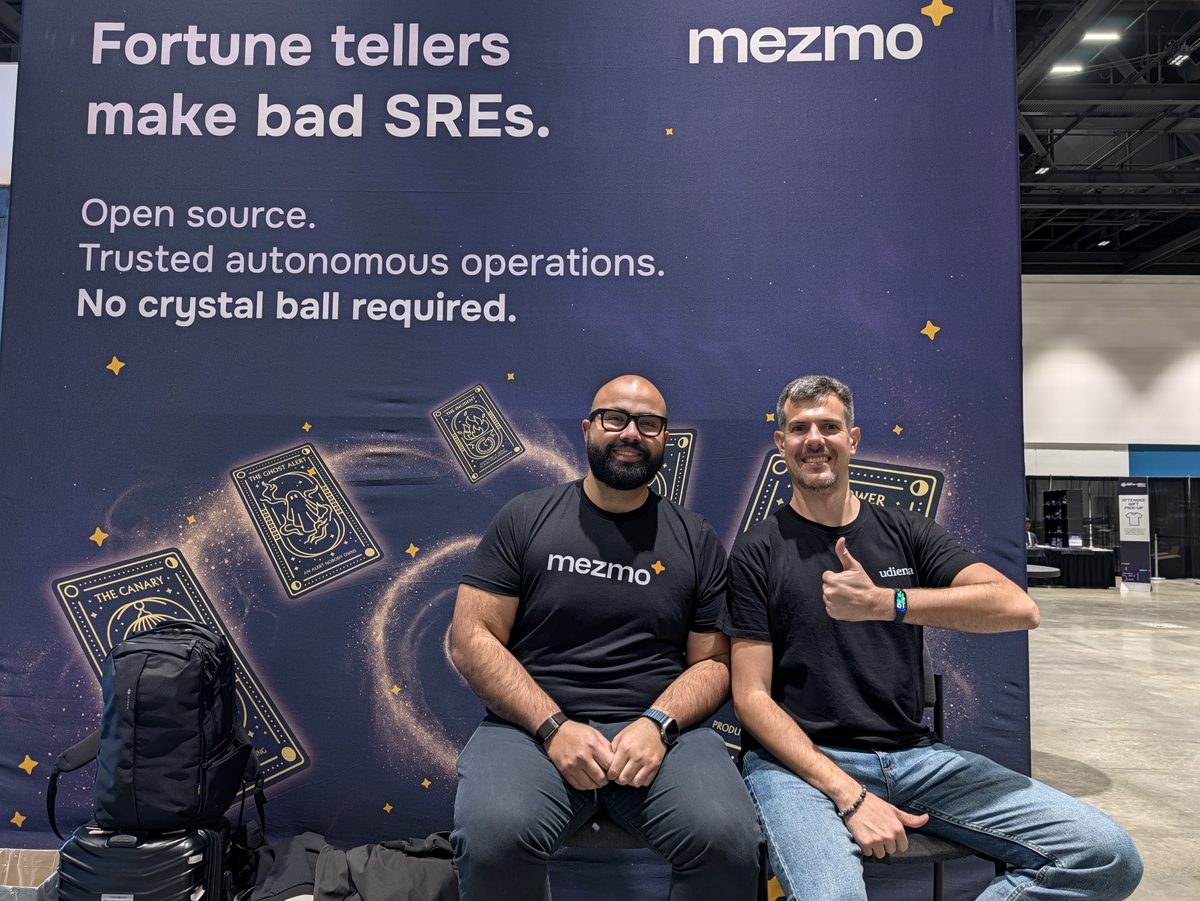
“Fortune tellers make bad SREs” was the line on Mezmo’s booth, and Andre Elizondo, who heads up product there, explained it: “there’s a lot of one-way doors in production … you don’t want to be guessing in production.” Mezmo enables teams “to build agents to help them run production in a really safe way”. In February it open sourced AURA, the project behind the award. AURA shortens the loop: getting an agent into production becomes “a matter of, you know, a couple hours more so than a couple of months”.
AURA takes “a very Kubernetes style approach”: “you define the declarative outcomes for your agent and then the system is responsible for things like agent orchestration”, with tracing, human in the loop and governance there from the start. The aim is “removing all the glue code of agents”. Mezmo’s own SRE team started it, from what they wished had existed: fast root cause analysis, then a strict, auditable human in the loop before any remediation, “so you don’t accidentally delete production in 9 seconds”. It is Apache 2 licensed, at github.com/mezmo/aura: a one-line install, then an init command that generates an SRE agent. “Two commands. You’re good to go.” People do manage production with Claude or Codex, he said, “but all the things that you would normally try to build around those systems to keep them safe, AURA does it on day one.” Incident root cause analysis is the most common use, followed by security operations, performance, capacity and cost planning.
11:32 — Jacek Migdał, Quesma: what agentic coding is worth
“We try to maximize the economical value of agentic coding,” said Jacek Migdał, founder of Quesma. Writing software is one of the biggest uses of the AI labs’ models, he said, but it is very hard to measure. At the booth, Quesma had a demo of its own: a backpack with a screen, bought from China. “It was like a nice hardware, but the software was not so user-friendly. So we use Claude Code to reverse engineer it and use it as our own merchandise.”
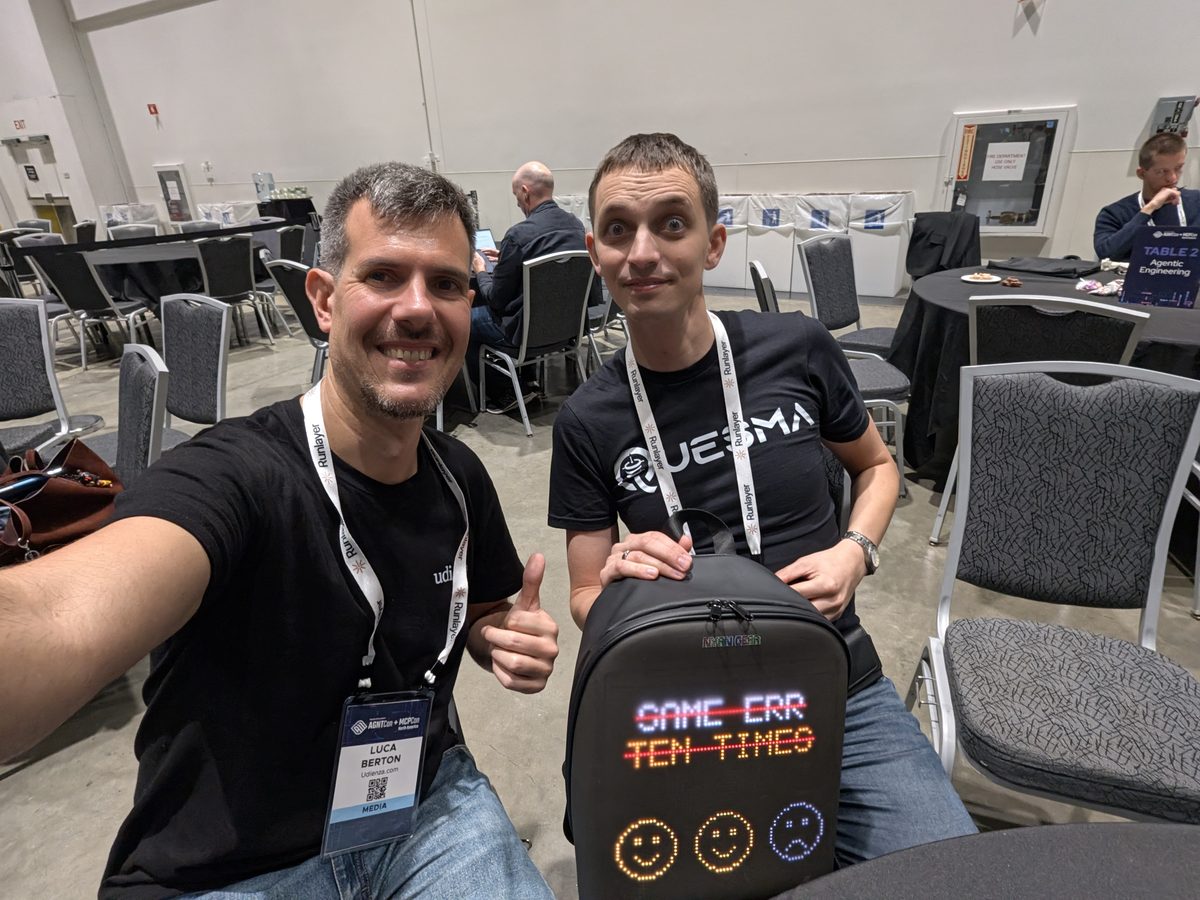
Quesma collects agentic session logs: “anytime agent takes any actions, we collect that data”. The collector is open source. The logs are scrubbed of credentials and private details, encrypted, and analysed with other LLMs. He sees three kinds of value:
- Prompting: people “asked 20 times, but if they would ask and define better final goal, they could do that in one”.
- Setup: with the right data and design guidelines, the agents “work faster, they use less tokens”.
- Spend: costs attributed to departments and cost centres. “Should you be allowed to spend $1,000 per month or $100? It could also depend on what are you working on, what’s the business value out of that.”
Companies install it through their device management on every laptop: a daemon that watches for new JSONL logs, across all the agent harnesses. Collection is free forever, and companies start with a free pilot. Luca raised sovereignty, a concern in Europe: there is a mode in your own cloud with your own key, and on-premises for bigger companies. “This is the data that you should own … it’s kind of like the way how the company thinks.” What do companies do with the savings? Most don’t save: “it’s kind of like a Jevons paradox. You take pictures cheaper, so you take more of them.” They take AI into new areas. Quesma also publishes benchmarks on its blog, several of which reached the top of Hacker News.
11:51 — Hari Krishna Sunder, YugabyteDB: a context layer for every agent
YugabyteDB is a database company, and its new product is Meko, “an agent context layer”. “M-E stands for memory, K-O stands for knowledge.” It is built to solve “the context problem and the context sharing problem” between agents, across a team or an organisation. RAG and a graph are inside. Most people, Hari Krishna Sunder said, have solved one part of it, the memory for instance; Meko combines conversations, audit trails, artifacts and knowledge.
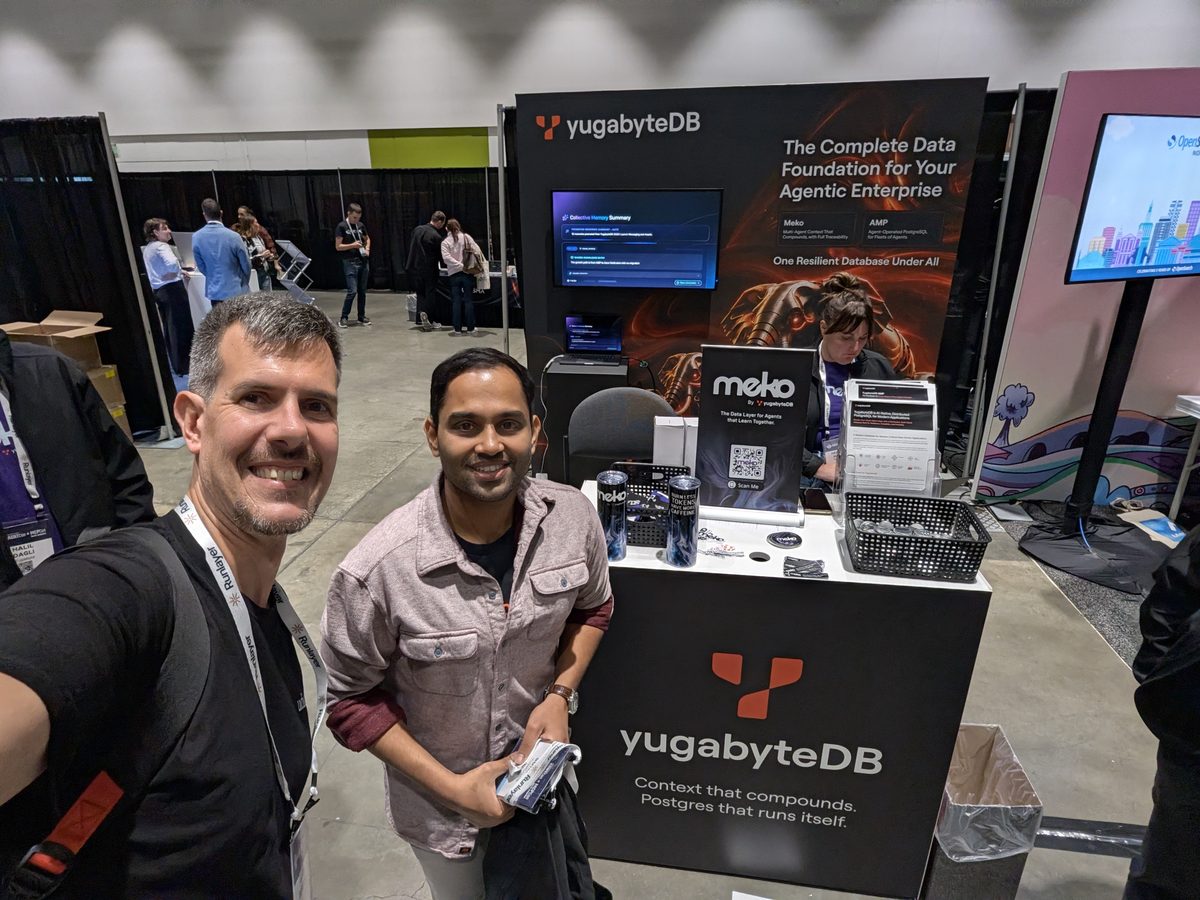
It comes as a fully managed cloud, as bring-your-own-cloud on your own hardware, air-gapped and with your own models, and soon as an open source version to run on a laptop. You upload PDFs and text files, Meko takes care of the chunking and the embedding, “and it will all be ready for you”. It is MCP native: “you just connect your agent through the MCP” and it works with every agent. At Yugabyte, engineering uses it “from the PRDs till all the way to the code review and release notes”, sales for account management, marketing for content. “Everything needs context. And agents without context are not as great as the ones with context.” You can start with a free account at cloud.mekodata.ai.
12:10 — Kashish Hora, AgentCat: the silent failures of MCP servers
The AgentCat booth was covered in cats, and three minutes into the interview Kashish Hora stopped: he was allergic to cats. “Do you mind if we start again?” From the top, then. AgentCat “helps companies building MCP servers understand how agents are using those MCP servers, where they’re getting stuck, and how they can fix it.” Building an MCP server is easy now. Knowing what agents do with it is not.
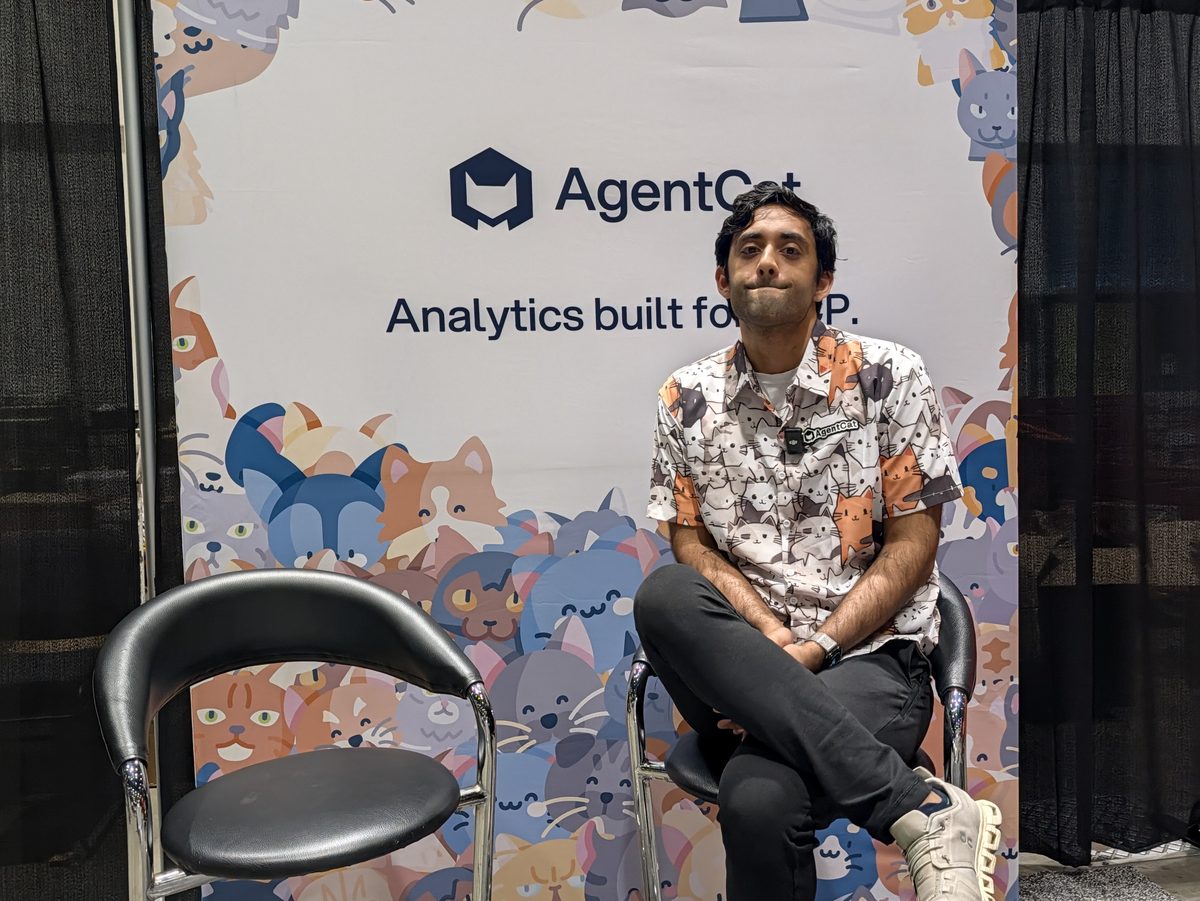
The problem he describes is the silent failure. An agent calls the wrong tool, but calls it correctly, or gives up because the server lacks what the user asked for. “All 200s, no errors happen”, and yet the user had a bad experience. Logs and traces don’t show it. AgentCat’s SDKs, open source and in every major MCP language, take one line to install and wrap the server like auto-instrumentation. They also let the agent report back what it could not do. The data can be forwarded to any OpenTelemetry collector: “Our goal is not to compete with your existing analytics and observability stack.” And it is not an API gateway, a question he gets a lot; it lives entirely on the MCP server. Webflow is one of the biggest customers. Beyond MCP, AgentCat is working on WebMCP, browser use, A2A and UCP. The bet is on agent experience: “the most successful companies will be the ones that prioritize how agents experience your product”, because agents “will be the biggest users of software products in the next 20 years”. It is free to try at agentcat.com.
12:42 — Mark Fussell, Diagrid: durable execution for agents
Mark Fussell, Chief Product Officer and co-founder of Diagrid and co-creator of Dapr, the CNCF’s Distributed Application Runtime, explained durable execution. “When you have a long-running, stateful business process, quite frequently it has to be able to survive failures in production.” Retrying a call to an external system is the easy part. The hard part is a process or a machine that dies: its state has to be checkpointed, the failure detected and the work carried on “from where it left off”.
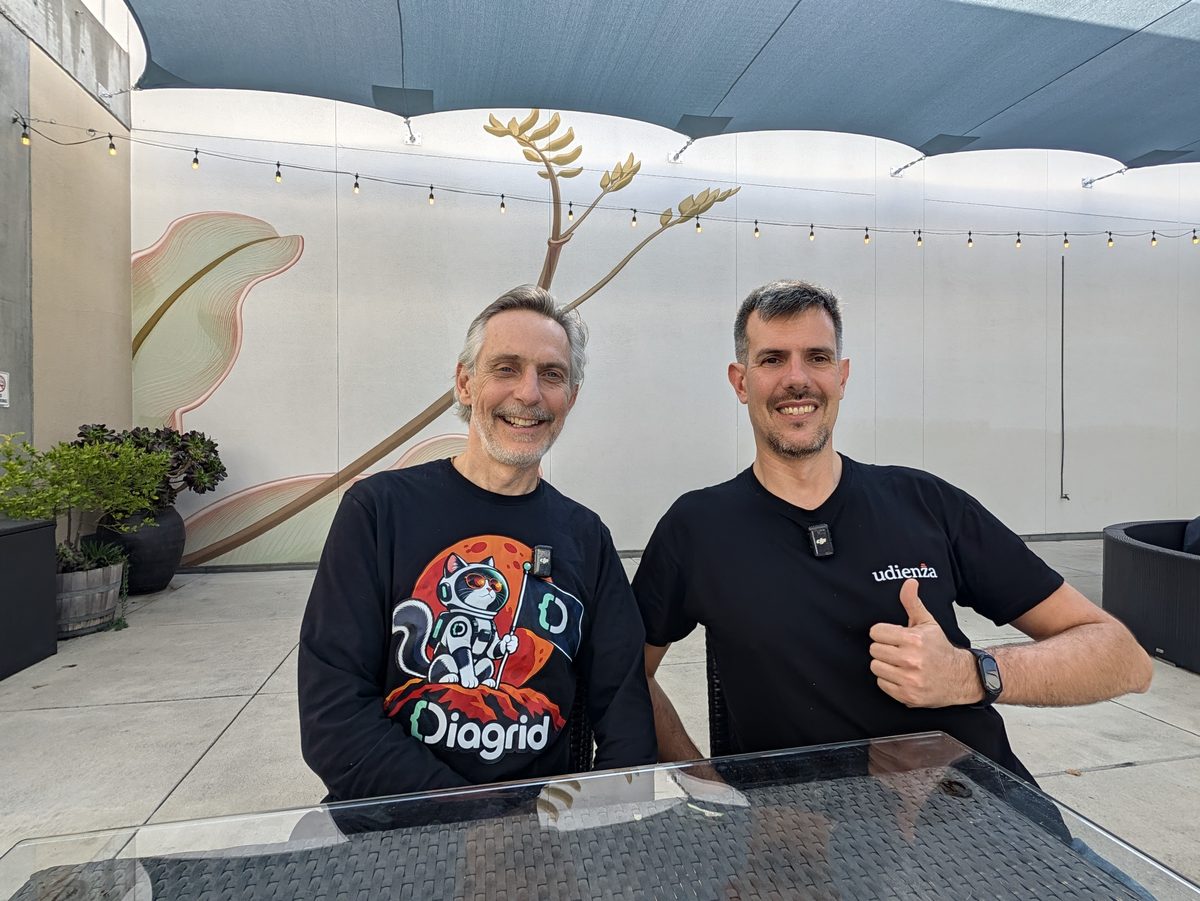
That matters more with agents. LangGraph, Strands, Google ADK and Microsoft Agent Framework all run long-lived agentic loops. A restarted agent that redoes its work wastes tokens, and worse: it sends the email again or writes to the database again, “now you’ve got a whole complete mess”. His promise: “Imagine you’ve got a thousand agents running and you do chaos testing on all of them … We will guarantee all those agents recover their state, carry on and run to completion.” Diagrid focuses on business agents rather than coding agents: a warehouse company’s agent that reads every incoming email, and an agent at Zeiss that turns prescription details into glasses.
Agents also get an identity, which decides which agents and which MCP servers each one may talk to. With that identity, every step an agent takes is cryptographically signed. “You can prove that an agent sent an email at this time”, because logs “can still be tampered with”. Diagrid works with financial companies and manufacturers. It runs fully disconnected, on Kubernetes, down to an edge cluster in a plant. To start, there is a free account on Diagrid Catalyst at diagrid.io and free courses at Diagrid University.
13:14 — Spencer Reagan, Airia: the call is coming from inside the house
“Airia is an agentic AI orchestration platform. We help discover and secure, optimize and govern agentic interactions,” Spencer Reagan said, and one of the parts he is proudest of is the MCP gateway. He pointed to the analysts first: in Gartner’s recent Critical Capabilities report for AI security and governance, he said, Airia “placed the farthest in the visionary section”.
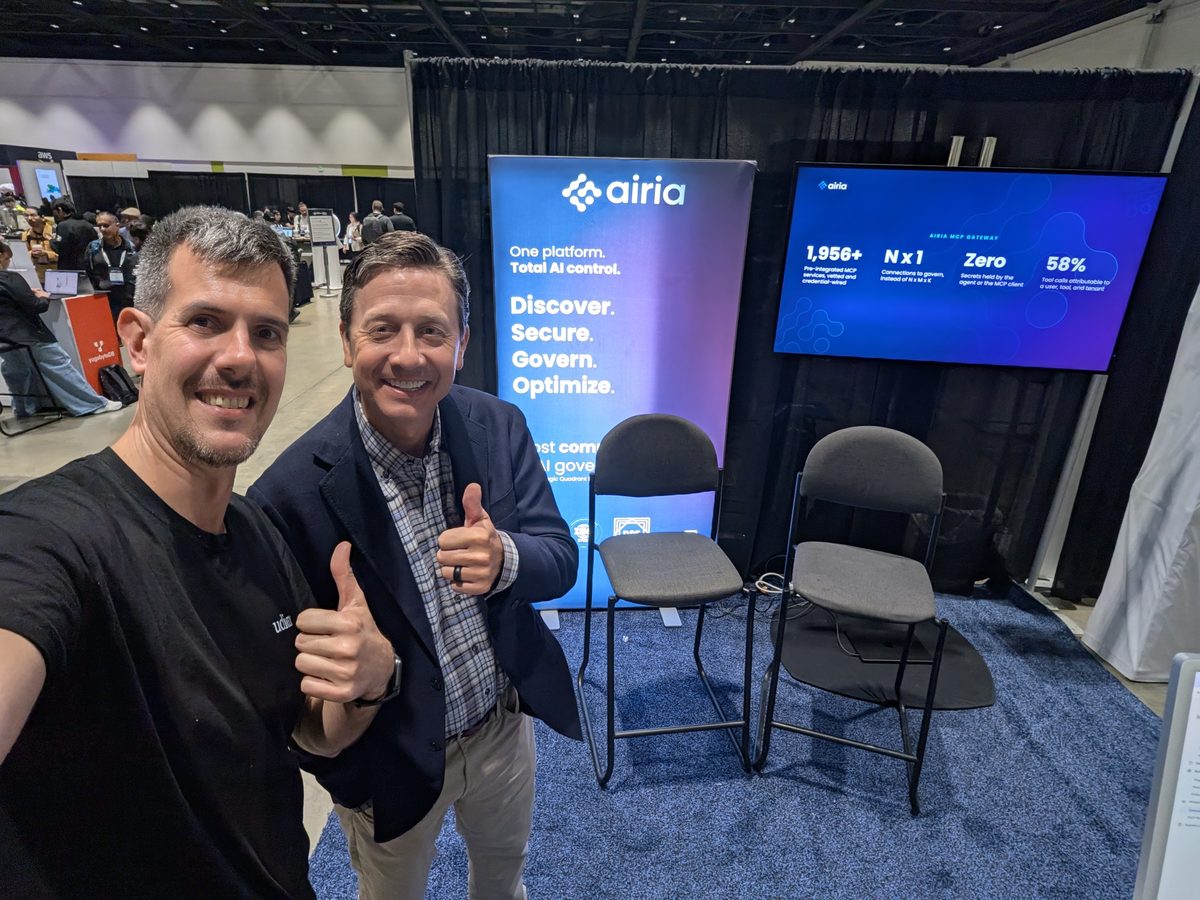
Generative AI, he said, behaves more like new employees brought onto the team than like traditional software. Security used to mean “protecting the barrier and keeping the bad stuff out”. With agents, the call is coming from inside the house. Two things make it dangerous together: a malicious query or payload can reach the model, and the model can call tools across your systems.
Airia first discovers every agentic workload, then normalises them, so that a policy can apply by agent, by user or by use case. Then come what Airia calls agent constraints: an AI analysis of an agent’s prompt and tools decides what it is supposed to do, and “you fill that negative space with blockers and barriers”. An agent that searches the issue tracker and emails you its alerts should not email outside the company; a tool call can be limited to certain email domains. Luca compared it to the deny rules in Claude Code’s settings file. That lives on each laptop, Spencer said: “if you’ve got 100 developers … you’ve got to change it 100 times”. Airia moves the rule up to its proxy and gateway layers, where IT controls it in one place. The users “don’t even have to worry about it. They’re just safe.”
The alarm goes off, he said, when an organisation moves from developers to everyone else: HR, legal, sales and marketing use the same tools, “but they’re even less capable and knowledgeable about these restrictions”. For regulated industries such as finance, and for Europe’s patchwork of rules, Airia keeps track of the regulations for its customers. There is a free trial at airia.com.
13:40 — Tyler Lamparter, Celigo: earned autonomy
Celigo has been an integration platform as a service for more than ten years, “integrating backend systems, ERPs, CRMs” and thousands of enterprise applications. For Tyler Lamparter, a product manager there, agents were the natural next step: “MCP is that protocol to extend that connectivity to all the agents.” Celigo builds MCP servers in its platform, with governance on top, “the traceability and auditability and observability”, in “a single platform that’s not bolted on with various different acquisitions”. Many customers are e-commerce businesses selling on Shopify and Amazon. He came from one of them four years ago.
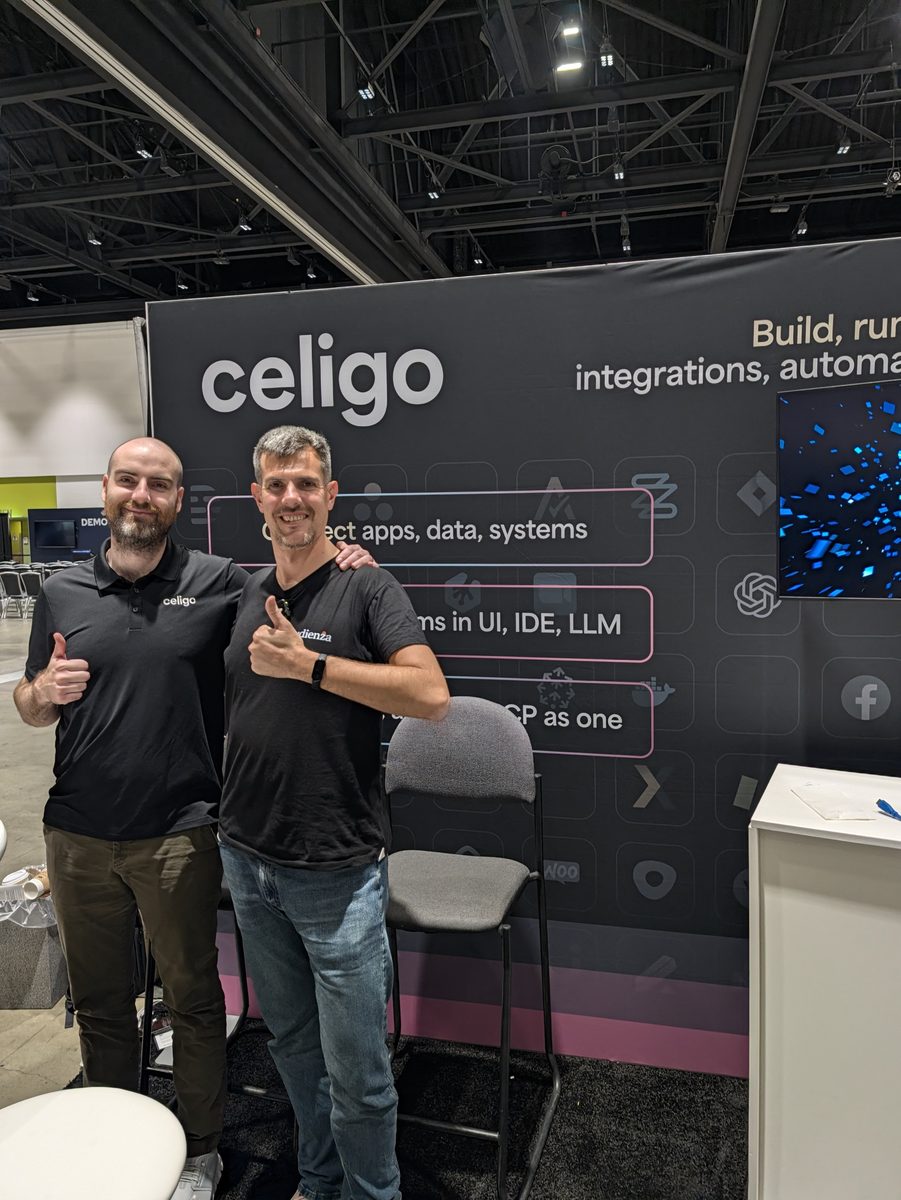
His own focus is the MCP servers. Customers who connect vendors’ MCP servers from the Claude or Cursor marketplace can route them through Celigo instead, to see “who’s calling what, you know, why they’re calling it” and to restrict access down to single tools. Halfway through the interview, staff came by to close the expo floor for the year. The best use case he sees is finance automation from email inboxes. The emails are fetched deterministically, one agent categorises them, another finds the information and drafts a reply, and a person reviews it and sends it. Celigo calls it earned autonomy: “you earn your right to make your deterministic flows more autonomous over time”.
14:05 — Sanford Redlich, Alterion: a third kind of entity
Alterion governs AI agents on large corporate systems, and Sanford Redlich, its Head of Engineering, named three differentiators: completeness, “from the endpoints through the network, through the communications to other entities like SaaS entities”; on-premises systems that can be air-gapped, “so not asking the customer to send their precious data out”; and a proprietary AI to classify behaviour, because “if you use a deterministic system to try to govern them, you will fail”.
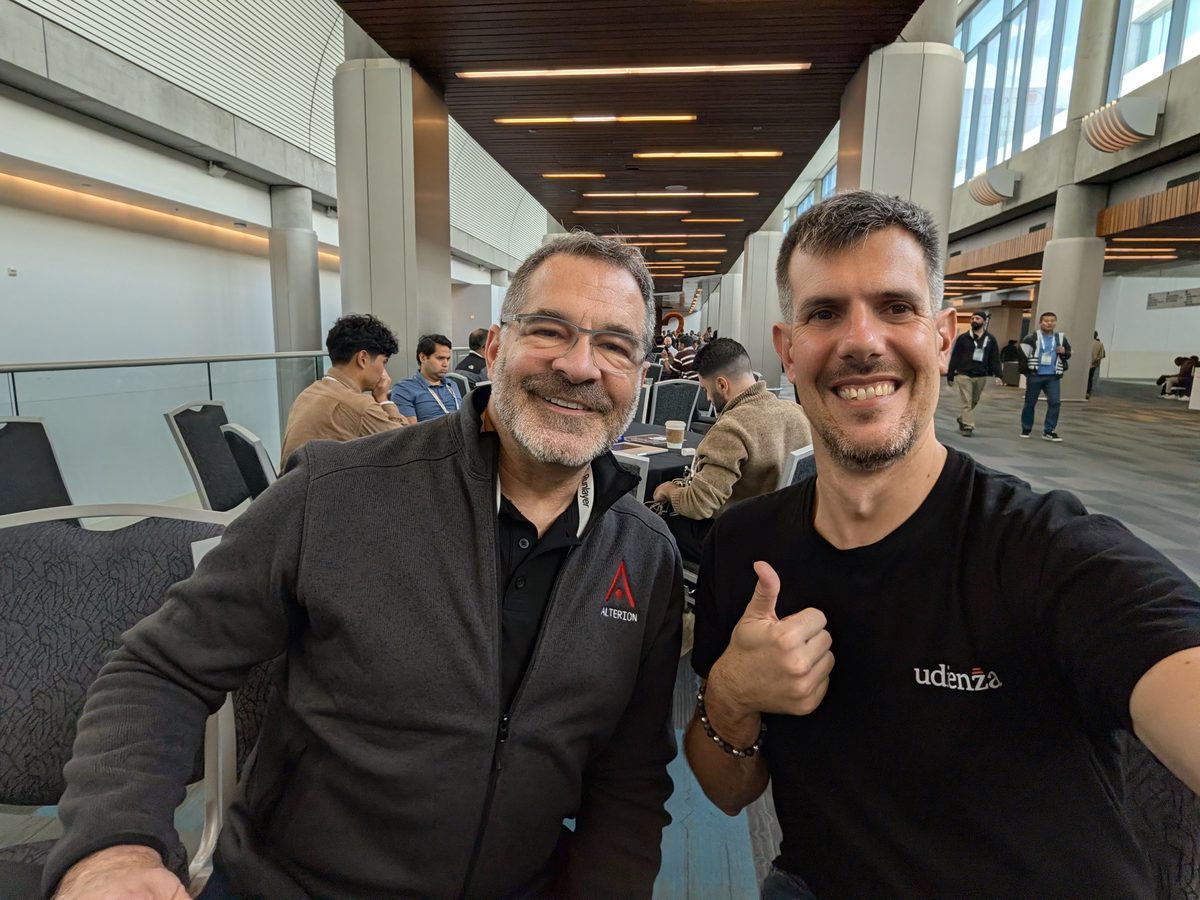
His example was the endpoint. “How hard could it be to monitor the behavior of agents on an endpoint?” The Claude app, Copilot and VS Code have control planes you can log into. Many others don’t, so their network traffic has to be intercepted and decoded. Then the agents call MCP servers over the network, and others on the same machine through standard IO. “These things that sound very simple are not at all simple.” The scale is the other problem: one company Alterion talks to runs 10,000 agents of a single kind, and “they are not communicating using any standard other than maybe MCP”. The platform has to classify all of it accurately enough to show a CISO or a compliance lead, GDPR’s Articles 9 and 22 included, what the finance department’s agents are doing, and then let them draw a boundary and apply a control. Alterion works with healthcare, financial and big tech companies, mostly Fortune 100 and Fortune 500 for now, at alterion.ai. Agents, he said, are “a third kind of entity”: people are unpredictable but go through HR, software is predictable, and “now we have unpredictable and very fast software running on that network. And if you’re a CEO and you’re not nervous about this, I don’t know what would make you nervous.”
14:44 — Matt Meeboer, Safe Software: hard-to-reach data for agents
The expo floor closed earlier than planned, so Matt Meeboer and Luca met near registration instead of at the Safe Software booth. Safe Software has been around for more than 30 years. It started in GIS, geospatial data, and the name comes from a 1990s geospatial file format called SAFE. Today it is “a data integration and orchestration platform” that integrates “with almost anything”, and it came to AGNTCon for MCP: “now we’re connecting any data source to any agent using MCPs”.
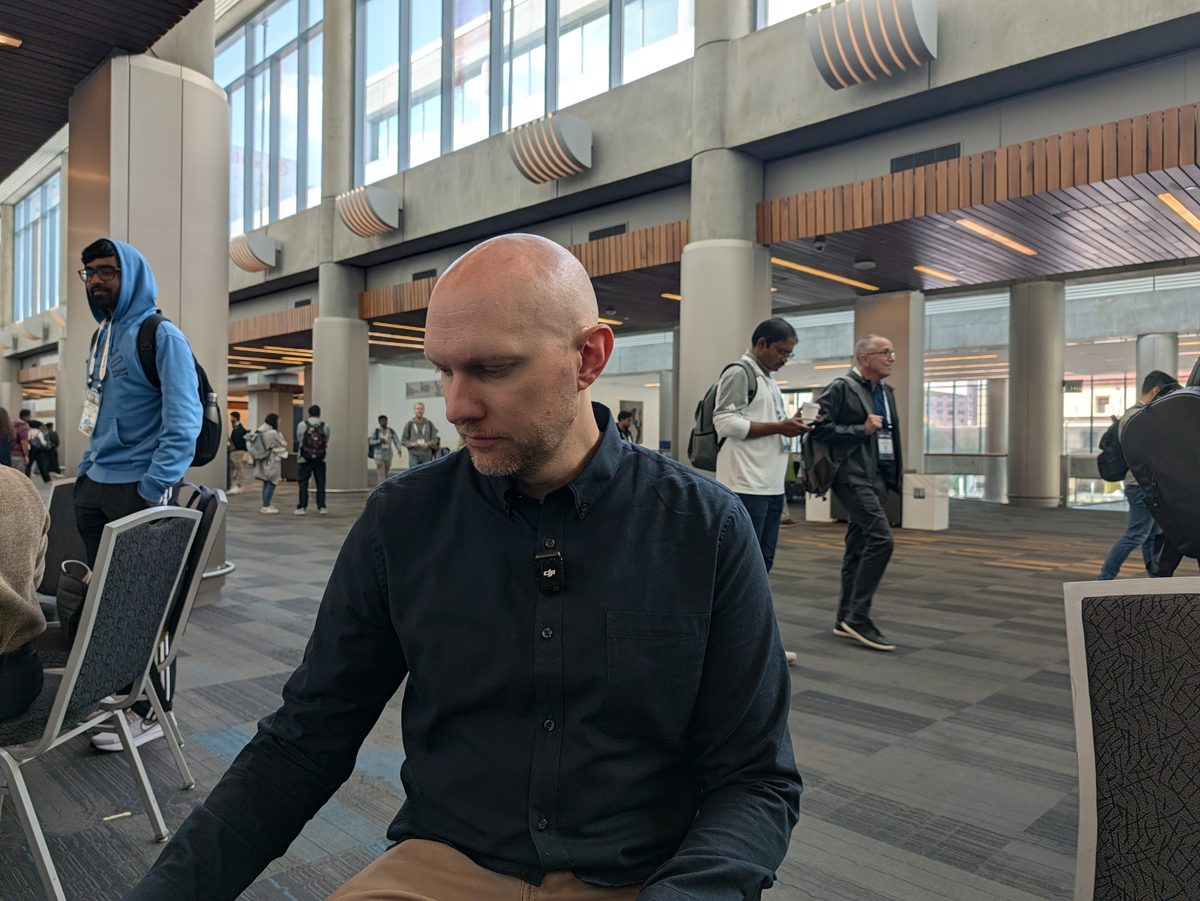
The data in question is the hard-to-reach kind, “data in like a 3D building model like we’re in right now”. FME already validates and transforms it into a structure an agent can understand. Since this year’s release, FME Flow can publish one or more no-code MCP servers, whose tools are FME’s own no-code pipelines. One customer in utilities and traffic monitoring gives its real-time sensor feeds to agents that way, so they can ask questions about them. Another, in transit, has buses reporting their position every 10 seconds and thins the data before giving it to any agent. Safe Software was an early adopter of MCP and will “keep growing with the protocol”. Next, it wants each tool call’s lineage to be shown graphically, for security and control. Its user conference is in London in March, and there are demos at fme.safe.com.
15:09 — Angie Jones, Agentic AI Foundation: why another standard
Angie Jones, VP of Developer Experience at the Agentic AI Foundation, hosted the day-one keynote and sat on the awards committee. On Friday afternoon she explained the foundation in one line: “this is where we say the agentic stack is being built”. It is “a neutral home” for MCP, A2A, AGENTS.md, Agent Skills and other projects, where more than 300 member companies that “maybe even compete with each other” agree on an interoperability layer.
“Sometimes people will joke and say, oh, another standard.” Her example was buying online. That is solved for people, but an agent buying on your behalf, across merchants and payment methods, is not: the merchant has to know the purchase matches the customer’s intent, and the agent has to pay “without necessarily you exposing your credit card details to it”. The same goes for testing. “How do you test a non-deterministic system?” With evals, with OpenEnv, the Hugging Face project the foundation took in on day one, where an agent can be tried in many scenarios, and with guardrails. How an agent “acts today might not be how it acts tomorrow.”
For developer experience, she said, standards are what you can build on, and AGENTS.md is the example. Most clients supported it, but Claude kept its own file, and developers pushed back: they wanted to put the guidance for their agent in one document, and everyone to support it. According to Angie, the Claude team listened and decided to support the standard too. There are three ways to get involved:
- Ambassadors: 140 volunteers from every major region, who write, speak and teach.
- Chapters: about 100 of them, with local organisers who hold regular events.
- Projects: ten open source projects, all open to contributors, on Discord and GitHub.
The next two flagship events are announced for next year: AGNTCon + MCPCon in San Francisco on 28 and 29 April, and in London on 15 and 16 September.
16:01 — San Ramani, MobilityeCommerce: from startup to enterprise
San Ramani helps startups “scale and grow on the agentic commerce and agentic building” side, and his first offer is go-to-market: getting them into the enterprise. That rests on experience with ERP, “more than 6,000 customers on the different ERPs of the world, SAP, Oracle, Microsoft Dynamics”. Then come an investor connect for companies that find product-market fit, data centres for the companies that need their own AI infrastructure (“AI is very, very expensive without you owning much of those components”, so “local AI has now become the focus of all enterprises”), and marketing run autonomously, from product placement to pricing. AI has changed his own company too: with 80 people it now does more than it did with more than 100.
16:36 — Katherine Druckman, JetBrains: open source has been here before
The last interview of the conference was with Katherine Druckman of JetBrains, an hour after her talk in the open source community track, “Open Source Has Been Here Before: Sustainability Lessons for Agentic AI”. She has been around open source communities “for a very long time. I don’t even like to count the years anymore.” JetBrains is a member of the Agentic AI Foundation and of the OpenSSF, the Open Source Security Foundation, which she has been part of for a while. She is very interested, she said, in the work being done in the open on these difficult problems. JetBrains is “taking AI development very seriously”, for open source communities and for developers of all kinds.
Generating code has become cheap in time. “But the cost of reviewing it has not, the cost of understanding it, the cost of trusting it.” Writing the code is less and less the job, and “as AI generates the code, people are still responsible for it”: they have to know what is in their software, be accountable for it and understand it. That was her talk, the human part of the work. Human in the loop is usually talked about as a safety gate, “but it’s also, at the end of the day, it’s a human, an actual person”, one who needs effective tools, resources, support and, in open source, budgets and time. JetBrains has just launched JetBrains Air, and it is at jetbrains.com.
What comes next
AGNTCon + MCPCon North America is over. The day-two interviews are in the pipeline:
- Jonathan Bryce, Linux Foundation;
- Andre Elizondo, Mezmo;
- Jacek Migdał, Quesma;
- Hari Krishna Sunder, YugabyteDB;
- Kashish Hora, AgentCat;
- Mark Fussell, Diagrid;
- Spencer Reagan, Airia;
- Tyler Lamparter, Celigo;
- Sanford Redlich, Alterion;
- Matt Meeboer, Safe Software;
- Angie Jones, Agentic AI Foundation;
- San Ramani, MobilityeCommerce;
- Katherine Druckman, JetBrains.
They will be published as episodes over the coming weeks, after the nine of day one.
Built something the rest of us run on? Being a guest is free. Take the other chair