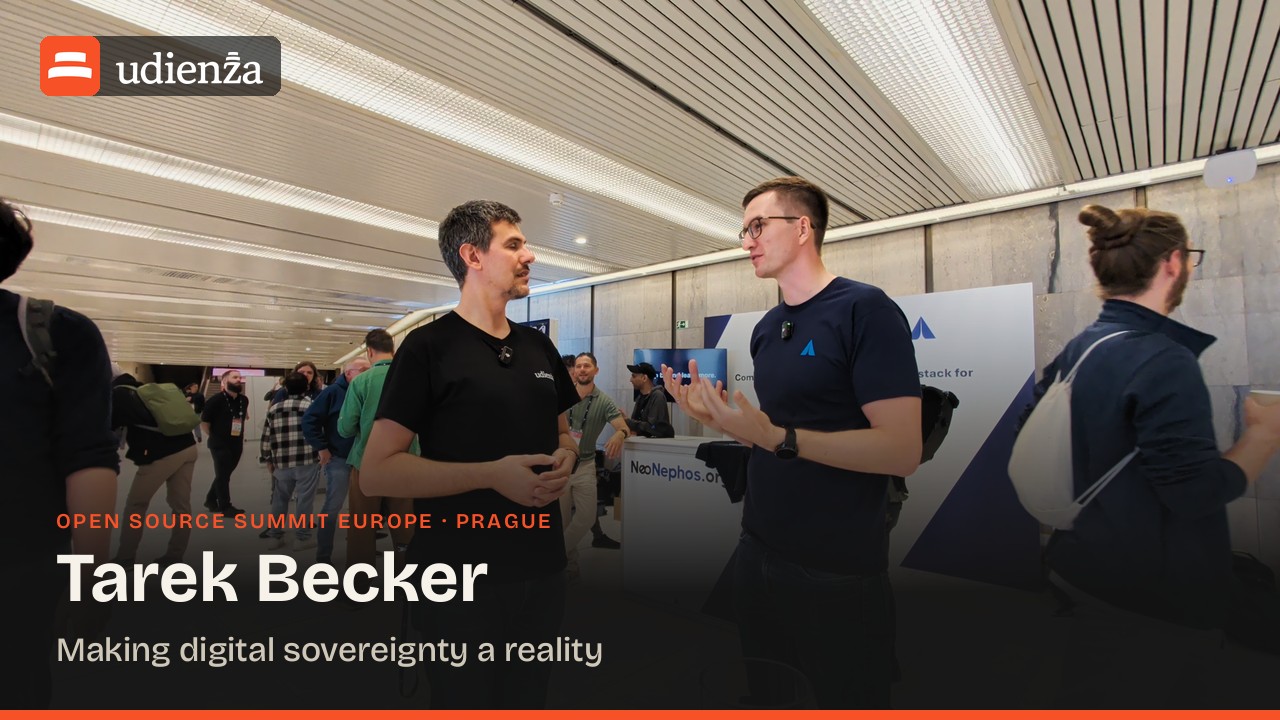
Coming soon 5:10 Recorded at Open Source Summit Europe, Prague
What does it take to make digital sovereignty work for companies?
Tarek Becker: NeoNephos and digital sovereignty
Tarek Becker of SAP on NeoNephos: a foundation for digital sovereignty, its roadmap, open source AI models, and how to get involved.
Tarek Becker, CTO, Business AI Platform Fabric, SAP · with  Luca Berton
Recorded, coming soon.
Tarek Becker is CTO of the Business AI Platform Fabric at SAP. SAP and roughly 20 other companies founded the NeoNephos foundation.
Follow the show and the episode arrives the morning it's published.
In brief
- SAP and roughly 20 other companies founded NeoNephos as part of the Linux Foundation, to help make digital sovereignty a reality.
- The goal is not only projects that are available but a way for companies to actually adopt them.
- Most projects started at SAP; the first projects that did not start there are now joining.
- NeoNephos aims to make the IPCEI-CIS strategy a reality, the European Union's initiative for Important Projects of Common European Interest.
- On AI, open source models are catching up, and the results are very good already.
- Developers can start by looking at the projects, testing them and contributing code; companies can become members.
- Contributions from Europe are 40-something percent but its share of the governance bodies is 30-something, a gap to close.
Chapters
- 0:00 Why NeoNephos exists
- 1:11 The roadmap and European projects
- 2:09 AI dependence and open-weight models
- 3:09 How to get involved
- 4:11 Closing the governance gap
Why this conversation
Digital sovereignty is the theme of this short conversation, and NeoNephos is the foundation Tarek Becker came to talk about. At Open Source Summit Europe in Prague, the host sat down with Tarek, CTO of the Business AI Platform Fabric at SAP, after watching his keynote that morning. It runs about five minutes: what the foundation is, where it is going, and how anyone can take part. The rest of the week is in Open Source Summit Europe 2026: who we met.
What NeoNephos is
Tarek explains that SAP and roughly 20 other companies decided to found a foundation, as part of the Linux Foundation, that helps make digital sovereignty a reality. His starting point is that open source is in good shape. What is missing is a foundation that makes sovereignty viable: not only projects that are available, but, in his words, “a real way that works for companies to actually adopt it”. That is the goal he gives for NeoNephos. The host adds that the sovereignty discussion is shaping every layer, not only applications but the infrastructure below them.
The roadmap
Most of the projects started at SAP, Tarek says, and something the team is really proud of is that the first projects that did not start at SAP are now joining NeoNephos. The goal is to make the IPCEI-CIS strategy a reality. IPCEIs are Important Projects of Common European Interest, an initiative of the European Union to support digital sovereignty and these critical projects from a European point of view. The foundation was started last year and is now a little older than a year. The aim, he says, is to make it a viable alternative for companies to build on.
Open source and AI
The host brings up a concern heard in Japan: becoming dependent on a single producer of AI models, even as new alternatives arrive. Tarek is excited about the AI developments of the moment. As he puts it, everyone has their own OpenClaw running at home. Open source models are already very powerful, frontier models exist, and what agents will look like is hard to predict in such a fast-paced environment. From what he sees, also at the conference, open source is catching up, with very good results in open source models, and that excites him personally. The host agrees and says they would like to see more small models, specialised in one task, that can blow our minds.
Getting involved
The host asks how to get involved, and mentions the ambassador program. Tarek answers as a developer at heart: look at the projects, touch the code, test it, contribute, independently of the broader mission. On the corporate side, become a member and evaluate whether what NeoNephos does helps keep or improve your digital sovereignty. From his point of view that only works if many people contribute, both source code and governance. He recalls numbers from the keynote: contributions from Europe are in the 40-something percent range, but in the governance bodies it is in the 30-something. That gap should be closed, he says, and it is not just the code but the governance too. Whatever your role, get involved at the level that fits you.
When it comes out
The episode is edited and in the release order. Like every episode it goes out on YouTube first, then on Apple Podcasts, Spotify and Amazon Music.
Mentioned in this episode
About Tarek Becker
Tarek Becker is CTO of the Business AI Platform Fabric at SAP. SAP and roughly 20 other companies founded the NeoNephos foundation.
Running this in production? Luca Berton helps platform teams take it from prototype to reliable production. See how he works
Built something the rest of us run on? Being a guest is free. Take the other chair
More episodes
All episodes →-
Episode 112 · Coming
Harrison Ripps: Zero known CVEs at ship time
-
Episode 114 · Coming
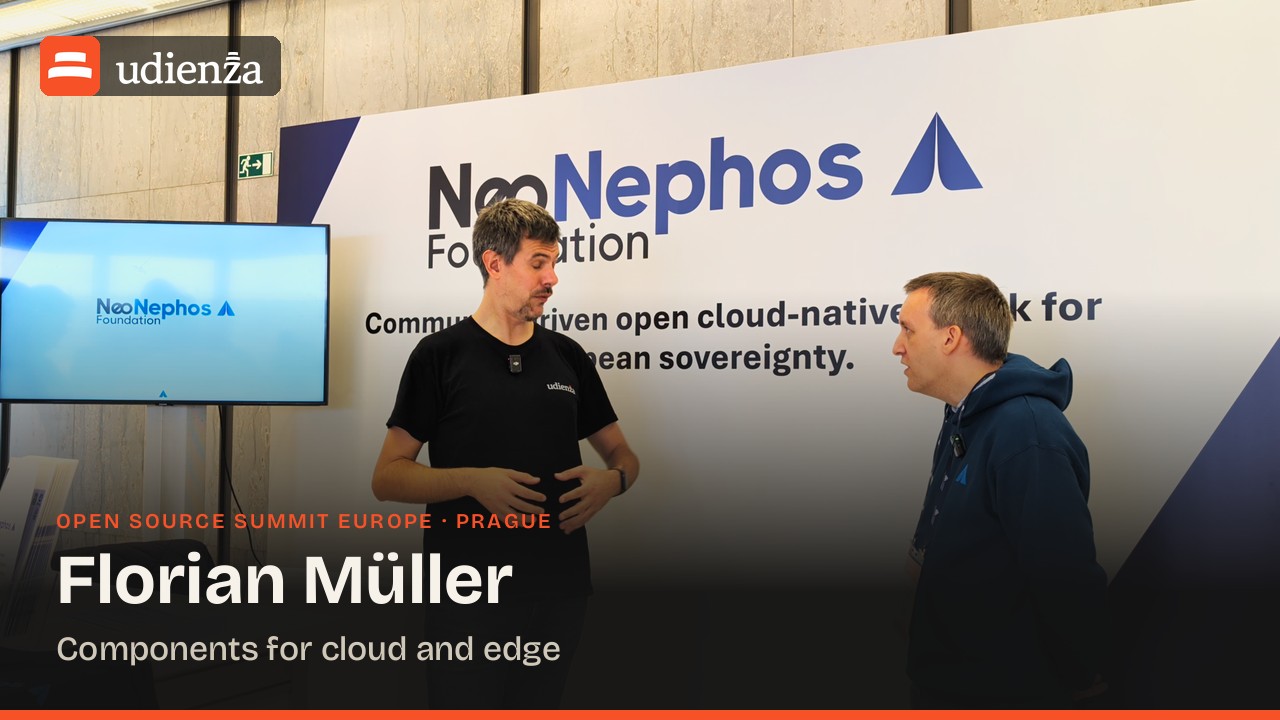
Florian Müller: NeoNephos building blocks
-
Episode 115 · Coming
Marcel Timmer: The question behind the question
-
Episode 118 · Coming
Ruud Zwakenberg: Code is the easy part