Coming soon 2:47 Recorded at Nordic APIs Platform Summit, Stockholm
What does on call look like inside a company that sells on-call tooling?
On call for everyone
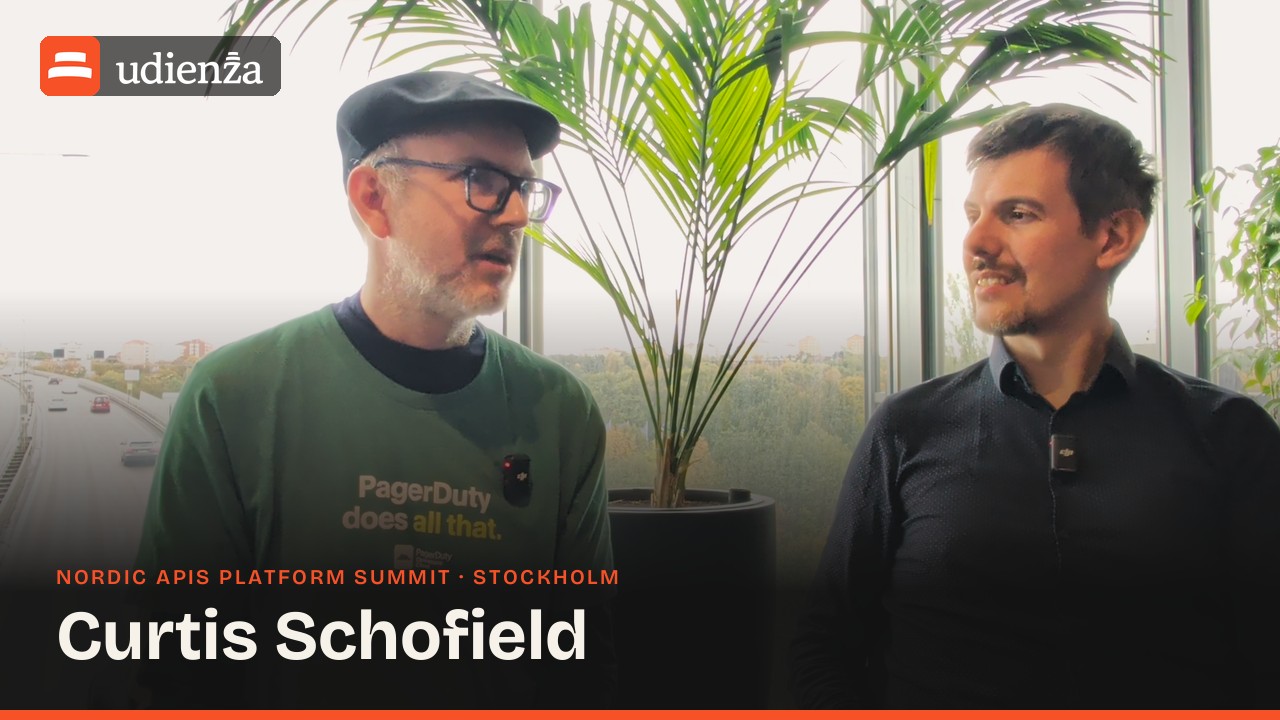
Curtis Schofield of PagerDuty on a resilience platform where everyone is on call, an incident commander rotation, and a company going all in on AI agents.
Curtis Schofield, Team member, PagerDuty · with  Luca Berton
Not filmed yet.
Curtis Schofield works at PagerDuty, which describes itself as a resilience platform: it lets teams know when their systems are failing so they can fix them.
Follow the show and the episode arrives the morning it's published.
In brief
- PagerDuty calls itself a resilience platform: knowing when a system is failing, and then fixing it.
- Everyone on his team is on call, and many people across the company are part of an incident commander rotation.
- Wellness days give people breaks, and colleagues help each other.
- PagerDuty has technical offices in Lisbon, San Francisco, Toronto and Atlanta, and sales offices in Japan, Santiago and the UK.
- The company has gone all in on AI: everyone is enabled, and it has released a few agents into its product.
- Internally it is working on an AI factory, and his group uses AI for automation.
Why this conversation
Every platform team eventually owns an on-call rotation, and the companies that sell on-call tooling have to live by it themselves. At the Nordic APIs Platform Summit in Stockholm, the host spoke briefly with Curtis Schofield of PagerDuty about what that responsibility looks like from the inside, and where AI fits. It is a short conversation, under three minutes. The rest of the week is in Nordic APIs 2026: your next customer is an agent.
A resilience platform, on call itself
PagerDuty, Curtis says, is a resilience platform. It cares about on-call, and it wants to make it possible for everyone to know when their system is failing, and then fix it. The host called that a big responsibility, and Curtis agreed: “It is a big responsibility.”
The company carries that responsibility internally too. Everyone on the whole team is on call, and a lot of people across the company are part of the incident commander rotation. To make that sustainable there are wellness days, so people get breaks, and colleagues help each other.
PagerDuty is spread across the world. It has technical offices in Lisbon, San Francisco, Toronto and Atlanta, and sales offices in Japan, Santiago and the UK, with a couple of others besides.
All in on AI
Asked about the future, Curtis is direct: the company has been all in on AI, pushing as hard as possible. Everyone in the company is now enabled to use it, and the aim is to make use of the new models and work out where they fit. PagerDuty has released a few agents into its system, and is keen on using AI internally as well. It is working on an internal AI factory, and his own group uses AI for automation: it is part of daily life there.
Where to find them
The way in is PagerDuty’s website. The company also runs its own events and outreach, and goes to conferences, so people are likely to meet the team around.
About Curtis Schofield
Curtis Schofield works at PagerDuty, which describes itself as a resilience platform: it lets teams know when their systems are failing so they can fix them.
Running this in production? Luca Berton helps platform teams take it from prototype to reliable production. See how he works
Built something the rest of us run on? Being a guest is free. Take the other chair
More episodes
All episodes →-
Episode 54 · Coming
Alex Scheel: OpenBao 2.7: post-quantum and HSM keys
-
Episode 56 · Coming
Pepijn Oomen: Reviving Cluster API for Talos Linux
-
Episode 52 · Coming
Gertrude Chilufya: Reframing the future of work
-
Episode 58 · Coming
Tony: Secrets and identity for AI agents