Coming soon 3:47 Recorded at Nordic APIs Platform Summit, Stockholm
What makes a login simple enough that people keep coming back?
Two-second logins with OBOS ID
Vidar Seland, product manager for OBOS ID, on login for end users: BankID and Vipps the first time, then a passkey that brings it down to about two seconds.
Vidar Seland, Product Manager, OBOS ID, OBOS · with  Luca Berton
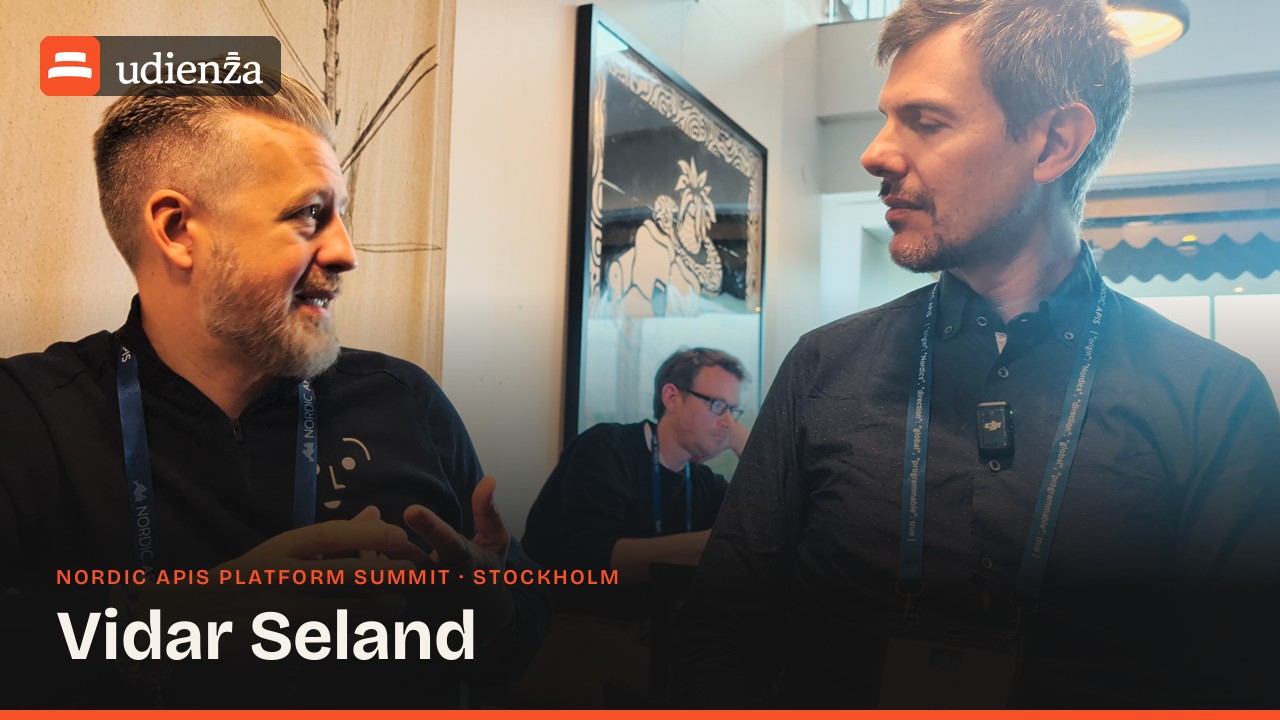
Not filmed yet.
Vidar Seland is a product manager at OBOS in Norway, responsible for OBOS ID, the company-wide ID solution for OBOS's end users in Norway and Sweden.
Follow the show and the episode arrives the morning it's published.
In brief
- For end users security is a given; what they want is to log in simply and get on with what they came to do.
- You get one chance at a first impression, so the first login needs as little friction as possible.
- Surveys and guerrilla testing with prototypes before launch showed users wanted biometrics, BankID and Vipps.
- The first login uses BankID or Vipps; the next time, users are offered a passkey.
- The median first login takes 25 seconds; with a profile and a passkey, the next one takes about two.
Why this conversation
Much of the talk at this year’s Nordic APIs summit was about agents calling APIs. Logging in is still where most people first meet a service, and a slow or confusing login costs users before anything else happens. At the Nordic APIs Platform Summit in Stockholm the host spoke with Vidar Seland, product manager at OBOS in Norway, who is responsible for OBOS ID, the company-wide ID solution for OBOS’s end users in Norway and Sweden. OBOS, he explains, is the largest housing company in the Nordics and builds about 10 per cent of the homes in Norway.
This is a short conversation. The story of the summit is in Nordic APIs 2026: your next customer is an agent.
The end user first
His passion as a product manager, he says, is the end user and their experience of any customer-facing solution, identity included. Conferences like this one are very technical, focused on B2B, AI and AI agents. His main stakeholders are the end users, and for them security is a given: they want to log in simply and do what they came to do. You only get one chance at a first impression, so the first login needs as little friction as possible.
From BankID and Vipps to passkeys
Before launching the new identity service, the team ran surveys and guerrilla testing with prototypes. Users said they wanted biometrics, BankID and Vipps. Vipps, he explains, is a payment service for sending money to friends by their phone number; in Sweden the equivalent is Swish, and in Denmark MobilePay. It has been extended to include login, so it is a seamless service people already know, and it is connected to security.
So the first step is to authenticate with BankID or Vipps. The next time, the user is asked whether they want to use a passkey. The result, he says, is that the median time to log in has been cut in half. The first login has a median of 25 seconds; once the profile is set up and a passkey is active, the next login takes about two seconds. He sees that as the reason people keep coming back.
To hear more about what OBOS has done with identity, he suggests looking him up on LinkedIn.
About Vidar Seland
Vidar Seland is a product manager at OBOS in Norway, responsible for OBOS ID, the company-wide ID solution for OBOS's end users in Norway and Sweden.
Running this in production? Luca Berton helps platform teams take it from prototype to reliable production. See how he works
Built something the rest of us run on? Being a guest is free. Take the other chair
More episodes
All episodes →-
Episode 47 · Coming
Bianca Lewis: OpenSearch as the data layer for AI
-
Episode 49 · Coming
Viola Marku: Federation for the agentic era
-
Episode 58 · Coming
Tony: Secrets and identity for AI agents
-
Episode 43 · Coming
Konstantin Ryabitsev: How the kernel is built by email