Coming soon 10:00 Recorded at Open Source Summit Europe, Prague
What can engineers expect from their work as AI changes it?
Juliette van der Laarse: What engineers can expect
Juliette van der Laarse of the AI Flower Foundation on how fast AI is changing engineering work, and what engineers can expect from their work.
Juliette van der Laarse, Founding Director, AI Flower Foundation · with  Luca Berton
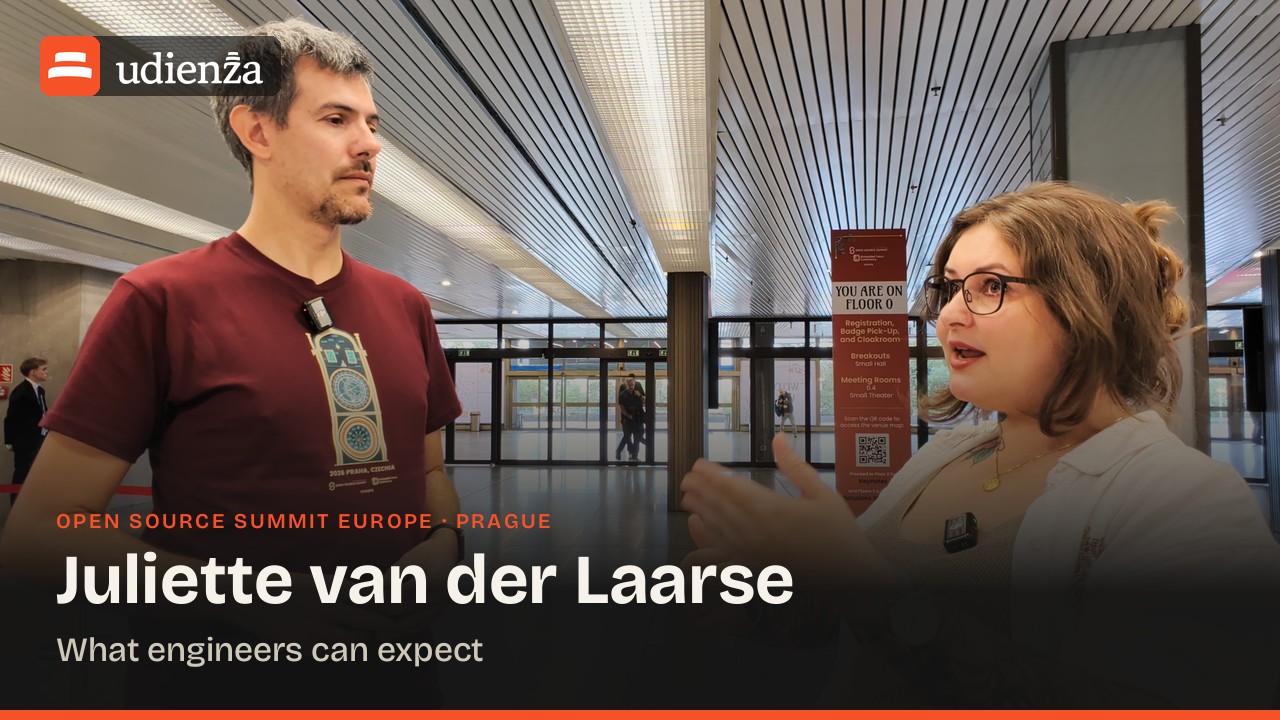
Recorded, coming soon.
Juliette van der Laarse is Founding Director of the AI Flower Foundation, which is in formation, and created the AI Flower, an open capability architecture for AI-native engineering.
Follow the show and the episode arrives the morning it's published.
Why this conversation
Juliette van der Laarse gave the Friday keynote at Open Source Summit Europe 2026, “From a Thousand Private Agents to One Open Garden”. At 11:20, after it, she recorded with the show. The AI Flower Foundation, which is in formation, started as her way to make sense of how fast AI was changing engineering work, and the conversation is about what engineers can expect from their work.
A map for the panic
“So it actually started because I think as many engineers I was really panicking about everything that happened with AI”, Juliette said. So much was changing, so rapidly, that she lost the overview and had no concrete answer to what engineers can expect from their work in the future. It began as a hobby project to find her way through it, “and then while working on that project it got bigger and bigger and bigger”. She now explains it as a map of the complexity we deal with, which she hopes makes the changes of AI simpler to navigate.
The same words, different meanings
Her keynote touched on ambiguity. Organisations come up to her proud to be AI native, then explain that they use AI-assisted coding: they still write the code, with AI. Another says it is fully AI native, and its agents do the coding. “So the terminology became quite fake”, even between business units of the same company, “and this is happening so rapidly that you can have people in the same room thinking they have a conversation but if you actually strip down what they mean, they have been walking, talking past each other a lot.”
Layers and lenses
The framework is extensive “because what I’m trying to capture is quite complex. So I felt like we should not be simplifying complexity because you will lose part of the picture, but we have to structure it.” In the foundational layer she identified and codified the IT work we do, with a definition of excellence for every activity, “the highest level to which you can execute it”. Then she identified AI capability, how AI will become more capable over time, and went back to the activities: if AI reaches this level, what does it mean for them? Then came the system requirements and the human requirements for each capability level.
The layers turned out useful in ways she had not planned. The codified activities can serve as “an AI constitution and I can build an agent with it or I can build a skill with it”. “And it’s not perfect yet, but it worked. So for 152 IT activities, I now have a skill”. Depending on the lens, the same data says what AI means for the workforce and your own role, for engineering excellence, for AI enablement. People building open source coding agents can place their work on it too: at this level of capability, for writing code, these open source solutions exist. A landscape, the host suggested, like the CNCF’s: “Yeah, exactly.”
Guardrails, and their price
Where is it going? “Honestly, even to me, even though I have this model, it’s still a bit unclear.” If AI reaches the highest level of capability, it will be autonomous; the question is the road there. AI still hallucinates a lot. A review agent can catch that, “but the review agent also has a chance of hallucinating”, so you add a second and a third opinion agent, and the token spend may no longer be worth the business case. “It just needs a lot of guardrails. And then the question is, how expensive do those guardrails get? And maybe a senior engineer guided with AI is then cheaper.”
Accountability as a statistical game
Many people say AI cannot take accountability, which she also wants to believe: “I love IT. I love engineering.” But “if you look at accountability in the end, it is a statistical game”: you lower the risk with review agents, and a human signs off on, say, a 3% chance that it goes wrong and on its impact. “So accountability will always remain a human job, but I don’t think accountability will remain in the part where we have to look at the code.” She is not a fan of that conclusion: “I don’t like to go there, but it’s probably where we are going.”
AI amplifies the organisation
What she sees in organisations implementing AI: “AI is really amplifying the organization.” Those with a strong engineering backbone and strong technical documentation do better; a shaky foundation cannot provide the right context, “So it will also amplify the flaws.” Some think AI lets them get away without good engineering. “But good engineering becomes more important.” And the taste the host mentioned stays a human job: AI can build you a million different things. “The question is, does it fit the vision?” You still have to tell it: “This is what we stand for.”
Where to find her
The easiest way is LinkedIn, where she will share the model once it is out; she is three or four months behind her own deadline. The site, AIflowerfoundation.org, she put together in an hour for the conference.
When it comes out
The episode is recorded and in the edit. Like every episode it goes out on YouTube first, then on Apple Podcasts, Spotify and Amazon Music. The story of the week it was filmed is in Open Source Summit Europe 2026: who we met.
About Juliette van der Laarse
Juliette van der Laarse is Founding Director of the AI Flower Foundation, which is in formation, and created the AI Flower, an open capability architecture for AI-native engineering.
Running this in production? Luca Berton helps platform teams take it from prototype to reliable production. See how he works
Built something the rest of us run on? Being a guest is free. Take the other chair
More episodes
All episodes →-
Episode 26 · Coming
Paula Grzegorzewska: What makes a good partnership
-
Episode 28 · Coming
Benjamin Hindman: Coding agents without drift
-
Episode 47 · 4 Nov
Bianca Lewis: OpenSearch as the data layer for AI
-
Episode 06 · 7 Oct
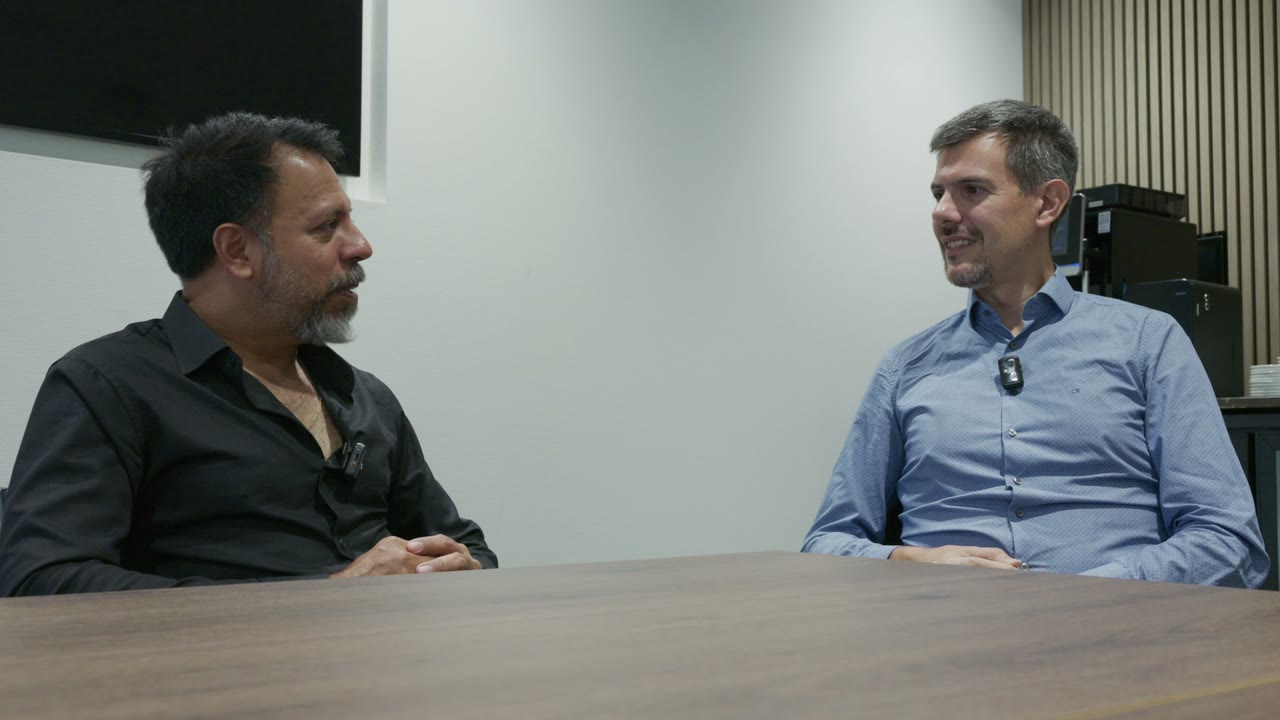
Manik Surtani: How goose led to the AAIF