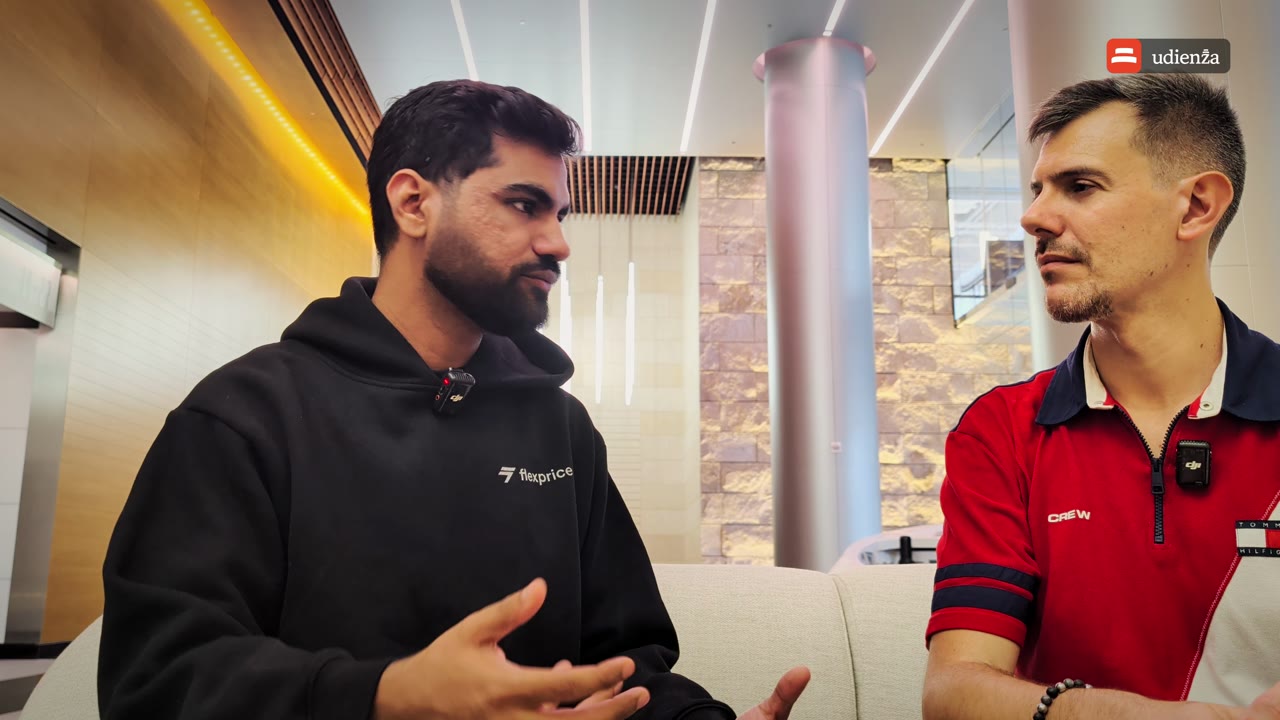
Coming soon 5:00 Recorded at Cloudflare Connect 2026, San Francisco
What does your documentation need when most of its readers are agents?
Alec Reynolds: Docs written by agents
Alec Reynolds, co-founder of SaturnDocs, on documentation whose readers are now mostly agents: llms.txt, MCP, authenticated docs and skills.
Alec Reynolds, Co-founder,  SaturnDocs · with
 Luca Berton
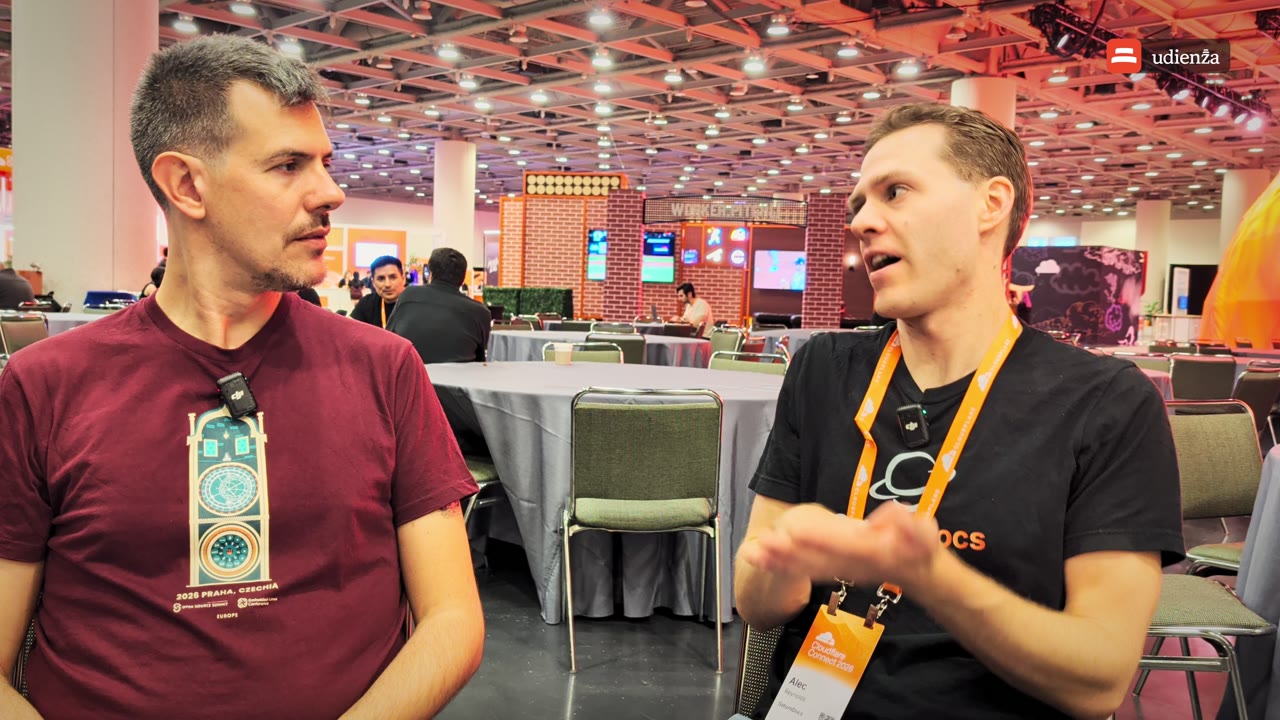
Recorded, coming soon.
Alec Reynolds is co-founder of SaturnDocs, with Sean Knight. He created Lando, a local development environment used by more than 50,000 developers.
Follow the show and the episode arrives the morning it's published.
In brief
- Most readers of modern technical and customer-facing documentation are now agents, and they often evaluate a product through its docs.
- If an agent cannot find the docs and complete its first task with them, it will not recommend the product.
- A copy-this-prompt button or a chat bot is still a feature built for people.
- SaturnDocs starts with agent-ready surfaces: llms.txt, a good MCP server, and authenticated MCP and docs where content must not be scraped.
- Those surfaces are table stakes, like old-school SEO; the work is shortening an agent's time to first task.
- Platforms such as Mintlify, Docusaurus, GitBook and Read the Docs came of age around 2020, built for human editors and readers.
- Skills help agents get started, but agent harnesses guard against prompt injection, so they must be offered in a way agents trust.
- SaturnDocs is early and works with pilot customers; the name comes from co-founder Sean Knight's time at NASA's Jet Propulsion Laboratory.
Chapters
- 0:00 Docs written by agents, for agents
- 1:23 Agent surfaces: llms.txt and MCP
- 1:53 Beyond Mintlify, GitBook and Docusaurus
- 2:53 From discoverability to first task
- 3:35 Skills without prompt injection
- 4:09 Pilots, and why Saturn
Why this conversation
Documentation used to be written for people who read it. At Cloudflare Connect 2026 in San Francisco, Alec Reynolds explained why its main readers are now agents, what that asks of a docs site, from llms.txt and MCP to skills, and why platforms built around 2020 struggle with it. The written version is SaturnDocs: documentation written for agents.
Docs written by agents, for agents
Alec works on a startup called SaturnDocs, “a documentation automation platform”. In one sentence: “we are docs written by agents for agents.” The majority of the readers of modern software documentation, technical documentation and “pretty much any customer-facing documentation” are now agents, he said. So the aim is to optimise documentation “so agents can find it and then efficiently accomplish whatever their first achievable task is with it.” It matters because “a lot of times they’re evaluating your product through the documentation”: if the agents are not effective with it, “they’re not going to recommend you to the developer or to whoever is using them to discover your product.”
Agent-ready surfaces
The host had seen plenty of getting-started guides that tell you to save them to your agent. Those are basic features, Alec answered: a copy-this-prompt button is common, and “everybody has a chatbot”. “But these are still very human-facing features.” SaturnDocs starts with “all of your agentic-ready surfaces”: an llms.txt file and “an MCP server that’s doing a good job”. More and more teams want authenticated MCP and authenticated documentation, “because they’re worried about all their docs kind of getting scraped to reproduce their product”, or because only paying customers need to read them.
Not built for the agentic era
How is it different from other documentation platforms? He named Mintlify, Docusaurus, GitBook and Read the Docs as the products that “kind of come in the same sentence as what we’re doing”. “A lot of those products are saddled with the baggage of being assumed to be for a human editor, human readers.” Most came into prominence about five years ago, “circa 2020 or even earlier projects”: “They’re not really built for the agentic era.”
From discoverability to the first task
Part of the problem is discoverability, and there it is “almost kind of like old school SEO”: checking all the boxes and having the right metadata. Those agent surfaces are “just table stakes. That’s a minimum.” The real work is “trying to find even more intelligent ways to expose your content to agents and accelerate their time to first task.”
Skills, carefully
Some of that is making sure agents find the skills that are relevant to a product and get into them quickly. That has its challenges, “because a lot of agent harnesses are obviously trying to protect against prompt injection”, so SaturnDocs has to make sure agents can reach those skills without taking them for a malicious prompt. It can generate the skills, or make an existing skills library more accessible to agents.
Pilots, and why Saturn
“We’re super early. This is a very avant-garde service at this point.” SaturnDocs works with pilot customers: on SaturnDocs.com, “one of us will reach out”. And the name? His co-founder, Sean, “spent some time at the JPL, NASA’s Jet Propulsion Laboratory”, and has always been inspired by space. Alec is “a big sci-fi kind of guy” himself, “although more terrestrial sci-fi”.
When it comes out
The episode is edited and in the release order. Like every episode it goes out on YouTube first, then on Apple Podcasts, Spotify and Amazon Music.
Mentioned in this episode
About Alec Reynolds
Alec Reynolds is co-founder of SaturnDocs, with Sean Knight. He created Lando, a local development environment used by more than 50,000 developers.
Running this in production? Luca Berton helps platform teams take it from prototype to reliable production. See how he works
Built something the rest of us run on? Being a guest is free. Take the other chair
More episodes
All episodes →-
Episode 60 · Coming
Nikhil Mishra: Billing for AI agents
-
Episode 62 · Coming
Siddarth Shekhar: A first con in Silicon Valley
-
Episode 68 · Coming
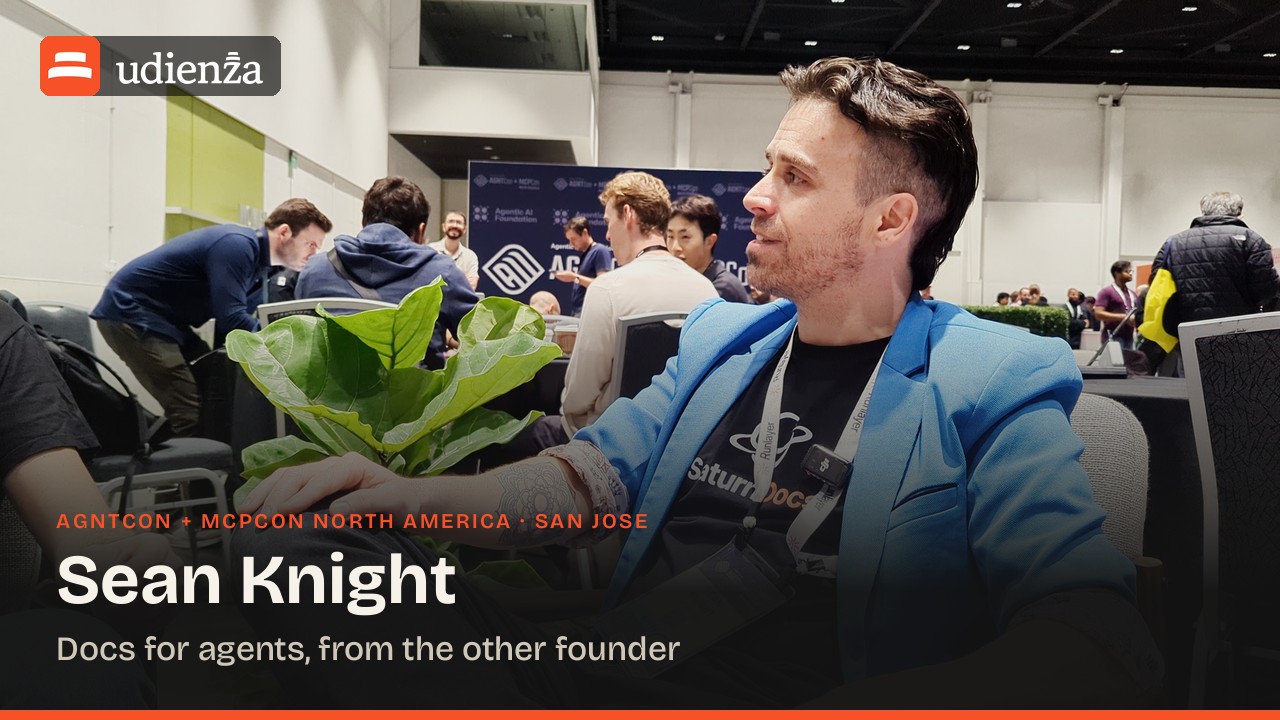
Sean Knight: Docs for agents, from the other founder
-
Episode 67 · Coming
Yuval Hazaz: Overcut